
What is an occlusal guard?
Occlusal guard vs night guard?
Do I need one?
Can I buy one OTC?
How long does one last?
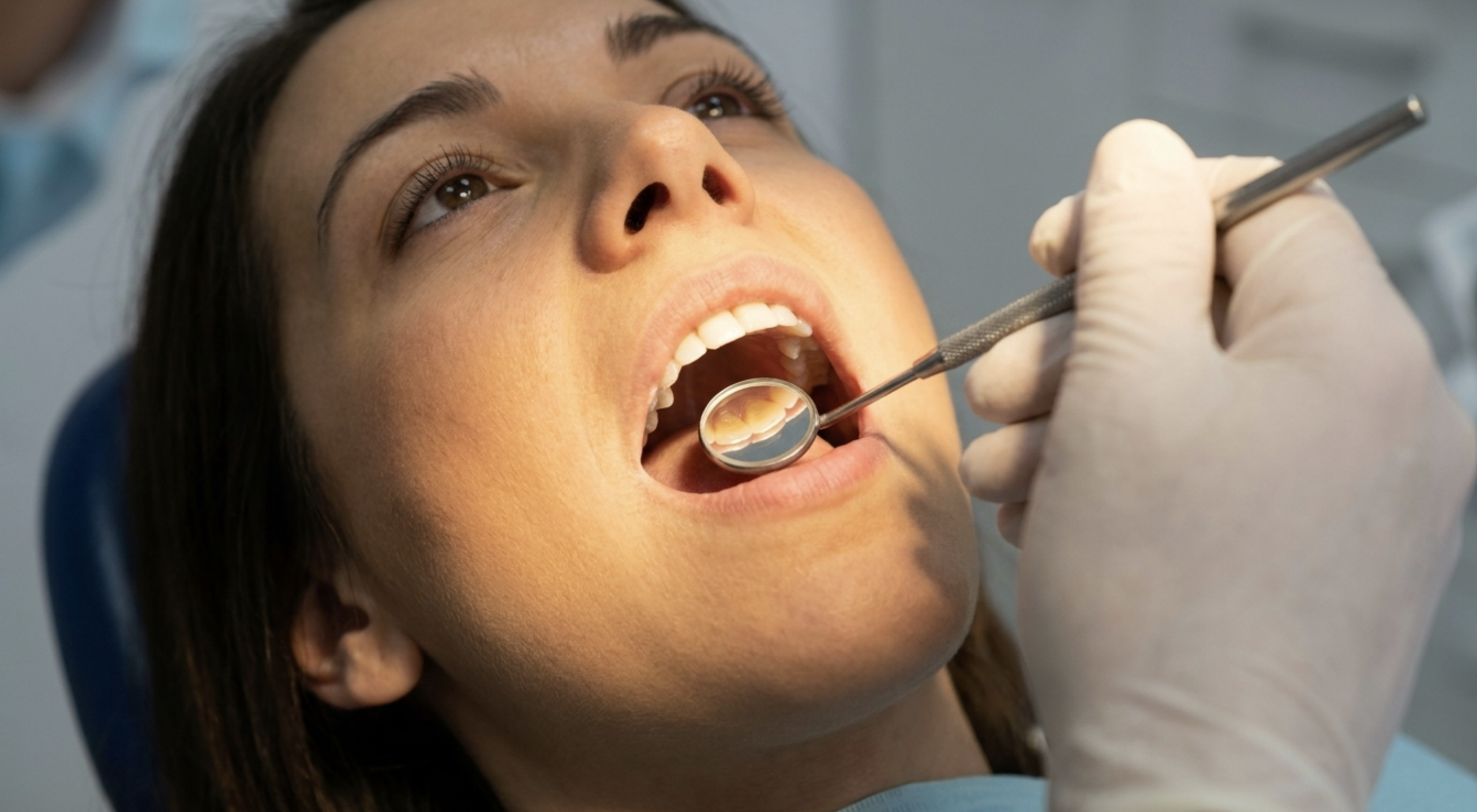

Your dentist recommends an “occlusal guard.” You nod, then go home and search the term — only to find it used interchangeably with night guard, bite guard, dental splint, and occlusal splint.
What exactly is an occlusal guard? Is it different from a night guard? Do you actually need one?
These are reasonable questions, and the answers matter — because the terminology in this space is genuinely confusing, and understanding what you’ve been recommended (and why) helps you make a more informed decision about your dental protection.
This article explains what an occlusal guard is, how it differs from related appliances, who needs one, and what to look for when choosing.
What Is an Occlusal Guard?
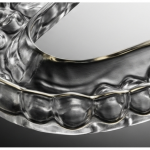
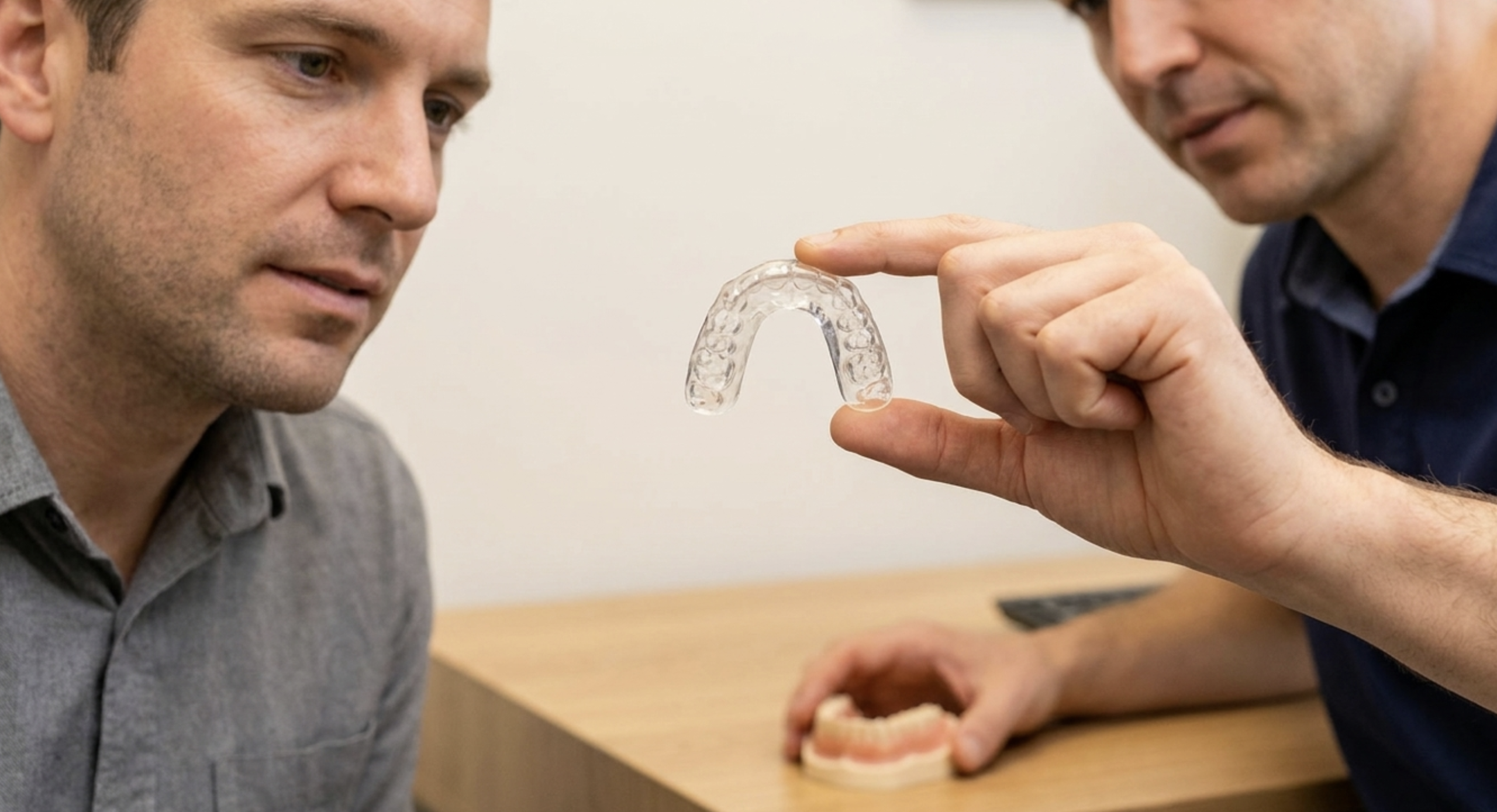
An occlusal guard is a removable oral appliance worn over the teeth — typically at night — to protect them from the forces of grinding (bruxism) and clenching. It sits between the upper and lower teeth and acts as a protective barrier, absorbing and distributing bite force instead of allowing it to impact the tooth surfaces directly.
The word occlusal refers to the biting surfaces of the teeth — from the Latin occludere, meaning to close. An occlusal guard therefore literally guards the occlusal surfaces: the parts of your teeth that meet when you bite.
In everyday use, “occlusal guard” is often used interchangeably with night guard, dental guard, and bite guard. The terms generally describe the same category of appliance. The differences, where they exist, tend to be in design specifics and clinical context — not in fundamental function.
Occlusal Guard vs Night Guard vs Occlusal Splint: Clearing Up the Terms
The terminology in this space exists on a spectrum. Here’s how the main terms relate to each other.
Night guard
A broad consumer term for any oral appliance worn at night to protect teeth. Night guards include occlusal guards, but the term is less clinical and doesn’t imply a specific design standard. Most commercially available “night guards” are functionally occlusal guards.
Occlusal guard
A more clinical term that specifically refers to a rigid or semi-rigid appliance designed to cover the occlusal (biting) surfaces of one dental arch. It implies a custom-fit, professionally designed appliance. When your dentist says “occlusal guard,” they typically mean something made from an impression of your bite — not an off-the-shelf product.
Occlusal splint
A subset of occlusal guards — typically a hard acrylic appliance that covers the full arch and is used for more complex bite and jaw management scenarios. Splints are usually thicker and more rigid than standard guards, and are more often prescribed for specific clinical purposes. The terms are sometimes used interchangeably, which adds to the confusion.
Bite guard
A generic consumer term that can describe any appliance that sits between the teeth. Often used in marketing rather than clinical contexts — not a specific technical designation.
| Term | Context | Design implication |
|---|---|---|
| Night guard | Consumer / general | Any oral appliance worn at night |
| Occlusal guard | Clinical / dental | Custom-fit, covers occlusal surfaces |
| Occlusal splint | Clinical / prescriptive | Rigid, full-arch, often for specific bite management |
| Bite guard | Consumer / marketing | Non-specific; covers a range of products |
| Bruxism guard | Consumer / specific | Implies designed for grinding force specifically |
The terminology varies — but when a dentist recommends an occlusal guard, they mean a custom-fitted appliance.
What Does an Occlusal Guard Actually Do?
An occlusal guard’s primary function is mechanical protection. It interposes a durable material layer between your upper and lower teeth, so that when you grind or clench during sleep, the force is absorbed and distributed by the appliance rather than your enamel.
What it does
- Absorbs grinding force that would otherwise wear tooth enamel
- Distributes clenching load across the full arch, reducing peak pressure on individual teeth
- Protects existing dental work — fillings, crowns, and veneers — from the compressive forces of bruxism
- Provides a consistent biting surface that doesn’t deform under pressure (when made from hard acrylic)
What it does not do
- It does not stop the grinding or clenching habit — bruxism is neurological in origin and cannot be interrupted by a physical appliance
- It does not treat TMJ disorder or other diagnosed jaw conditions
- It does not realign the jaw or change your bite long-term
- It does not cure bruxism — it manages the dental consequences of bruxism
Who Needs an Occlusal Guard?
Not everyone who occasionally clenches their jaw needs a custom occlusal guard. But the threshold for recommending one is lower than many people expect — because enamel damage is permanent and cumulative.
You likely need one if:
- Your dentist has identified enamel wear, tooth flattening, or bite surface erosion during a check-up
- You regularly wake up with jaw stiffness, tension, or sore teeth
- A partner has mentioned hearing you grind at night
- You have unexplained tooth sensitivity not linked to decay or gum issues
- You’ve been told you have bruxism at any point
- You have significant existing dental work (crowns, veneers, implants) vulnerable to compressive overload
- You’ve previously chewed through or worn out an OTC night guard
You may not urgently need one if:
- You have no signs of enamel wear and no symptoms of bruxism
- Jaw tension is mild, infrequent, and clearly linked to a specific stressful period rather than a chronic pattern
If you’re uncertain, the clearest path to an answer is asking your dentist to specifically evaluate your teeth for wear patterns at your next check-up. Bruxism wear has a distinctive appearance that a dentist can identify and grade.
Types of Occlusal Guards: What the Options Look Like
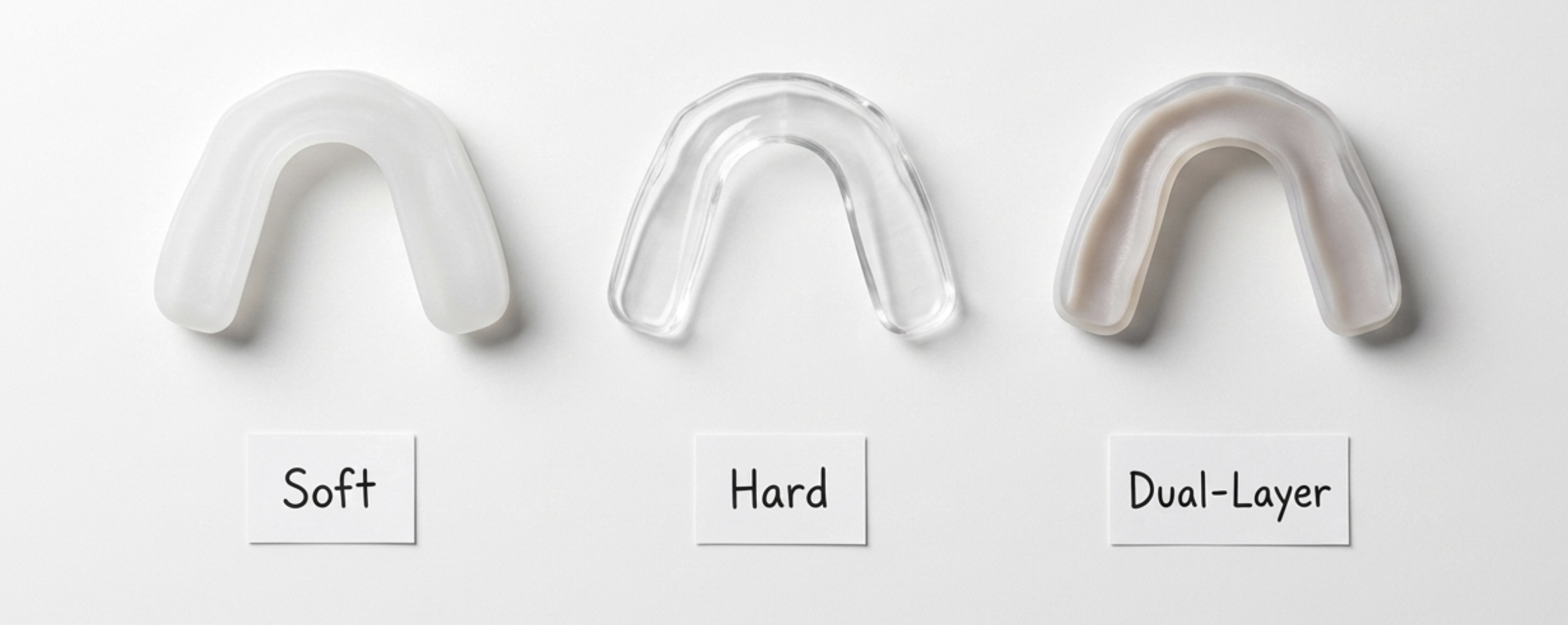
Hard acrylic occlusal guards
The clinical standard. Hard acrylic doesn’t flex or compress under grinding force — it distributes load evenly and maintains its shape consistently. Most dentist-fabricated occlusal guards are hard acrylic. They take an adjustment period (1–3 weeks for most people) but provide the best long-term protection for moderate to heavy bruxers.
Soft occlusal guards
More comfortable initially, more widely available OTC. Soft guards work adequately for light grinding and clenching. For heavier patterns, the material compresses under load and may stimulate more grinding activity. Not the clinical recommendation for confirmed significant bruxism.
Dual-layer occlusal guards
Hard outer surface, softer inner lining — aiming to combine the protection of a hard guard with the comfort of a soft one. A practical option for people who found hard guards too uncomfortable but need more durability than soft provides.
Full-arch vs partial coverage
A true occlusal guard covers the full arch — all teeth from molar to molar. Partial coverage guards leave some teeth unprotected, concentrating grinding force on uncovered areas. For genuine bruxism protection, full-arch coverage is the appropriate standard.
Custom vs OTC: What “Occlusal Guard” Implies About Fit
When a dentist recommends an occlusal guard, they typically mean a custom-fitted appliance — one made from an impression of your specific bite. This is the key practical distinction between a dentist-prescribed occlusal guard and an OTC night guard.
OTC guards are mass-produced to average bite dimensions. Even boil-and-bite guards produce an approximate fit rather than a precise one — adequate for occasional, light use, but usually insufficient for consistent bruxism protection.
Custom occlusal guards are fabricated from an impression of your teeth, either taken in a dental office or via a mail-order impression kit. The resulting appliance sits precisely on your bite — distributing force correctly, staying in place overnight, and providing protection matched to your actual arch dimensions.
| OTC guard | Custom occlusal guard | |
|---|---|---|
| Fit | Approximate | Precise |
| Force distribution | Uneven | Even, bite-matched |
| Staying in place | Variable | Reliable |
| Comfort (long-term) | Variable | High |
| Lifespan | Weeks to months | 1–3 years |
| Cost | $20–$60 | $80–$800+ |
For most people with confirmed bruxism, custom mail-order ($80–$200) offers the best value — significantly better protection than OTC at a fraction of dentist cost.
How to Care for an Occlusal Guard
Daily
- Rinse immediately after removing — cool water only, never hot
- Brush with a soft toothbrush and mild soap — not toothpaste, which scratches the surface
- Air-dry before storing in a ventilated case
Weekly
Soak for 15–30 minutes in diluted dental appliance cleaner or a 50/50 mix of water and white vinegar. This removes biofilm that daily brushing misses.
Watch for
- Visible thinning, holes, or deformation in the bite surface — time to replace
- Persistent odour — increase cleaning frequency or consider an ultrasonic cleaner
- Changes in fit — if the guard feels looser or sits differently, have it checked
What to Expect When You First Wear One
Most people need an adjustment period before an occlusal guard feels unremarkable. Here’s what’s normal and what isn’t.
Normal
- Increased saliva production in the first few nights
- Mild awareness of the appliance — your tongue and jaw muscles adapting to the new resting position
- Mild tightness when first placing the guard
- A temporary feeling that your bite is slightly different in the morning (resolves as the jaw re-settles)
Not normal — contact your provider
- Sharp or localised pressure on a specific tooth that persists past 1–2 weeks (pressure point in the fit)
- The guard won’t seat properly despite effort
- Significant jaw discomfort or clicking that wasn’t present before
- The guard doesn’t stay in place through the night
The adjustment period for most people is 1–3 weeks. After that, most wearers report the guard feels like a natural part of their night routine.
The Bottom Line
An occlusal guard is a clinical term for what most consumers call a night guard — a custom-fitted oral appliance worn during sleep to protect teeth from grinding and clenching pressure. The terminology varies, but the function is consistent: protect the occlusal surfaces from damage that accumulates night by night.
If your dentist has recommended one, the recommendation is grounded in evidence of wear or risk that they can see in your teeth. If you’re seeking one independently, the threshold is clear: any pattern of grinding or clenching that’s causing symptoms or visible dental wear warrants protection.
The best occlusal guard is one that fits your bite precisely, is made from material appropriate to your grinding intensity, covers your full arch, and is something you’ll actually wear every night. The Reviv how-to-choose guide walks through the decision step by step, or browse the full Reviv range of FDA-registered Class I oral appliances designed to protect teeth from grinding pressure every night.
Frequently Asked Questions
What is an occlusal guard?
An occlusal guard is a custom-fitted dental appliance worn over one dental arch during sleep to protect tooth enamel from the pressure of bruxism and jaw clenching. It is a Class I medical device registered with the FDA. The term is often used interchangeably with night guard, bite guard, and dental guard.
What is the difference between an occlusal guard and a night guard?
In most practical contexts they refer to the same thing. “Night guard” is the broader consumer term for any oral appliance worn at night. “Occlusal guard” is the more clinical term, specifically implying a custom-fitted appliance designed to cover and protect the occlusal (biting) surfaces. When a dentist recommends an occlusal guard, they typically mean a custom-made appliance.
Do I need an occlusal guard?
You likely need one if your dentist has identified enamel wear or tooth flattening, if you regularly wake with jaw stiffness or sore teeth, if a partner has heard you grinding, if you have unexplained tooth sensitivity, or if you have significant existing dental work such as crowns or veneers that are vulnerable to compressive overload from grinding.
Can I buy an occlusal guard over the counter?
OTC occlusal guards exist but offer only an approximate fit. For genuine bruxism protection, a custom-fitted guard made from an impression of your actual bite is significantly more effective — distributing force correctly, staying in place overnight, and providing consistent protection matched to your arch dimensions. Custom mail-order options ($80–$200) offer this at a fraction of dentist cost.
How long does an occlusal guard last?
A custom hard acrylic occlusal guard typically lasts 1–3 years for moderate grinders and 1–2 years for heavy grinders. Soft guards wear through faster, often within months under heavy use. Signs it needs replacing include visible thinning in the bite surface, holes, persistent odour that cleaning doesn’t resolve, or changes in fit.