
Most people assume grinding and clenching are the same problem with the same fix.
They’re not.
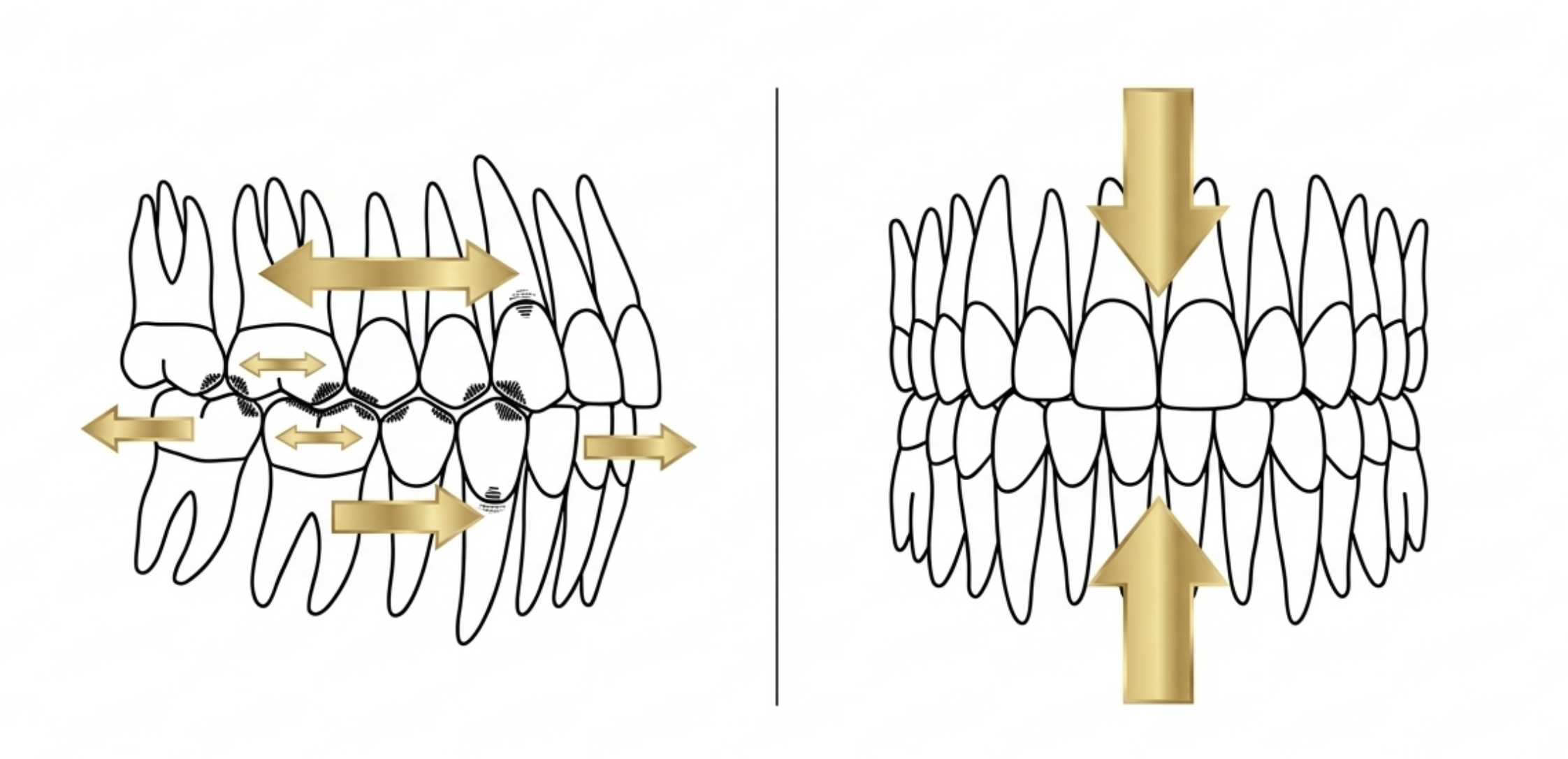
Grinding involves movement — the jaw slides back and forth or side to side, wearing teeth along their edges. Clenching involves sustained force — the jaw bites down hard and holds, compressing teeth vertically without lateral movement.
Both damage your teeth. Both can be addressed with an oral appliance. But the mechanics are different, the wear patterns are different, and the ideal appliance design is different. Buying a generic grinding guard when you’re primarily a clencher — or vice versa — means getting protection that isn’t optimised for what your jaw actually does.
This article explains the distinction, what it means for appliance selection, and how to choose the right night guard for clenching specifically.
Want to find the right Reviv appliance for your habit?
Use the how-to-choose guide →Clenching vs Grinding: What’s Actually Happening
To understand why appliance choice differs, it helps to understand the biomechanics of each habit.
Teeth grinding (bruxism)
Grinding involves rhythmic or semi-rhythmic lateral jaw movement during sleep. The jaw slides — forward and back, side to side, or in a circular pattern. This motion drags the upper and lower teeth across each other repeatedly, creating friction that wears down enamel along the biting edges and tooth surfaces.
The wear pattern from grinding is characteristic: flattened cusps, shortened teeth, and a smooth, polished look to worn surfaces. Over time it changes the shape of the teeth themselves.
Jaw clenching
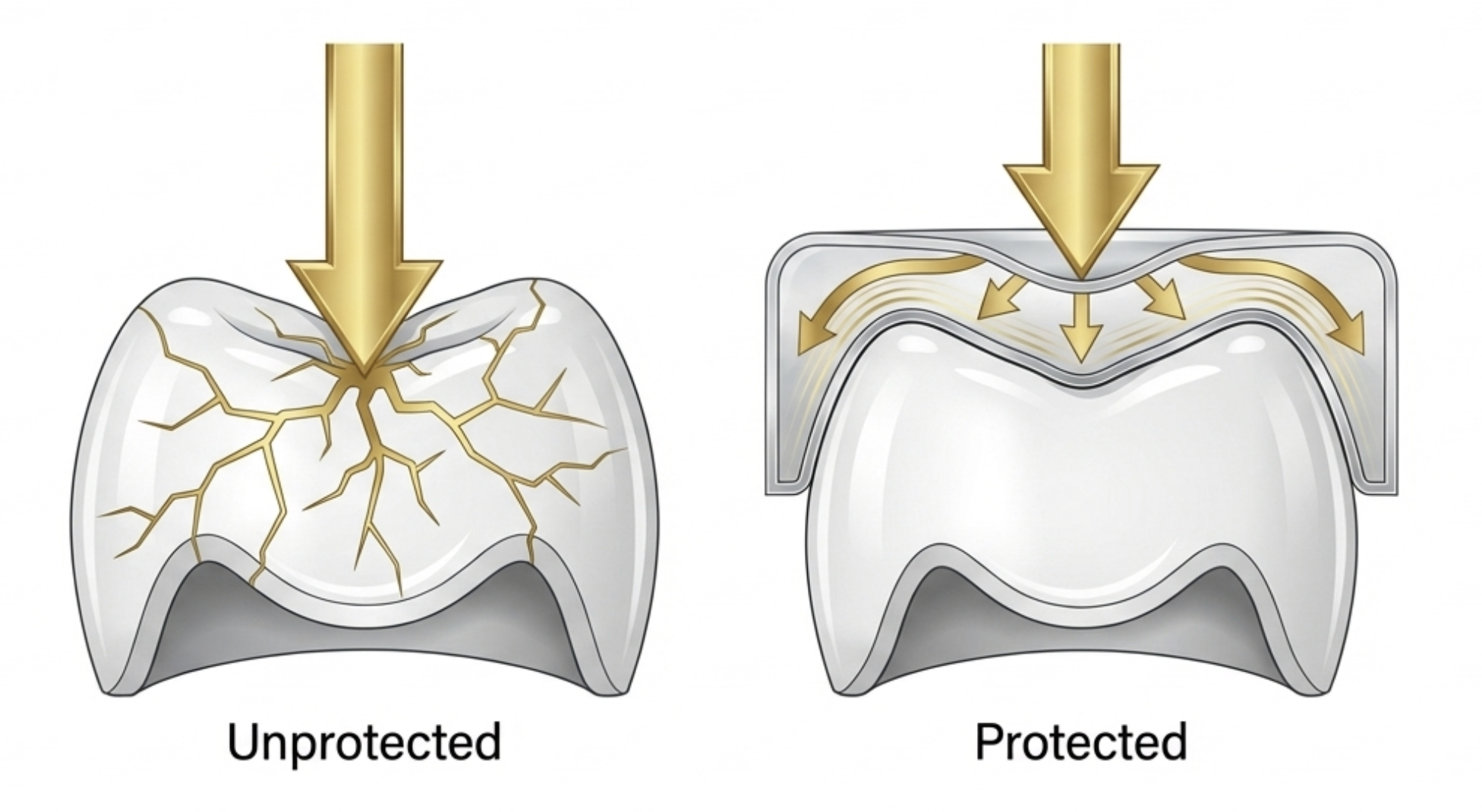
Clenching involves sustained, high-force biting without lateral movement. The jaw closes hard and holds — sometimes for extended periods. There’s no sliding, no friction in the same sense. The force is primarily compressive and vertical.
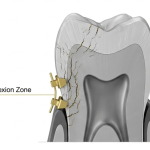
The wear pattern from clenching is different: stress fractures in enamel, cracks that run vertically down the tooth, micro-fractures at the gumline, and damage to existing dental work from compressive overload. Teeth don’t shorten in the same way as with grinding, but the structural damage can be equally serious.
Why many people have both
Sleep bruxism episodes often involve a combination of grinding and clenching. A grinding cycle might begin and end with a period of clenching. This is why many dentists describe patients as having “bruxism” as an umbrella term — but if you know which component dominates your pattern, you can make a more targeted appliance choice.
| Grinding | Clenching | |
|---|---|---|
| Jaw movement | Lateral — slides side to side / forward | Vertical — bites down and holds |
| Force type | Abrasive friction | Sustained compression |
| Wear pattern | Flattened cusps, smooth worn surfaces | Stress fractures, abfraction lesions |
| Audible? | Often — grating sound | Usually silent |
| Guard priority | Smooth flat surface, hard material | Compression resistance, adequate thickness |
Grinding and clenching are distinct mechanics requiring different appliance priorities.
How Clenching Damages Your Teeth
Clenching may be less dramatic-sounding than grinding, but its consequences are significant and often underestimated.
Compressive stress fractures. Sustained high biting force creates stress at the enamel surface. Over time this manifests as craze lines — fine surface cracks — and eventually deeper fractures. These are not immediately painful but become progressively more serious if clenching continues unprotected.
Cusp fractures. The pointed peaks of back teeth (cusps) are particularly vulnerable to compressive overload. Heavy clenchers are at elevated risk of cusp fractures — where a portion of the tooth breaks off — particularly on teeth that have existing fillings or restorations.
Restoration failure. Fillings, inlays, and crowns are all subject to the same compressive forces as natural tooth structure. Heavy clenchers tend to experience faster restoration failure, requiring more frequent dental work.
Root and bone stress. Extreme clenching force travels through the tooth into the periodontal ligament and surrounding bone. Chronic overloading can contribute to loosening of teeth and changes in the supporting bone structure over time.
Tooth sensitivity. Compressive stress at the gumline — where enamel meets the root — can cause a distinctive V-shaped wear pattern called abfraction, leading to sensitivity that can feel like a cavity but has a different cause.
What Makes a Good Night Guard for Clenching
Clenching-specific appliance requirements differ from grinding-specific ones in a few important ways.
Thickness and compression resistance
For clenching, the guard primarily needs to resist compression — the sustained vertical force of the bite. A guard that’s too thin will compress under heavy clenching force until it’s transferring load directly to your teeth. Adequate thickness — typically 2mm minimum for moderate clenchers, 3mm+ for heavy clenchers — ensures the appliance maintains its protective barrier under load.
Surface design
For grinding, a smooth flat surface is important — it allows the jaw to slide without catching. For clenching, even distribution of bite force across the full arch matters most. Some clenching-specific appliances are designed to distribute force more evenly, reducing the concentration of load on individual teeth or cusps.
Material hardness
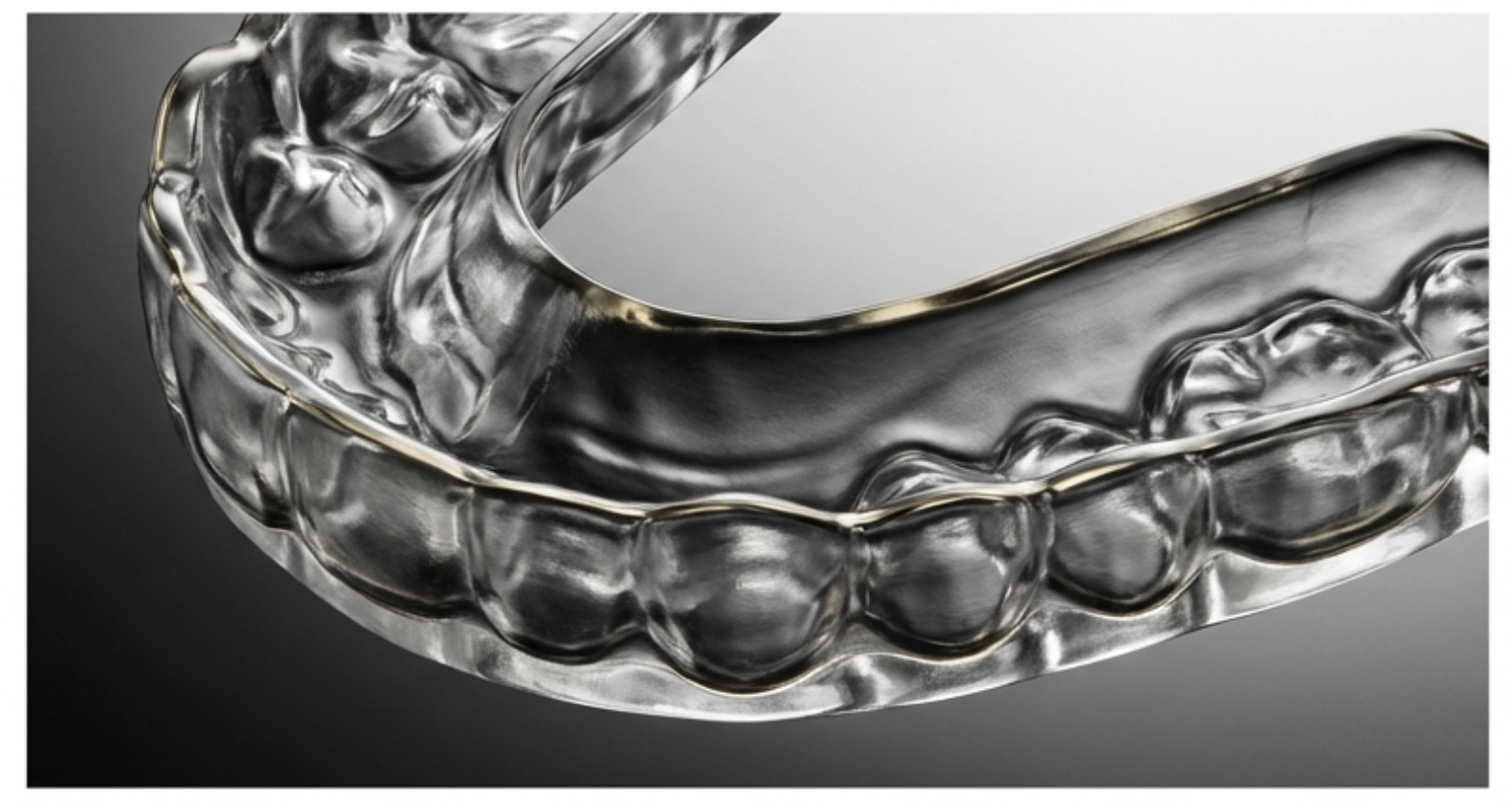
Hard acrylic remains the recommended material for significant clenching — it resists deformation under load. A soft guard under sustained clenching force will compress and may eventually allow enough load transfer to cause damage, particularly to existing dental work. For those who can’t tolerate hard guards, dual-layer designs (hard outer, soft inner) are a workable compromise.
Custom fit
Custom fit is especially important for clenching. When you clench, maximum bite force goes to whatever surfaces your teeth contact first. If the guard doesn’t fit your bite exactly, some teeth take disproportionate load — causing uneven wear and discomfort. An impression-based custom guard distributes force correctly across your full arch.
Daytime Clenching vs Nighttime Clenching: Different Interventions
The night guard conversation naturally focuses on sleep — but many clenchers do most of their clenching while awake, during the day.
Nighttime clenching
Nighttime clenching is addressed primarily with an oral appliance worn during sleep. The protective barrier is in place precisely when you can’t consciously monitor or interrupt the habit — you wear it, you’re protected.
Daytime clenching
Daytime clenching is more accessible to behavioural intervention because you’re conscious. Common approaches include:
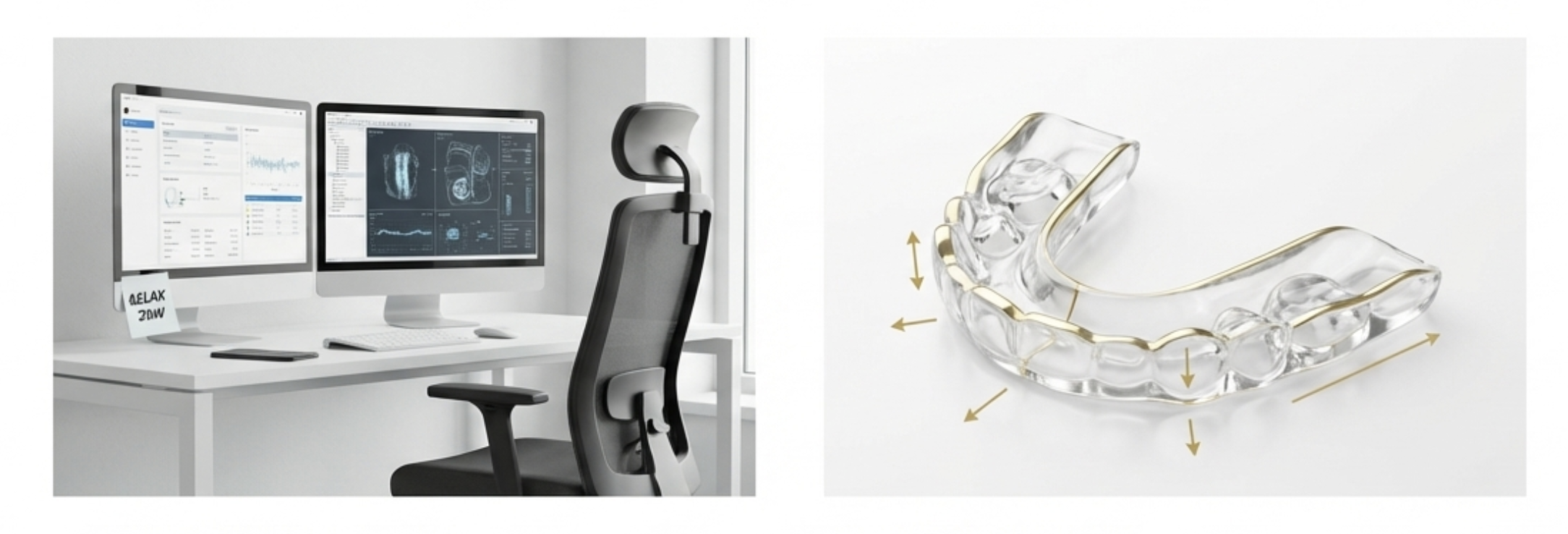
- Awareness reminders — a sticky note on your monitor or phone reminder to check jaw position and consciously relax
- The “lips together, teeth apart” habit — the correct resting jaw position has teeth slightly separated, not in contact. Practising this actively reduces clenching frequency for many people
- Stress management — daytime clenching is strongly linked to stress and concentration; reducing physiological arousal reduces episode frequency
- Physiotherapy — jaw muscle exercises and relaxation techniques can help significantly
A night guard doesn’t address daytime clenching directly — but many heavy daytime clenchers also clench at night, making nighttime protection part of a comprehensive approach regardless.
Signs Your Current Guard Isn’t Right for Clenching
If you’re already wearing an oral appliance but not getting adequate protection, look for these signs:
- The guard is visibly compressed or deformed in the bite area — it’s absorbing load but may not have enough material left to maintain protection
- You still wake with jaw tension or tooth soreness despite wearing it — the guard may be too soft or too thin for your bite force
- Your dentist continues to see new wear or cracking at check-ups — the guard isn’t distributing the clenching force adequately
- The guard feels like it has a “dead zone” where certain teeth contact it differently — a fit issue creating uneven load distribution
- You’re going through guards quickly — a sign the material isn’t matched to your clenching intensity
Think your current guard isn’t working? Compare options built for clenching protection.
Find the right Reviv appliance →Clenching and Existing Dental Work: Extra Reasons to Get This Right
If you have crowns, bridges, veneers, implants, or significant fillings, the stakes for clenching protection are higher than for someone with fully natural teeth.
Dental restorations are engineered to withstand normal bite forces — not the sustained, elevated compressive force of heavy clenching. Ceramic restorations — porcelain crowns, veneers — are particularly vulnerable to fracture under heavy clenching load.
Protecting existing dental work is one of the strongest practical arguments for a well-fitted clenching guard. The cost of a lost crown, a fractured veneer, or a failed implant far exceeds the cost of a quality appliance. If you have significant restorative dental work and clench heavily, make sure your dentist knows — and ensure they’ve factored it into their appliance recommendation.
Choosing the Right Night Guard for Clenching: A Decision Framework
Not sure which category you fall into?
The Reviv how-to-choose guide walks you through it →The Bottom Line
Clenching and grinding are different problems. They share the same solution — a well-fitted oral appliance worn at night — but the specification of that appliance should reflect the mechanics of what your jaw actually does.
For clenching specifically, the priorities are compression resistance, adequate thickness, and precise fit across your full arch. Hard or dual-layer material, custom fit, and appropriate thickness for your force level are the non-negotiables.
If you’re not sure whether you clench or grind — or both — a conversation with your dentist about your wear pattern will point you in the right direction. From there, the Reviv how-to-choose guide helps you match the right appliance to your specific pattern, or browse the full Reviv range of FDA-registered Class I options built for grinding and clenching protection.

Frequently Asked Questions
What is the difference between a clenching guard and a grinding guard?
Grinding involves lateral jaw movement that wears teeth along their edges, while clenching involves sustained vertical force with no lateral movement. A clenching guard needs to prioritise compression resistance and adequate thickness, whereas a grinding guard needs a smooth flat surface to allow lateral jaw movement without catching.
Can a regular night guard be used for clenching?
A regular soft night guard is insufficient for moderate-to-heavy clenching. It compresses under sustained vertical force, progressively transferring load back to your teeth. A hard or dual-layer guard with adequate thickness (2–3mm for moderate clenchers, 3mm+ for heavy clenchers) is the appropriate specification for confirmed clenching habits.
How do I know if I clench or grind my teeth?
Grinding typically produces audible sounds during sleep, wear facets on tooth surfaces, and flattened cusps. Clenching is usually silent, produces stress fractures and abfraction lesions (V-shaped notches at the gumline), and causes restoration failure. Many people do both — your dentist can identify which pattern dominates from your wear distribution.
Does a night guard help with daytime clenching?
A night guard does not directly address daytime clenching — it is worn during sleep and cannot interrupt a conscious waking habit. Daytime clenching is better managed through awareness techniques (the “lips together, teeth apart” habit), stress management, and physiotherapy. However, many daytime clenchers also clench at night, so nighttime protection remains important.
Is clenching worse for teeth than grinding?
Both are damaging but in different ways. Grinding causes progressive enamel erosion and tooth shortening from abrasive friction. Clenching causes compressive stress fractures, cusp fractures, and accelerated failure of dental restorations. Neither is categorically worse — the consequences depend on intensity, duration, and whether tooth protection is in place.