


Which type of mouthguard is best?
Hard vs soft night guard — what’s the difference?
What is a dual-laminate guard?
Upper or lower guard — which is better?
What is an ultra-thin daytime guard?
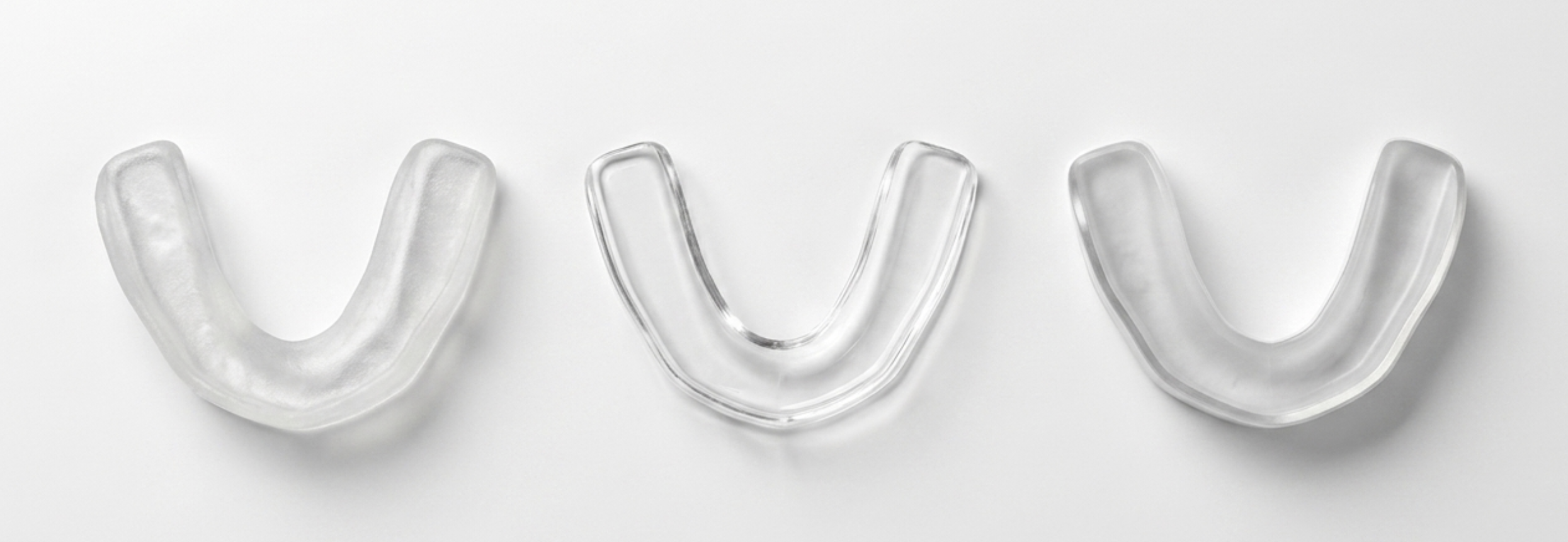
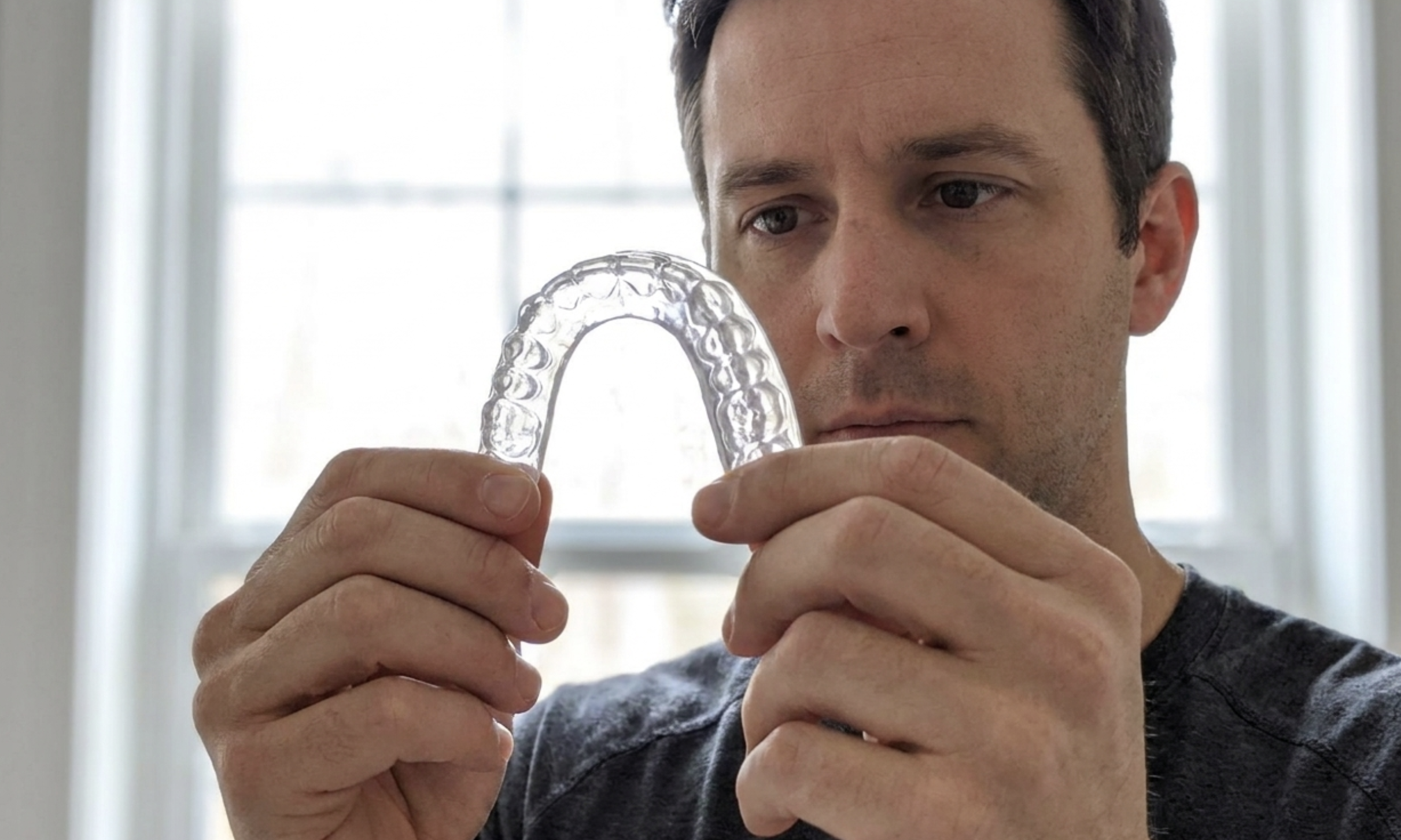
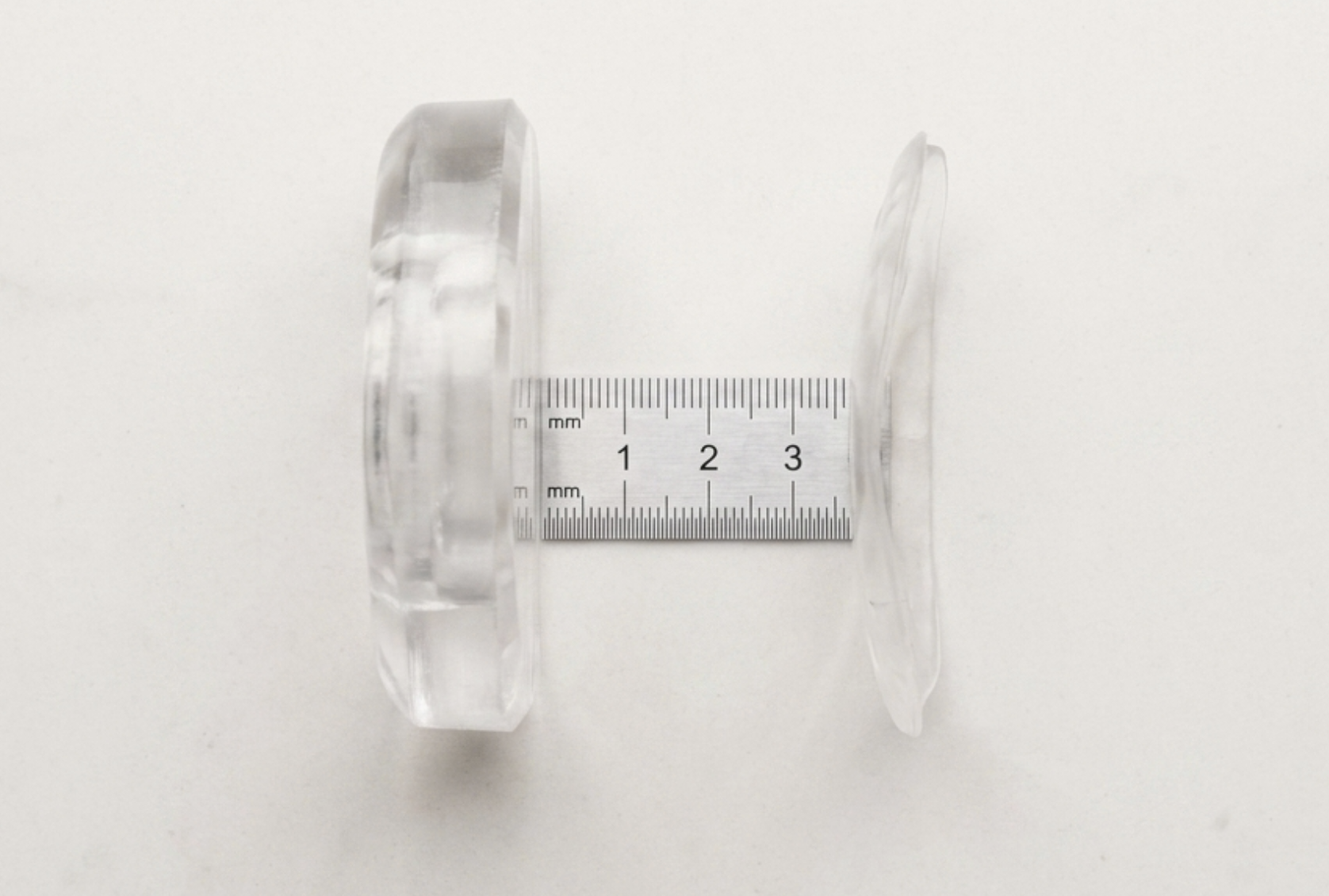
Most mouth guard comparisons reduce to the same three-type framework: soft, hard, dual-laminate. That’s a useful starting point, but it leaves out two variables that often matter more than material type alone: thickness, and whether you’re buying for daytime or nighttime use. A “soft guard” that’s 4mm thick behaves very differently from a 1mm soft guard. A “hard guard” for nighttime grinding is a completely different object from a “hard guard” for daytime clenching at a desk.
This guide covers all five meaningful categories — soft, hard acrylic, dual-laminate, ultra-thin daytime, and biomechanical — with the underlying material science for each, the upper vs lower choice, and a decision framework that maps your grinding pattern to the right type.
Material Is Not the Only Variable: The Full Specification
When choosing a mouth guard type, material is the primary decision but not the only one. The complete specification involves three variables that interact:
- Material — soft thermoplastic, hard acrylic, dual-laminate, or specialty biomechanical
- Thickness — typically 1mm to 4mm, affecting jaw loading, comfort, and daytime vs nighttime suitability
- Arch coverage — full arch (molar to molar) vs partial, and upper vs lower
The same material in different thicknesses serves different purposes. A 1mm hard acrylic guard is a daytime appliance. A 3mm hard acrylic guard is a heavy grinder’s nighttime protection. Treating them as the same “type” misses the distinction.
Soft Guards: Thermoplastic, Flexible, Comfort-First
Soft guards are made from ethylene-vinyl acetate (EVA) or similar thermoplastic polymers. The material is flexible and compressible — it conforms easily to tooth surfaces, provides immediate comfort, and is the most widely available type in OTC form.
What soft material actually does
Soft thermoplastic absorbs energy through compression and deformation. When grinding force is applied, the material compresses — the thickness decreases slightly and the material spreads laterally. This distributes force across the contact area and cushions the impact on tooth surfaces. For lateral grinding (side-to-side movement), this works reasonably well. The material absorbs the abrasive movement and wears through progressively rather than cracking.
The clenching problem
For vertical clenching force, the compressibility is a liability. When the jaw compresses a soft guard, the proprioceptive feedback is the same as compressing any soft object — the system detects the give and the muscles continue loading to compress it further. This can increase the total force generated during clenching, worsening morning jaw soreness rather than relieving it. Identifying whether your primary pattern is grinding or clenching matters significantly for this choice.
Who soft guards suit
- Light grinders — any barrier provides adequate protection at low force volumes
- First-time guard wearers testing whether they can tolerate wearing one
- People with dental sensitivity who find hard guards create uncomfortable pressure
- Not appropriate for confirmed moderate-to-heavy clenchers
Expected lifespan: 3–12 months for light grinders; weeks to months for heavy grinders.
Hard Acrylic Guards: Rigid, Durable, Distributes Load
Hard guards are made from polymethyl methacrylate (PMMA) — the same material used for many dental restorations. It’s a rigid acrylic that doesn’t compress under normal grinding and clenching forces. The material is significantly harder than tooth enamel, which means it absorbs and distributes force rather than deforming under it.
What hard acrylic actually does
Because the material doesn’t compress, the guard acts as a stable platform for the opposing arch to contact. Force is distributed evenly across all the teeth that contact the guard surface, rather than concentrating at the high contact points. This is why custom fit matters so much for hard guards — a hard guard with poor fit creates uneven contacts that concentrate force on specific teeth, which is more problematic than with soft guards where the material accommodates slight fit imprecision.
The adjustment period
Hard guards require an adjustment period of 1–3 weeks that soft guards don’t. The rigid material doesn’t conform to your teeth — your jaw and tongue adapt to the guard rather than the guard adapting to your bite. Some people experience increased saliva production and general jaw awareness during this period. Most people find the guard becomes unremarkable by night 14–21 with consistent wear.
Who hard acrylic suits
- Moderate to heavy grinders who have worn through soft guards
- Clenchers — the rigid surface doesn’t stimulate additional muscle loading
- People who have dental work (crowns, veneers, implants) needing consistent force distribution
- Anyone who wants the longest lifespan from a single guard investment
Expected lifespan: 2–5 years with proper care. The most durable option in any price tier.
Dual-Laminate Guards: The Composite Approach
Dual-laminate guards bond two materials: a soft thermoplastic inner layer that contacts the teeth, and a hard acrylic outer layer that forms the opposing contact surface. The concept is to deliver comfort from the inner layer and durability from the outer.
What dual-laminate actually does
The inner soft layer provides a conforming fit against the tooth surfaces — less pressure point sensitivity than a fully hard guard. The outer hard layer prevents the compression problem that makes pure soft guards problematic for clenchers. In practice, the hard outer surface is what resists the grinding and clenching force; the soft inner layer is primarily a comfort and fit variable.
The limitation
Over 12–18 months of consistent wear, the soft inner layer can compress and subtly refit, causing the bite geometry to drift slightly. The guard also develops uneven wear more quickly than a pure hard guard because the soft inner layer is less dimensionally stable. Dual-laminate guards typically last 1–3 years — more durable than soft guards, less than pure hard acrylic.
Who dual-laminate suits
- Moderate grinders who found hard guards genuinely uncomfortable after a full adjustment period
- People who need more durability than soft provides but can’t commit to full hard acrylic
- The “Goldilocks” tier — common recommendation for people without a strong directional preference
Expected lifespan: 1–3 years depending on grinding intensity.
Ultra-Thin Daytime Guards: A Separate Category
Daytime guards are not simply thinner versions of nighttime guards. They are a distinct appliance category with different design requirements:
- Thickness: 1mm or less — thin enough for normal speech and swallowing
- Material: Hard acrylic or hard thermoplastic — soft material at 1mm doesn’t provide meaningful protection and compresses immediately under daytime clenching force
- Wear pattern: On-and-off throughout the day, not static overnight — needs to seat and remove easily
- Discretion: Clear and slim enough to be non-obvious in professional or social settings
A standard nighttime guard (2–4mm) is too thick for daytime use — it affects speech, makes swallowing feel different, and is visually obvious. Using a nighttime guard during the day is not a substitute for a purpose-designed daytime appliance.
Biomechanical Guards: Engineered Occlusal Surface
A fifth category that doesn’t fit neatly into the soft/hard/dual-laminate framework: guards designed with a specific engineered bite surface geometry rather than a flat occlusal surface. The principle is that the contact surface of the guard influences how the jaw closes under force — directing loading away from the molar concentration points that take disproportionate grinding force.
Reviv’s R1, R2, R3, and RD1 operate on this principle. Rather than passively absorbing force, the occlusal surface geometry is engineered to distribute compressive load differently than flat acrylic would. R1 is the soft-material entry model; R2 is dual-layer for the combined grinding-and-clenching pattern; R3 is the hard maximum-protection model; RD1 is the ultra-thin daytime version.
Upper vs Lower: Which Arch to Cover
Most guards cover the upper arch. This is the default for several mechanical reasons: the upper arch is larger and provides more surface area for the guard to engage, which produces a more stable fit under lateral grinding force. Upper guards also tend to be more stable when the jaw moves side to side.
Lower guards are smaller and less intrusive against the tongue — the profile sits lower in the mouth with less material impinging on the palate or tongue space. Some people find lower guards significantly more comfortable, particularly those who are sensitive to the sensation of something against the palate.
The clinical evidence doesn’t show a strong superiority of one over the other for protection outcomes. The choice is primarily comfort-driven. If you’ve tried upper guards and consistently found them intolerable — removing them in sleep, waking with discomfort, unable to complete the adjustment period — try lower before concluding that guards don’t work for you. Most DTC labs offer both options from a single impression kit.
The Full Comparison
| Type | Material | Typical thickness | Best for | Not for | Lifespan |
|---|---|---|---|---|---|
| Soft | EVA thermoplastic | 2–4mm | Light grinders, comfort priority | Clenchers, heavy grinders | 3–12 months |
| Hard acrylic | PMMA acrylic | 1.5–3mm | Heavy grinders, clenchers, dental work protection | People who can’t complete adjustment period | 2–5 years |
| Dual-laminate | Soft inner + hard outer | 2–3mm | Moderate grinders, hard guard intolerant | Maximum-force heavy grinders | 1–3 years |
| Ultra-thin daytime | Hard acrylic or thermoplastic | ≤1mm | Daytime clenchers, discrete wear | Heavy nighttime grinding | 6–18 months |
| Biomechanical | Varies by model | Varies | Combined grinding-clenching pattern | Varies by model selected | 1–3 years |
Which Type Is Right for You?
Light grinder, no dentist-flagged wear, OTC guards last 4+ months
Soft OTC or soft custom. The economics of a hard custom guard are harder to justify at this severity. Start with soft, and upgrade if your wear rate or symptoms indicate you’re grinding harder than you thought.
Moderate grinder, dentist has mentioned wear, going through soft guards in under 3 months
Dual-laminate custom. This is the most commonly appropriate tier for people who have confirmed their bruxism habit but found hard guards uncomfortable during the adjustment period. The comfort-to-durability balance fits most moderate grinding patterns well.
Heavy grinder, cracked guards, significant enamel damage, dentist alarmed
Hard acrylic custom. This is the only material that will hold up to the force volume a heavy grinder generates over 2–5 years. Dual-laminate will provide better durability than soft but will still need replacement more frequently than hard at heavy grinding force. Commit to the 2–3 week adjustment period — the eventual improvement in morning symptoms is worth it for most people.
Primarily a clencher rather than a grinder
Hard acrylic or dual-laminate — not soft. The flat, rigid contact surface is critical for clenchers. See the full explanation of why soft guards can worsen clenching symptoms.
Daytime clencher — stress, concentration, or medication-driven
Ultra-thin hard custom — a purpose-designed daytime appliance, not a thinner version of a nighttime guard. This is a distinct product category with different specification requirements. If you also grind at night, you need both: one for each pattern.
Frequently Asked Questions
Which type of mouthguard is best for teeth grinding?
There is no single best type — it depends on grinding severity and pattern. Soft thermoplastic for light grinders who prioritise comfort and immediate wearability. Hard acrylic for heavy grinders and clenchers who need maximum durability and force distribution. Dual-laminate for moderate grinders who find hard guards uncomfortable. Ultra-thin hard for daytime clenchers. The brief for Article #23 is matching the type to the pattern, not identifying a universal winner.
What is the difference between a hard and soft night guard?
Hard acrylic (PMMA) is rigid and doesn’t compress under force — it distributes grinding and clenching load evenly across the arch and lasts 2–5 years. Soft thermoplastic (EVA) is flexible and compresses under load — comfortable immediately, but can stimulate more muscle activity in clenchers and wears through in months rather than years. For heavy grinding and clenching, hard is significantly better. For light grinding where compliance is the main challenge, soft can be adequate.
What is a dual-laminate night guard?
A guard with a soft inner layer (against the teeth for comfort) and a hard outer layer (resisting wear and grinding force). Aims to combine the comfort advantages of soft with the durability and non-compressibility of hard. Most appropriate for moderate grinders who found full hard guards genuinely uncomfortable to wear consistently after a proper adjustment period.
Should I get an upper or lower night guard?
Upper guards are more stable under lateral grinding force and are the default. Lower guards are less bulky and some people find them significantly more comfortable. Neither is consistently better for protection outcomes. If you’ve persistently struggled with upper guards — removing them during sleep, unable to complete adjustment — try lower before giving up on guards entirely.
What is an ultra-thin daytime mouth guard?
Hard acrylic at 1mm or less, designed specifically for daytime wear where normal speech and discrete appearance are requirements. A different product category from nighttime guards — not simply a thinner nighttime guard. Standard nighttime guards (2–4mm) cannot substitute for a purpose-designed daytime appliance.