
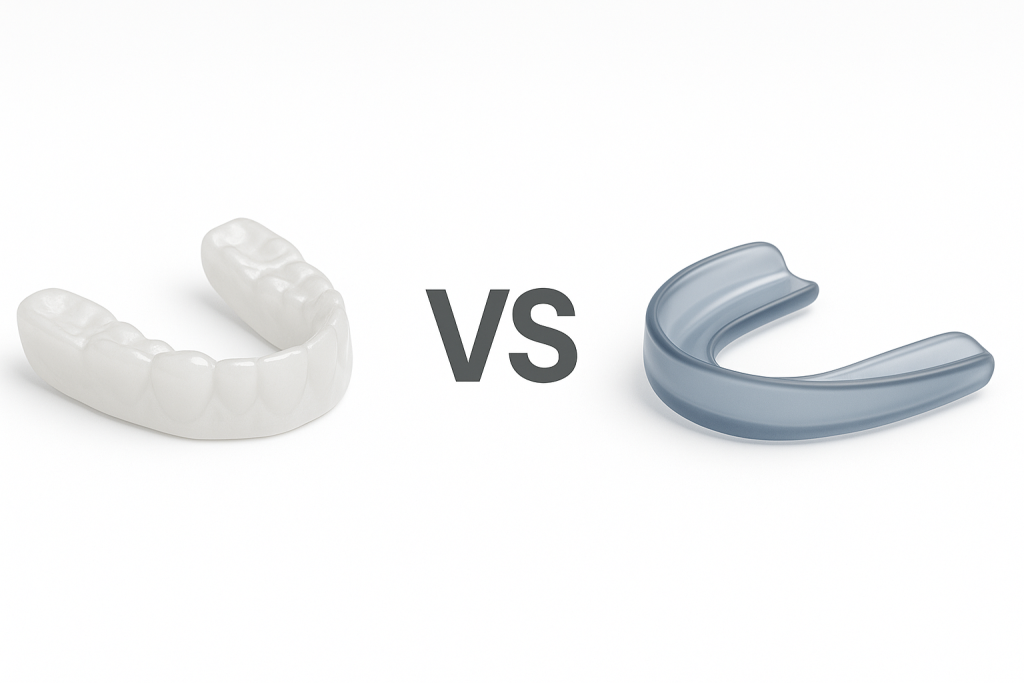

You have been told you need a “night guard” for your grinding. Or maybe it was a “mouthguard.” Or perhaps someone mentioned an “occlusal splint.” The terminology around jaw protection devices is confusing, and it is not just semantics—the words people use often reveal different philosophies about what the device is supposed to do.
Understanding the real differences between these terms can help you make a more informed decision about what type of protection is right for you. More importantly, it can help you avoid investing in a device that protects your teeth but does nothing for your pain.
The Traditional Definitions
Mouthguard: Traditionally, this term refers to a protective device worn during sports or physical activities to prevent injury to the teeth, lips, and jaw. Think of what athletes wear during contact sports. The primary goal is impact protection.
Night Guard: This term typically refers to a device worn during sleep to prevent teeth grinding (bruxism) and protect the teeth from wear. The focus is on creating a barrier between the upper and lower teeth.
Occlusal Splint: This is a more technical term often used in professional settings. It refers to a device that covers the biting surfaces of the teeth and is intended to address jaw joint issues, muscle tension, or bite problems in addition to protecting the teeth.
The Problem with These Definitions
The issue is that these traditional definitions focus almost exclusively on protection—protecting teeth from impact, protecting teeth from grinding, protecting teeth from wear. But if you are dealing with TMJ pain, jaw tension, or chronic headaches, simply protecting your teeth is not enough. You need a device that addresses the underlying biomechanical issues causing the problem.
This is where the terminology starts to break down and where a new category of device has emerged.
The New Category: Physics-Based Therapeutic Mouthguards
In recent years, a new approach has developed that goes beyond simple protection. These devices are designed with an understanding of jaw biomechanics and aim to guide the jaw into a more natural, balanced position. They are not just barriers; they are therapeutic tools.
A physics-based mouthguard like Reviv falls into this category. It is called a mouthguard because you wear it in your mouth, but its purpose is fundamentally different from a traditional night guard. Instead of just protecting your teeth, it works to de-stress your jaw muscles, reduce clenching forces, and promote healthier jaw alignment.
Key Differences: Protection vs Therapy
| Feature | Traditional Night Guard | Physics-Based Mouthguard |
|---|---|---|
| Primary Goal | Protect teeth from grinding | Address biomechanical cause of grinding |
| Material | Hard, rigid acrylic | Flexible, adaptive material |
| Mechanism | Creates barrier between teeth | Guides jaw to balanced position |
| Effect on Muscles | No direct effect; muscles still clench | Reduces muscle tension and clenching force |
| Effect on Pain | Minimal; protects teeth only | Significant; addresses root cause |
| Fit | Custom-molded to existing bite | Universal fit that guides to ideal position |
| Cost | $600 – $1,200+ | Significantly more affordable |
When You Need Protection vs When You Need Therapy
You might benefit from a traditional night guard if:
- Your primary concern is preventing tooth damage from grinding.
- You do not experience significant jaw pain, headaches, or muscle tension.
- Your jaw alignment is already good, and you just need a protective barrier.
You need a physics-based therapeutic mouthguard if:
- You wake up with jaw pain, headaches, or facial tension.
- You have tried a traditional night guard and it did not help your pain.
- You experience clicking, popping, or limited jaw movement.
- Your grinding is severe and does not seem to improve with stress management alone.
- You want to address the root cause of your grinding, not just protect your teeth from it.
The “Splint” Confusion
The term “splint” adds another layer of confusion. In the context of jaw health, a splint is supposed to stabilize and support the jaw joint, similar to how a splint stabilizes a broken bone. However, many devices called splints are just hard night guards by another name.
A true therapeutic splint should do more than just protect—it should actively support healthier jaw function. This is where the physics-based approach shines. By using a flexible material that allows for slight, controlled movement, it acts as a true splint, guiding the jaw toward a more stable, comfortable position.
Why the Material Matters More Than the Name
Ultimately, the name matters less than the material and design philosophy. A hard, rigid device—whether you call it a night guard, mouthguard, or splint—will function the same way: it will protect your teeth but do little for your muscles or pain.
A flexible, physics-based device—regardless of what you call it—will function differently: it will protect your teeth while also addressing the biomechanical issues that cause the grinding in the first place.
What to Ask Before You Buy
When someone recommends a device for your jaw, ask these questions:
- What is the primary goal of this device? If the answer is only “to protect your teeth,” it may not address your pain.
- What material is it made from? Hard acrylic or flexible/adaptive material?
- How does it work? Does it just create a barrier, or does it guide the jaw into a better position?
- Will it help with my pain and muscle tension, or just prevent tooth damage?
- What is the cost, and what is included? Custom fitting, follow-up adjustments, replacement guarantees?
The Bottom Line
Do not get caught up in the terminology. Whether it is called a mouthguard, night guard, or splint, what matters is whether it addresses the root cause of your problem. If you are dealing with pain, tension, and chronic grinding, you need more than a protective barrier—you need a therapeutic device that works with your jaw’s natural mechanics.
A physics-based mouthguard like Reviv represents a new approach that goes beyond simple protection to provide real, lasting relief. It is not just about what you call it; it is about what it actually does for your jaw health.
Ready to move beyond outdated terminology and find a solution that actually works? Discover the difference a physics-based approach can make. Join our community to learn from others who have made the switch and found real relief.
