
Walk into any pharmacy and you’ll find guards labelled “night guard.” Search online and you’ll find “bruxism mouth guard.” Ask your dentist and they might say “occlusal guard” or “bite splint.”
Same thing? Different things? Does it matter which term you use?
It matters more than most people realise. While these terms often describe overlapping products, there are real differences in design intent, material, and who each type is built for. Buying a generic night guard when you need a bruxism-specific appliance — or vice versa — can mean wasted money and inadequate protection.
This article cuts through the terminology and tells you exactly what each appliance is, how they differ, and which one is right for you.
Already know you have bruxism?
See how the Reviv range is designed for grinding protection →First: What Is Bruxism?
Bruxism is the clinical term for teeth grinding or jaw clenching that occurs outside of normal chewing activity. It comes in two forms:
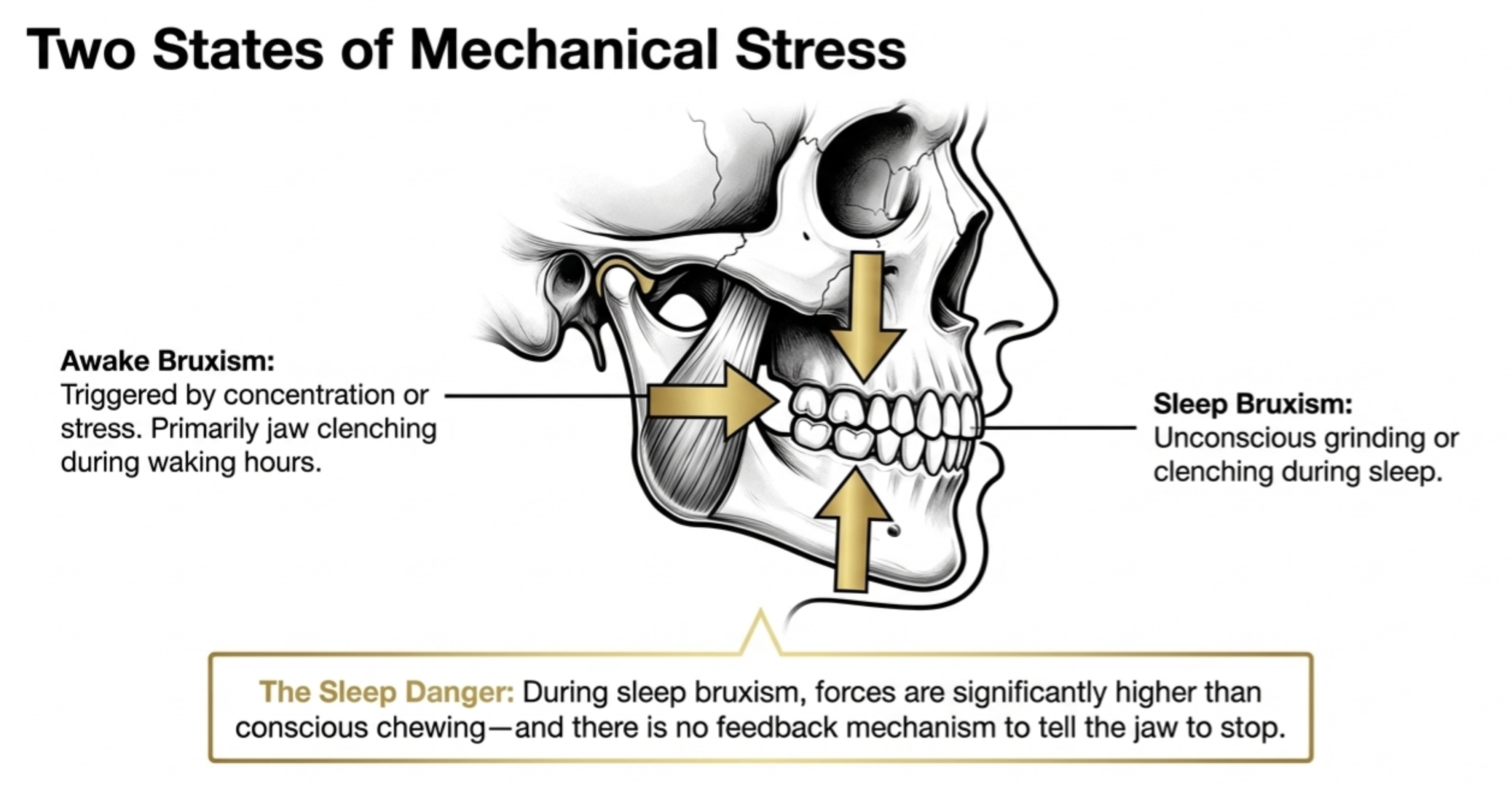
- Sleep bruxism: Grinding or clenching that happens unconsciously during sleep. Most people have no idea they’re doing it.
- Awake bruxism: Jaw clenching during waking hours, often triggered by concentration, stress, or certain medications.
Both forms put abnormal mechanical stress on the teeth. Sleep bruxism tends to be more damaging because the forces involved can be significantly higher than conscious chewing — and there’s no feedback mechanism to tell you to stop.
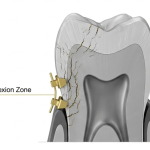
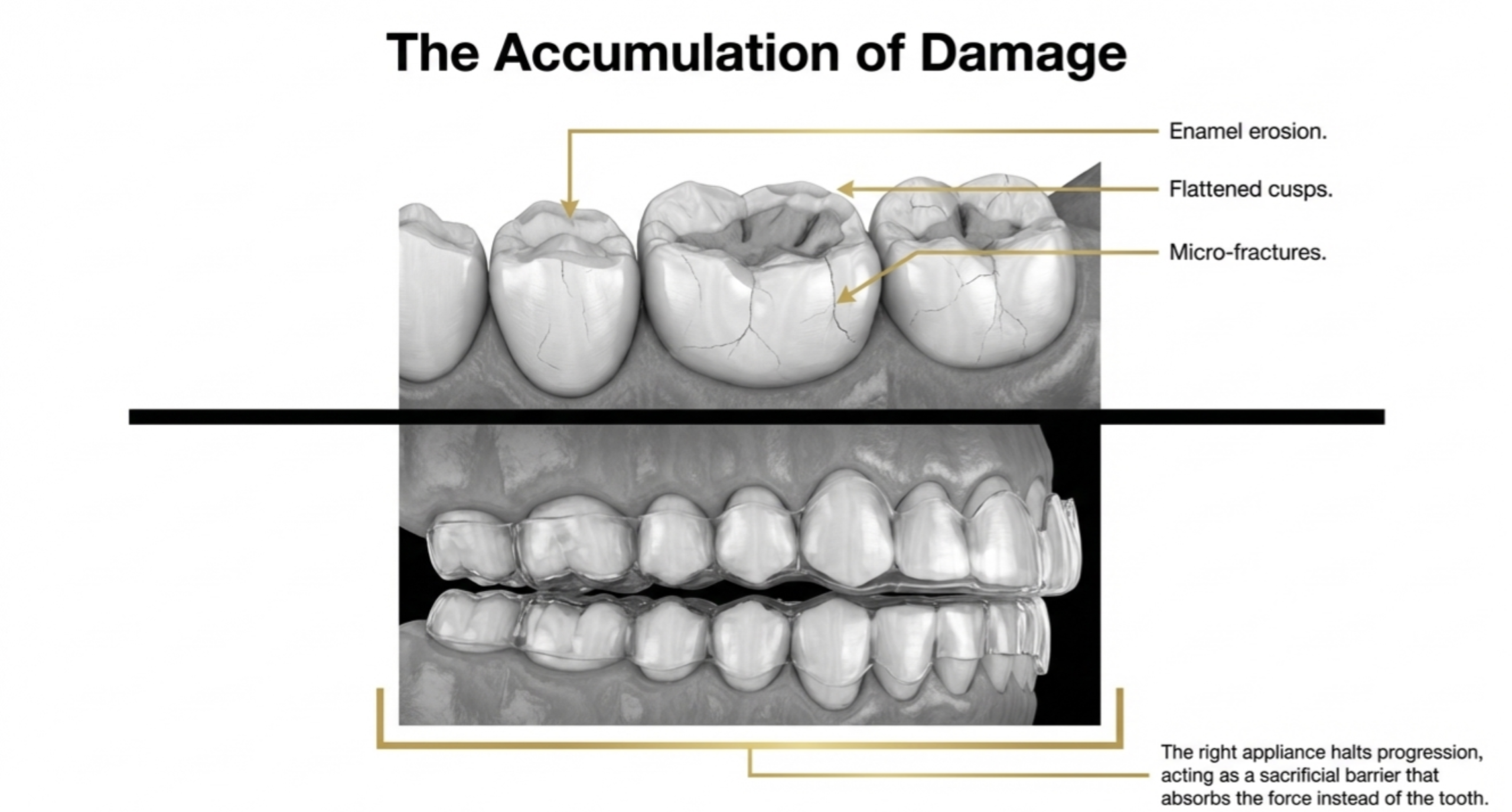
The dental consequences of untreated bruxism accumulate slowly: enamel erosion, tooth sensitivity, flattened cusps, and in severe cases, cracked or fractured teeth.
An oral appliance — whether it’s called a bruxism mouth guard, a night guard, or something else — is the primary protective measure. The terminology can be confusing, but the goal is the same: put a barrier between your teeth so the appliance absorbs the force instead of your enamel.
“Night Guard” vs “Bruxism Mouth Guard”: Is There Actually a Difference?
In everyday use, night guard and bruxism mouth guard often refer to the same product. Both describe an oral appliance worn during sleep to protect teeth from grinding force. The terminology is largely interchangeable in the consumer market.
That said, the framing carries subtle differences worth understanding:
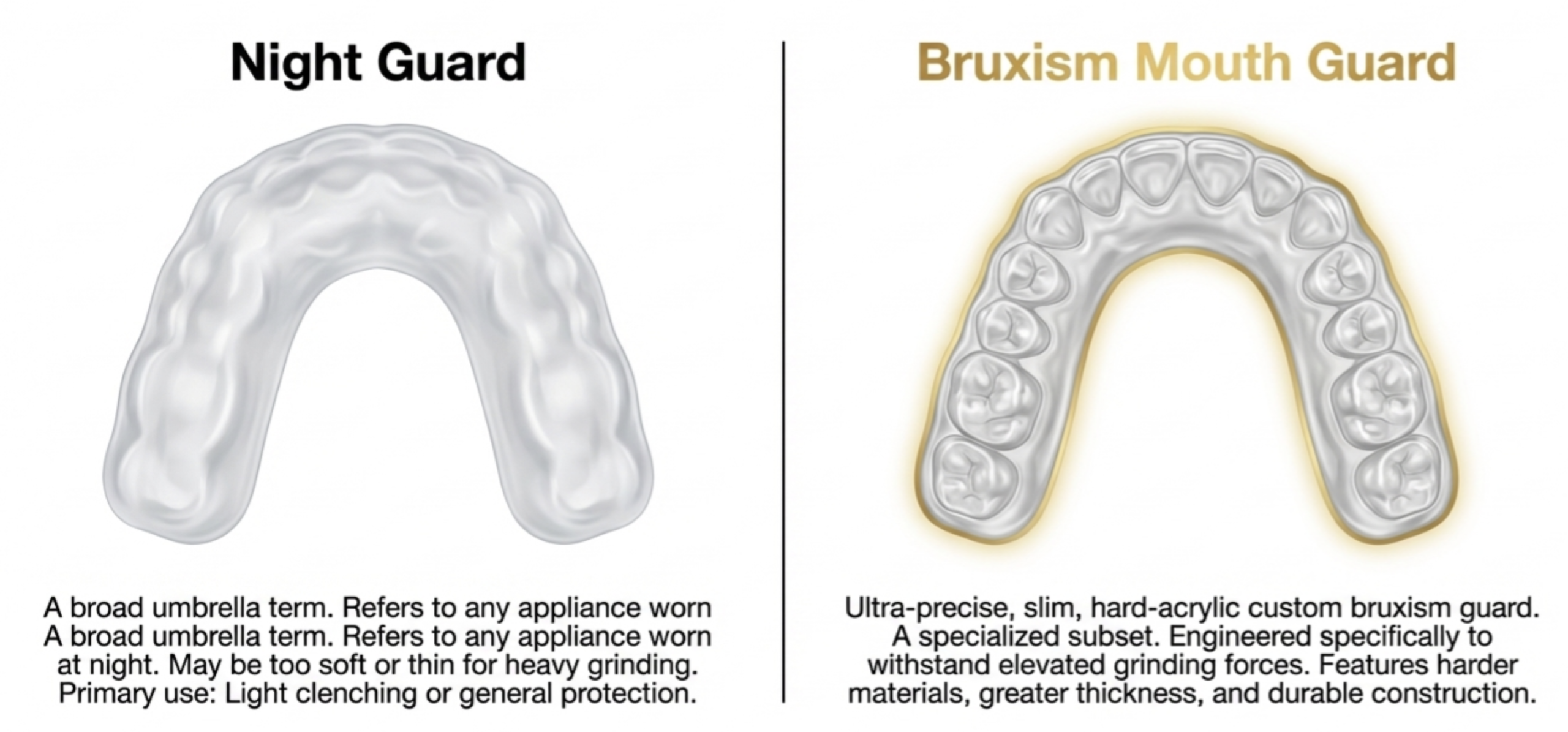
Night guard is a broader term. It describes any appliance worn at night, which could include guards for clenching, grinding, or even just general tooth protection. Not every night guard is specifically engineered with bruxism in mind.
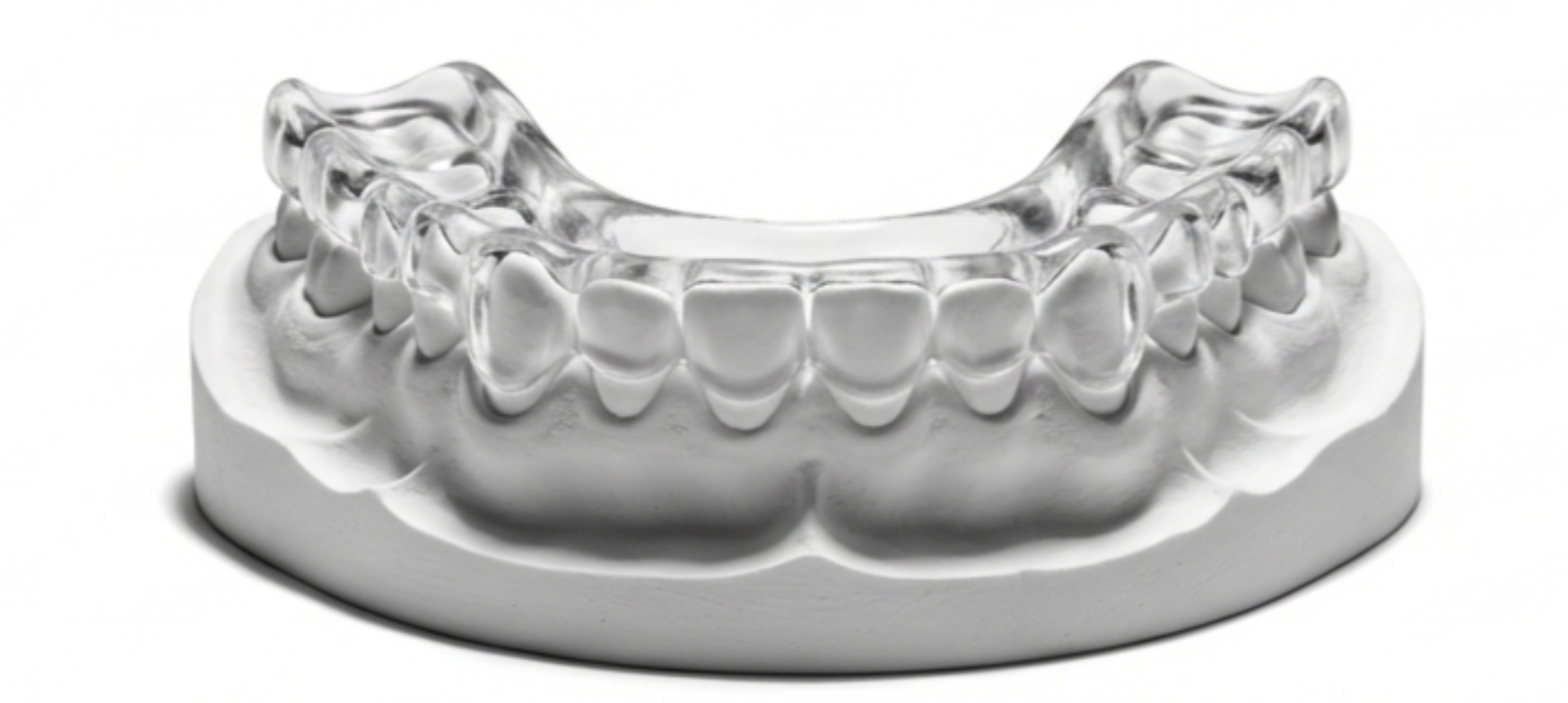
Bruxism mouth guard implies a product designed specifically to withstand and absorb the elevated forces associated with teeth grinding. This framing typically points toward harder materials, greater thickness, and more durable construction than a basic night guard designed for light clenching.
When you’re shopping specifically for bruxism protection, look for these indicators — not just the label. A guard marketed as a “night guard” may be entirely appropriate, or it may be too soft, too thin, or too generic for a confirmed grinding habit.
The Spectrum of Oral Appliances: Where Each One Fits
Rather than treating this as a simple either/or, it helps to understand the full range of appliances and where bruxism-specific protection sits within it.
| Appliance type | Primary purpose | Bruxism protection level |
|---|---|---|
| Sport mouthguard | Impact protection during activity | Low — not designed for sustained grinding force |
| Standard night guard (soft) | Light nighttime grinding / clenching | Low to moderate — insufficient for heavy grinders |
| Bruxism mouth guard (hard/dual) | Moderate to heavy sleep bruxism | High — designed specifically for grinding force |
| Occlusal splint | Bruxism + bite stabilisation | High — typically dentist-prescribed |
| Mandibular advancement device | Snoring / mild sleep apnea | Varies — not primarily a grinding guard |
For confirmed bruxism, you want something in the middle two rows.
The key distinction between a standard soft night guard and a bruxism-specific appliance is material hardness and construction thickness — not necessarily the label on the box.
Material: The Most Important Difference
Of all the variables to evaluate, material is the one that makes or breaks protection for confirmed bruxism sufferers. If there’s one thing that genuinely separates an adequate appliance from an inadequate one, it’s this.
Soft guards
Soft, flexible guards are widely available, comfortable to wear initially, and very commonly sold as “night guards.” They work well for light clenchers and people who are new to wearing an oral appliance.
For bruxism involving moderate or heavy grinding, soft material has a critical flaw: it can stimulate more grinding. The jaw senses the pliable surface and increases bite force to work through it. Many bruxism patients report chewing through soft guards in weeks. The guard wears out faster than the grinding habit — and while it’s wearing, the protection it offers is diminishing.
Hard acrylic guards
Hard acrylic guards don’t flex or deform under grinding pressure. They distribute force evenly across the surface, resist compression, and typically last 1–3 years even under heavy use. They take longer to adjust to — most wearers need 1–3 weeks before the guard feels unremarkable — but for genuine bruxism, they provide substantially better protection over time.
Dual-layer guards
Dual-layer designs pair a hard outer shell with a softer inner lining. The inner layer cushions the fit for comfort; the outer layer resists deformation under grinding force. These are often a good fit for people who found hard guards too uncomfortable but need more durability than a soft guard provides.
Custom vs OTC: The Fit Question
Both night guards and bruxism mouth guards come in OTC and custom-fitted versions. For bruxism specifically, however, the argument for custom fit is stronger than for any other use case.
Here’s why: grinding force is not evenly distributed across the arch. Depending on your individual bite pattern, certain teeth take more load than others. A poorly fitting guard creates pressure points — areas where the appliance concentrates force on specific teeth rather than distributing it. This can accelerate wear on those teeth and create jaw discomfort that makes the guard unwearable.
A custom-fitted guard, fabricated from an impression of your actual bite, distributes pressure the way your bite naturally loads. It’s more comfortable, more protective, and significantly more durable.
| OTC boil-and-bite | Custom mail-order | Dentist-fabricated | |
|---|---|---|---|
| Fit | Approximate | Precise | Most precise |
| Material choice | Usually soft only | Soft, hard, or dual | Soft, hard, or dual |
| Lifespan (heavy grinder) | Weeks to months | 1–2 years | 1–3 years |
| Cost | $20–$60 | $80–$200 | $300–$800+ |
| Best for bruxism? | Light only | Moderate to heavy | Severe / complex |
For most people with a confirmed bruxism diagnosis, a custom mail-order hard guard is the highest-value option — significantly better protection than OTC, at a fraction of the dentist cost.
Clenching vs Grinding: Does the Distinction Matter for Appliance Choice?
Yes — and it’s more underappreciated than almost any other factor in appliance selection.
Grinding involves lateral movement of the jaw — back and forth or side to side. It tends to wear teeth along the edges and cusps. Guards for grinding need to withstand that lateral sliding force, which means material hardness and smooth surface coverage are especially important.
Clenching involves vertical force — biting down hard without movement. It compresses the appliance rather than sliding across it. The wear pattern on the guard is different, and the primary risk to teeth is from compressive pressure rather than abrasion.
Many people do both. But if you know your pattern skews heavily toward one or the other, it’s worth discussing with your dentist or the appliance provider. Some guards are specifically optimised for one type of force over the other.
Red Flags When Shopping for a Bruxism Guard
These are signs a product isn’t right for confirmed bruxism:
- Soft-only material with no hard option — inadequate for moderate to heavy grinding
- Partial arch coverage — leaving back teeth unprotected where significant grinding load occurs
- No impression or sizing process — a one-size-fits-all guard will not distribute force correctly
- No information about thickness — thickness is a key variable for bruxism protection; if it’s not disclosed, it’s likely too thin
- No return or adjustment policy — fit issues are common and legitimate providers offer a path to address them
How to Know Which One You Actually Need
Use this as a quick decision guide:
You probably need a standard soft night guard if:
- You have light, occasional clenching rather than heavy grinding
- Your dentist has not noted significant enamel wear
- You’ve never worn through a guard before
- You’re new to oral appliances and want to start with something low-cost to test the habit
You probably need a bruxism-specific hard or dual-layer guard if:
- Your dentist has flagged enamel wear or flattening
- You’ve chewed through or worn out a soft guard
- You wake up with jaw soreness or tension regularly
- You’ve been told your grinding is moderate to severe
- You want lasting protection rather than a temporary fix
The Bottom Line
The terms “bruxism mouth guard” and “night guard” describe overlapping but not identical products. For light use, a standard soft night guard may be perfectly adequate. For confirmed bruxism — especially moderate to heavy grinding — you need an appliance that’s specifically built for the forces involved: hard or dual-layer material, full arch coverage, and a custom fit.
The label matters less than the construction. A well-built night guard designed for bruxism will outperform a generic guard regardless of what it’s called.
If you’re not sure which appliance is the right match for your grinding pattern, the Reviv how-to-choose guide walks you through the key variables. Or browse the full Reviv range to compare FDA-registered Class I appliances built for grinding protection.
Frequently Asked Questions
What is the difference between a bruxism mouth guard and a night guard?
In everyday use the terms are often interchangeable, but there is a practical distinction. A night guard is a broad term for any appliance worn at night to protect teeth. A bruxism mouth guard specifically implies harder material, greater thickness, and more durable construction designed to withstand the elevated forces of moderate-to-heavy grinding. When shopping for bruxism protection, focus on material and construction — not just the label.
Can I use a regular night guard for bruxism?
It depends on your grinding intensity. A standard soft night guard is adequate for light clenching. For moderate-to-heavy bruxism, a soft guard is often insufficient — it can compress under force, wear through quickly, and may even stimulate more grinding. A hard or dual-layer custom guard provides significantly better protection for confirmed bruxism.
Is a custom bruxism guard worth the extra cost over OTC?
For confirmed bruxism, yes. A custom mail-order guard ($80–$200) provides a precise fit from an impression of your actual bite, distributes grinding force correctly, and typically lasts 1–2 years. An OTC boil-and-bite guard ($20–$60) offers only an approximate fit — usually soft material only — and is insufficient for moderate to heavy grinders. The cost difference is modest compared to the dental restoration costs that unprotected grinding can eventually produce.
How do I know if I need a hard or soft bruxism guard?
If your dentist has noted enamel wear or tooth flattening at a check-up, you’ve chewed through a soft guard before, or you regularly wake up with jaw soreness, you need a hard or dual-layer guard. Soft guards are adequate only for light, occasional clenching in people without significant wear history.
Does a bruxism mouth guard stop grinding?
No. A bruxism mouth guard does not stop the grinding habit — bruxism is driven by the nervous system and a physical appliance cannot override it. What the guard does is protect your teeth from the damage that grinding would otherwise cause, by absorbing and distributing the force instead of letting it impact your enamel.