

Why is my custom night guard not working?
Can a night guard make jaw pain worse?
What should I do if my guard isn’t helping?
How do I know if my guard fits correctly?
Is a dentist guard better than DTC?
You paid several hundred dollars. You went through the impressions. You wore the guard every night. And you still wake up with a sore jaw.
This is not an unusual situation. And the explanation is almost never “night guards don’t work” — it’s that the specific guard you have is failing on one or more of four variables that determine whether a guard actually does what you need it to do.
This article works through those four variables in order: material, fit quality, expectation, and underlying issue. By the end you should be able to identify which one applies to your situation — and know exactly what to do about it.
What a Night Guard Actually Does — and Doesn’t Do
This distinction resolves the confusion before we even get to why guards fail.
What a night guard does: It places a durable material barrier between your upper and lower teeth so that when you grind or clench during sleep, the force is absorbed and distributed by the appliance rather than your enamel. Enamel doesn’t regenerate. A guard protects it from the compressive and lateral forces of bruxism.
What a night guard does not do: It does not stop you from grinding or clenching. The neurological mechanisms behind bruxism — stress processing, sleep architecture, dopamine pathways — are unaffected by a piece of acrylic. It does not treat jaw muscle soreness, headaches, or jaw joint pain. It does not change your bite or realign your jaw. These are separate issues that require separate management.
This matters because the most common misaligned expectation — “I’m wearing a guard but my jaw still hurts in the morning” — often reflects this distinction. Morning jaw soreness is a consequence of the muscles working all night. A guard protects your teeth from that work. It doesn’t reduce the work itself.
If your expectation is tooth protection and your teeth are no longer showing progressive wear — your guard is working, even if you’re still sore. If your expectation was to wake up feeling like you didn’t grind at all — that’s not something a guard delivers, and it’s worth knowing that before concluding the guard has failed.
The Four Reasons Guards Fail
When a guard genuinely isn’t doing what it should — teeth still showing wear, bite changing, or symptoms noticeably worsening — the cause is almost always one of these four.
Reason 1: Wrong Material for Your Bruxism Pattern
This is the single most common cause of guard failure, and the least discussed in most “why isn’t my guard working” articles.
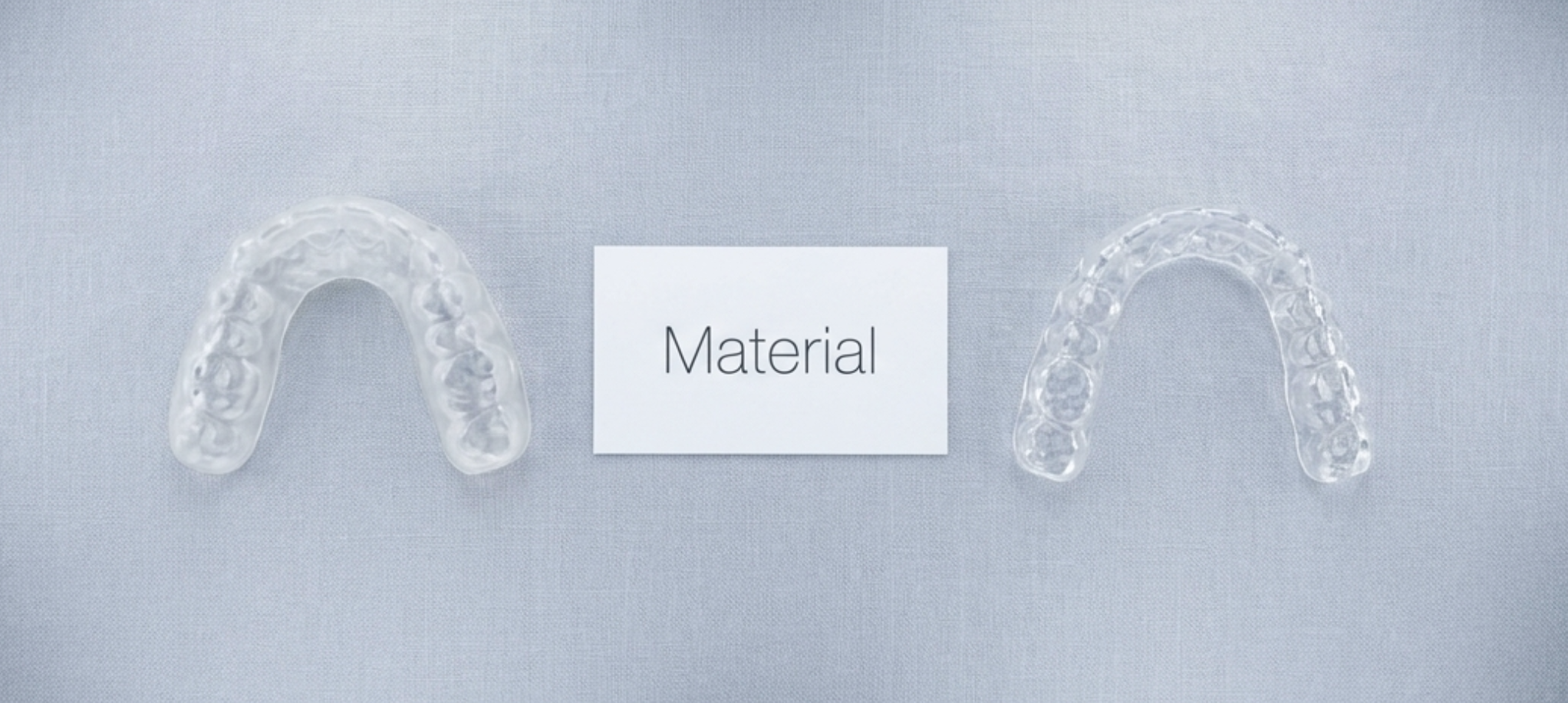
Night guards come in three primary materials: soft thermoplastic, hard acrylic, and dual-laminate (soft inner, hard outer). The material that’s correct for you depends directly on whether your primary pattern is grinding, clenching, or both — and how intensely.
The soft guard problem for clenchers
Soft guards are the most comfortable initially and the most widely sold OTC. They’re also the wrong material for people whose primary pattern is clenching. Here’s why.
When you clench, you’re applying sustained vertical compressive force to your teeth. A soft, compressible material under that force gives the jaw’s proprioceptive system something to continue loading against — the same mechanism that makes you grip harder when holding something soft and compliant. The muscles generate more force trying to compress the material, not less. Some clenchers find their morning jaw soreness increases after starting a soft guard compared to wearing nothing.
A hard acrylic guard provides a non-compressible surface. The jaw muscles find nothing to load against and can rest. The difference in morning symptoms for clenchers switching from soft to hard is frequently significant.
The wear-rate signal
Your guard’s wear rate tells you whether the material is adequate for your grinding force. A soft guard that lasts 2–3 months on a heavy grinder is absorbing force that would otherwise hit your enamel — but it’s also signalling that the material is being consumed faster than the economics make sense. Switching to hard acrylic extends the guard’s useful life by 3–5x for the same grinding intensity.
The diagnostic question: are you a clencher, a grinder, or both? If you’re primarily a clencher and you’re on a soft guard, change the material. This single switch resolves the problem for a large percentage of people who report guard failure. For help identifying whether your primary pattern is clenching or grinding, the distinction is covered in detail.
Reason 2: Poor Impression Quality
A custom guard is only as good as the impressions it’s made from. This is the variable that most people assume is handled correctly — and the one that most DTC users have actual control over.
What poor impressions produce
A poor-quality impression produces a guard that doesn’t accurately match your arch. The consequences:
- Uneven bite contacts — the guard’s occlusal surface doesn’t evenly contact the opposing arch, causing some teeth to receive disproportionate force
- Guard instability — the guard rocks or shifts during sleep, both reducing its protective coverage and creating unpredictable contact patterns
- Prolonged bite shift — the bite feeling off for 30+ minutes after removal, rather than settling quickly, often indicates the guard is holding the jaw in a slightly incorrect position
For dentist-made guards
In-chair impressions by a professional are more reliable than at-home impressions — but not infallible. If your guard was made from a single set of impressions taken on a day when your jaw was already in a stressed or asymmetric position, the guard is a perfect mold of that stressed state. Guards are also adjusted at fitting appointments — if this step was rushed or skipped, high contact points may not have been identified and ground down.
Signs of a fit problem: the guard rocks when you seat it, you feel pressure on a specific tooth (not general awareness), or the bite feels markedly different for more than 30 minutes after removal. Contact the lab or dentist — fit adjustments are part of the product.
For DTC guards
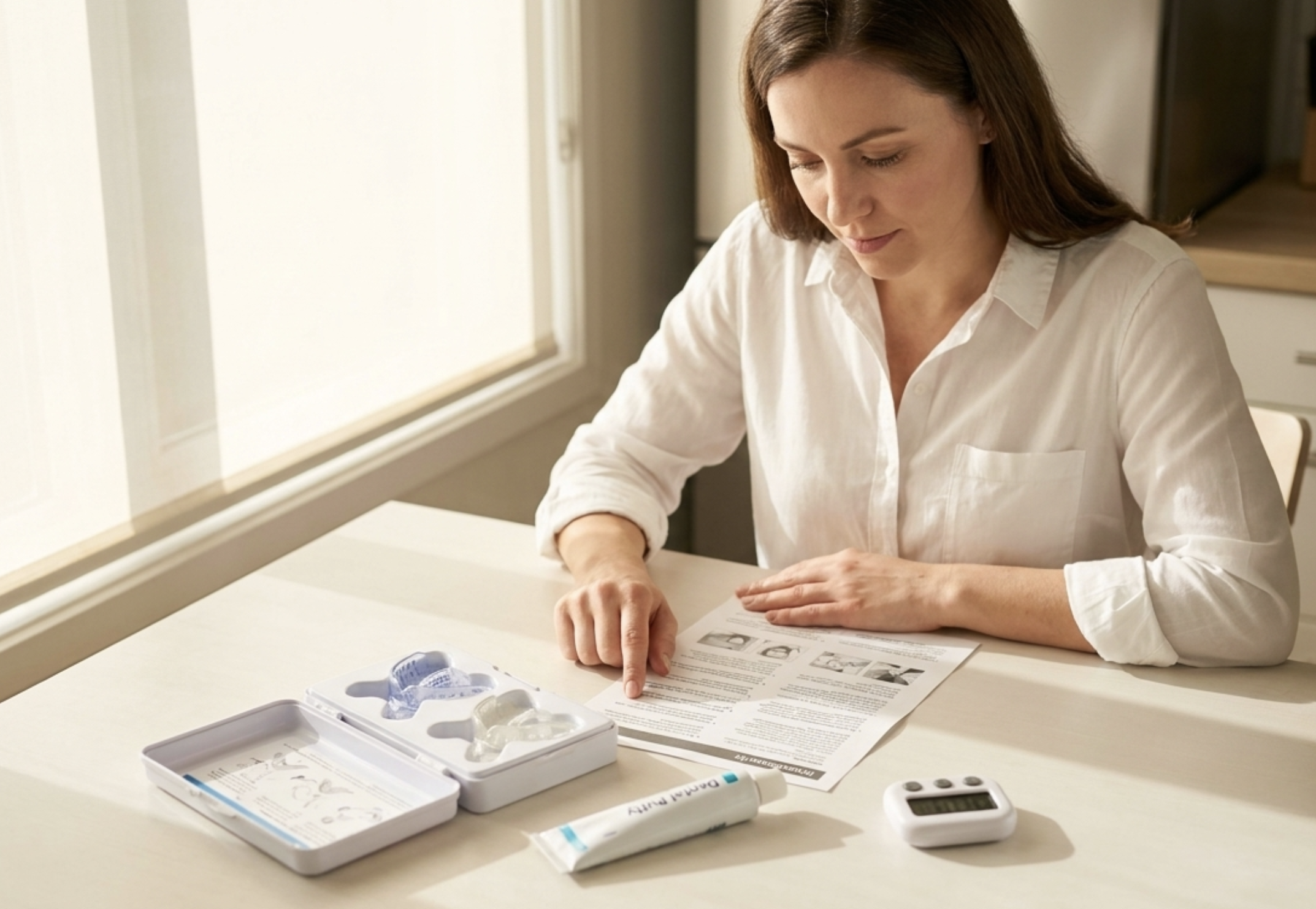
The two most common impression mistakes that compromise fit: biting through the tray (teeth contact the plastic, the lab can’t read your arch) and moving while the putty sets. Most reputable labs offer free re-impression and remake if quality is poor. Always confirm this policy before ordering.
Reason 3: Wrong Expectation of What the Guard Should Deliver
This is the most important one to address honestly — because it’s the reason many people abandon guards that are actually working.
A correctly fitted, appropriate-material night guard will:
- Protect tooth enamel from grinding and clenching force
- Absorb force that would otherwise wear, crack, or chip teeth
- Protect dental restorations (crowns, fillings, veneers) from compressive overload
A correctly fitted, appropriate-material night guard will not:
- Stop you from grinding or clenching
- Reduce jaw muscle soreness in the morning (muscles worked all night regardless)
- Treat headaches caused by bruxism (same reason)
- Resolve TMJ joint pain or clicking
- Change your bite or jaw position over time
If you’re wearing a correctly fitted hard guard and still waking with jaw soreness — that is the guard working correctly. The grinding is happening; the guard is absorbing the force before it reaches your teeth. The muscle soreness is a consequence of muscles working all night, which the guard cannot prevent.
Addressing the soreness and reducing the clenching drive requires additional interventions: magnesium supplementation, jaw exercises, stress management, medication timing review (if on stimulants), and in some cases clinical management of the bruxism habit directly. These are companions to a guard, not replacements for it.
Reason 4: An Underlying Issue the Guard Isn’t Designed to Address
There are situations where a guard is correctly specified, correctly fitted, and being used with the right expectations — and jaw symptoms persist because there is something else going on that the guard was never going to resolve.
The most common underlying issues:
TMJ joint disorder
A night guard is a Class I tooth protection device. TMJ disorder — pain or dysfunction in the temporomandibular joint itself — is a clinical condition that requires clinical assessment. Some people with TMJ disorder find a guard helps by reducing the load on the joint; others find it has little effect because the joint dysfunction has its own drivers. A guard alone is not a TMJ treatment, and persistent jaw joint pain alongside a correctly fitted guard warrants clinical evaluation.
Sleep apnea co-occurrence
Bruxism and obstructive sleep apnea co-occur at elevated rates. Apnea micro-arousals can trigger grinding episodes. If sleep quality is poor despite a guard, and symptoms include snoring, daytime fatigue, and unrefreshing sleep, sleep apnea screening is worth discussing with a doctor. A bruxism guard is not a sleep apnea device and doesn’t address apnea-triggered grinding.
Medication side effects
Stimulant medications, SSRIs, and some other prescription drugs can drive jaw clenching as a side effect. A guard protects teeth from this medication-induced force but doesn’t reduce the force itself. If your bruxism began or significantly worsened after starting a medication, raising it with your prescriber is the relevant intervention — not upgrading your guard.
The DTC Alternative: Same Lab, Different Price
One practical point worth making: the fabrication process for a DTC custom guard and a dentist-made guard is the same. Both are made in dental laboratories from impressions of your teeth in hard acrylic or dual-laminate material. The dentist adds clinical oversight — professional impression taking, in-person fitting adjustments, integration with your dental history. For complex bite issues, that oversight is valuable.
For straightforward bruxism protection in someone without complex bite issues, DTC custom guards from labs like Pro Teeth Guard, Sentinel, Chomper Labs, or Reviv produce equivalent tooth protection at $80–$200 versus $400–$800. If your expensive guard has failed and you’re considering replacement, this is worth knowing — the price difference doesn’t reflect a quality difference in the guard itself.
Guard Evaluation Checklist
Work through these questions in order to identify which variable is causing your guard to fail:
| Check | Question | If yes |
|---|---|---|
| Material | Are you primarily a clencher using a soft guard? | Switch to hard acrylic or dual-laminate |
| Wear rate | Are you going through guards in under 8 weeks? | Hard acrylic — soft isn’t built for your force volume |
| Fit — stability | Does the guard rock or shift during placement? | Re-impression and remake needed |
| Fit — contacts | Is there pressure on a specific tooth rather than general awareness? | Fit adjustment — pressure point in occlusal surface |
| Fit — bite shift | Does bite feel off for 30+ minutes after removal? | Guard creating uneven contacts — needs assessment |
| Expectation | Are you expecting the guard to reduce morning soreness or stop clenching? | Guard is working if teeth are protected — soreness needs separate management |
| Underlying issue | Does jaw pain persist despite a correctly fitted hard guard? | Clinical assessment — may be TMJ, sleep apnea, or medication-driven |
Frequently Asked Questions
Why is my custom night guard not working?
The four most common reasons: wrong material for your bruxism pattern (the most common — a soft guard on a heavy clencher), poor impression quality creating uneven bite contacts, wrong expectation of what the guard delivers (tooth protection, not pain relief), or an underlying issue the guard isn’t designed to address. Work through the checklist above in order.
Can a night guard make jaw pain worse?
Yes — in two specific scenarios. A soft guard on a heavy clencher can stimulate more muscle force because the compressible material gives the jaw something to continue loading against. A poorly fitted guard creates uneven bite contacts causing asymmetric jaw loading. A well-fitted hard or dual-laminate guard should not make jaw pain worse after the 1–3 week adjustment period.
What should I do if my night guard isn’t helping?
Diagnose which variable is failing rather than abandoning guards as a category. Check material first — if you’re a clencher on a soft guard, that’s likely the answer. Then check fit — does it rock, create localised tooth pressure, or produce extended bite shift? Then check expectation — if teeth are protected and that’s all the guard promises, it may be working. Then consider whether there’s an underlying issue requiring clinical assessment.
How do I know if my night guard fits correctly?
A correctly fitted guard seats firmly without rocking, stays in place through the night, creates even contact across all teeth when the opposing arch closes against it, and does not cause localised pressure on any single tooth. Bite shift after removal should resolve within 30 minutes. If any of these fail, the fit needs assessment — contact the lab or dentist.
Is an expensive dentist guard better than a DTC guard?
The fabrication process is identical — both are made in dental labs from impressions of your teeth. The dentist adds professional impression taking, clinical fitting adjustments, and integration with your dental history. For complex bite issues this oversight is valuable. For straightforward bruxism, DTC custom guards at $80–$200 produce equivalent tooth protection at a fraction of the dentist price.
