

The short answer
The best ultra-thin daytime mouth guard is the one you can keep in through a full workday: low enough to talk over, clear enough to go unnoticed, and snug enough not to shift. Thinness matters, but it is only one of five things that decide whether a day guard actually disappears.
If you’re searching for an ultra-thin daytime mouth guard, you probably already know you clench while awake. You catch your jaw locked during deep work, on the commute, or halfway through a tense call. What you want now is protection you can wear in front of other people without explaining it.
Here’s the twist most guides miss: the thinnest guard is not always the least noticeable one. A slightly taller guard that is fully clear, smooth at the front and well seated can disappear better than a thinner one that rocks or shows a coloured edge. This guide explains why, and how to use that to pick the right guard.
Thin is only one of five things that make a day guard invisible
A daytime guard has a harder job than a night guard. At night nobody sees it and you don’t talk. During the day it has to survive meetings, calls, coffee and conversation. Five design choices decide whether it passes.
- Profile (thickness and height). Less material between your teeth means less change to how your tongue moves, so fewer lisps on “s”, “sh” and “th”. But going thinner has limits: very thin soft material can compress, tear or shift.
- Clarity. A fully transparent guard reads as “nothing” at conversational distance. A coloured base or visible tabs reads as “something in your mouth”, even when it is thin.
- Front features. Arms, tabs or ridges near the front teeth are what people notice when you smile or talk. Removing them often matters more than shaving off a fraction of a millimetre.
- Retention. A guard that grips your teeth stays put while you speak. One that rocks becomes audible and you start fiddling with it. A deeper impression usually grips better.
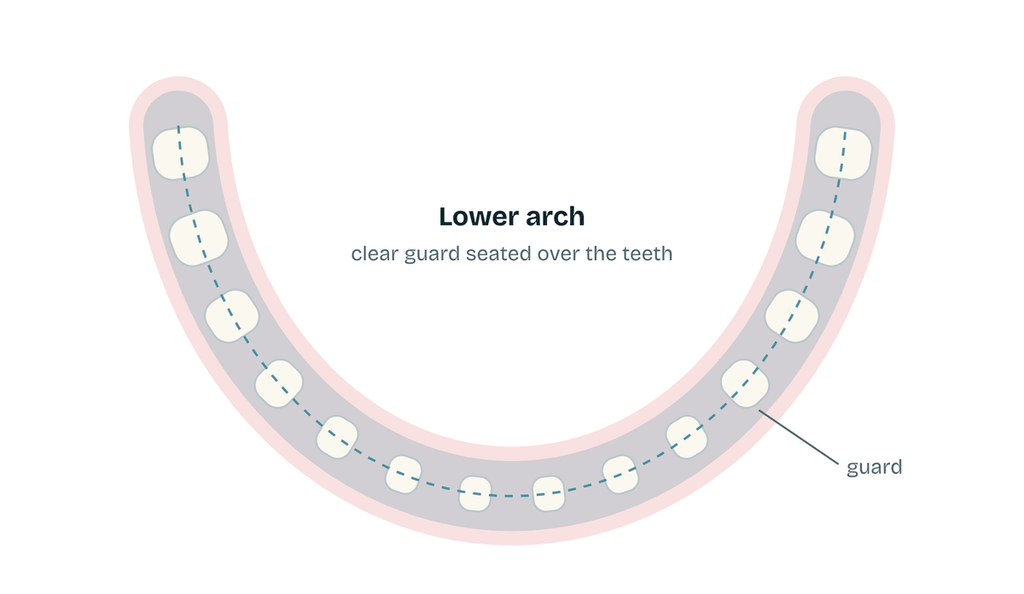
- Lower vs upper arch. Lower-arch day guards tend to sit behind the lower lip and out of sight, and they leave more room for the tongue on the palate.
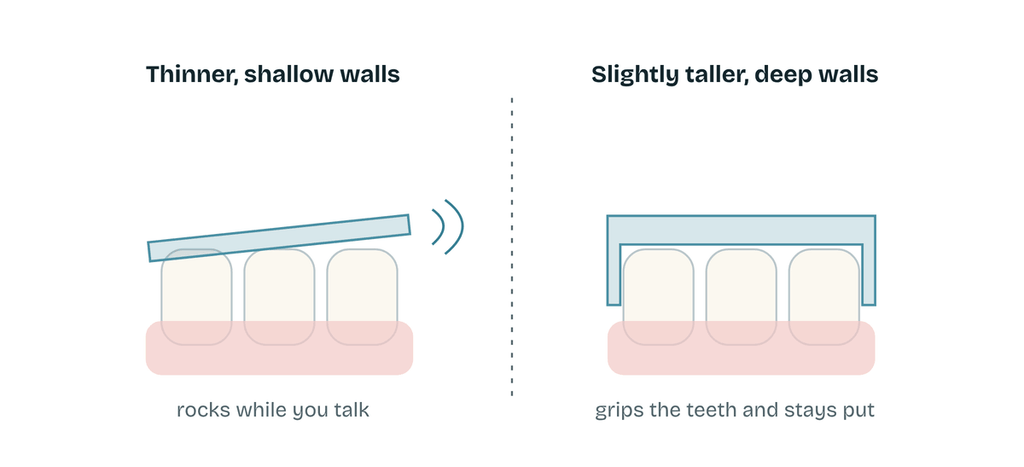
This is why “ultra-thin” on a product page is a starting point, not a verdict. A slightly taller guard that is clear, smooth at the front and well seated can be less noticeable than a thinner one that isn’t.
Do you actually need a daytime guard?
You probably do if you clench while awake and your night guard alone isn’t keeping symptoms down. Awake bruxism is usually clenching, not grinding: the teeth press together and hold, often for minutes, during focus or stress.
Common signs:
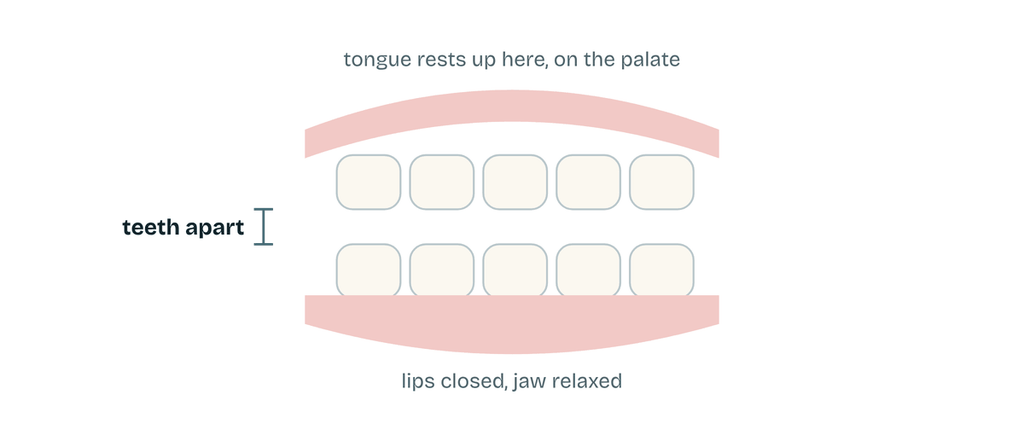
- You catch your teeth touching when your mouth should be at rest (lips closed, teeth apart, tongue on the palate)
- Jaw or temple tightness that builds through the afternoon rather than on waking
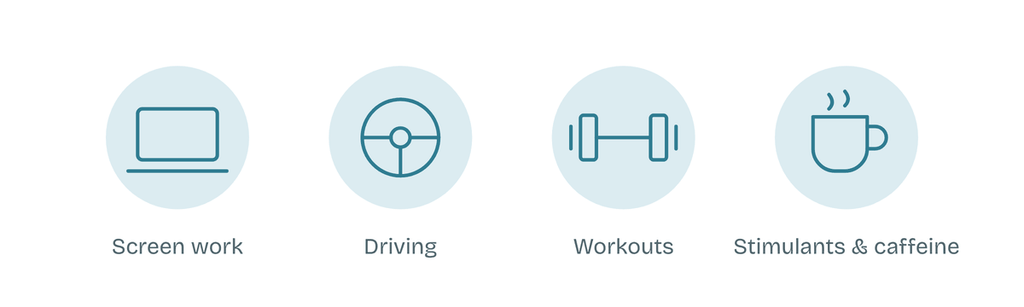
- Clenching during specific triggers: screen work, driving, workouts, stimulant medication or caffeine
- Your night guard helps mornings, but the jaw feels worse again by evening
The last one is the strongest case for a day guard. If your jaw rests well at night but clenches for hours at your desk, a night guard is only covering half the problem. For the full background, see What Is Bruxism? and Screen Time and Jaw Tension.
The three main types of low-profile day guard
Most daytime guards fall into one of three designs. Each trades cost, fit and coverage differently, so the right one depends on how and where you clench.
| Type | How it fits | Good for | Watch out for |
|---|---|---|---|
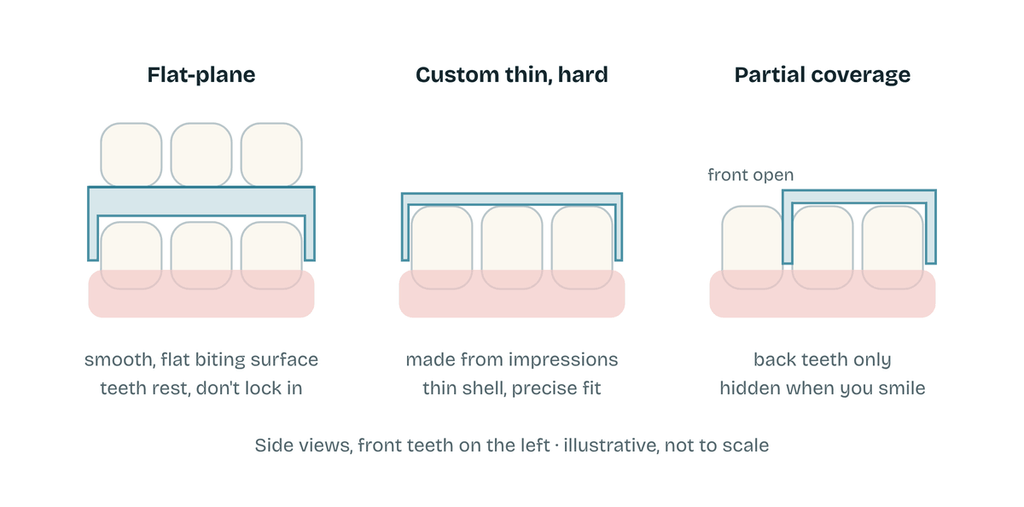
| Flat-plane | Covers the teeth with a smooth, flat biting surface, so the opposite teeth meet an even plane instead of locking into grooves | Clenchers: the jaw can rest without wedging into one position, and pressure is spread evenly | Usually custom-made; the flat surface feels unusual for the first few days; needs a precise fit to stay put |
| Custom thin, hard | Made by a lab from impressions or a scan of your teeth | Precise fit; a thin hard shell keeps its shape under clenching | Higher cost; a wait for fabrication; can’t be adjusted at home |
| Partial coverage | Covers the back teeth only, leaving the front open | Practically invisible when you smile | Front teeth are unprotected; long daily wear can affect how your teeth meet |
If you mainly clench, a flat-plane guard is often the most comfortable choice, because your teeth can rest on it without wedging into one position. If being invisible matters most, a custom thin guard is usually the lowest-profile full-coverage option. Keep partial-coverage designs to short periods.
Looking for a low-profile day guard? See daytime guards designed for work, calls and the gym.
A 6-point checklist before you buy any day guard
Run any “ultra-thin” guard through these six questions. A guard that fails two or more will likely end up in a drawer.
- Is the real size listed? Look for thickness or overall height in millimetres. Vague words like “slim” or “discreet” don’t count.
- Is it fully clear? Coloured bases, logos and tabs show at conversational distance.
- Is the front smooth? Arms or ridges near the front teeth are the most visible part of any guard.
- Will it stay seated while you talk? Look for a deep impression or custom fit, and reviews that mention speech.
- Which arch does it go on? Lower-arch guards usually hide better and affect the palate less.
- What happens if it doesn’t suit you? Check adjustment, replacement and return terms. Some day guards are final sale, so a guard that can be adjusted or refitted gives you a second chance if the first fit goes wrong.
If you also grind heavily at night, a day guard is not a substitute for a proper night guard. See Mouth Guards for Clenching: Day, Night, and Both.
Your first two weeks with a day guard
Most of the “I can’t talk in this” complaints fade with a good fit and a gradual start. Here is a simple plan.
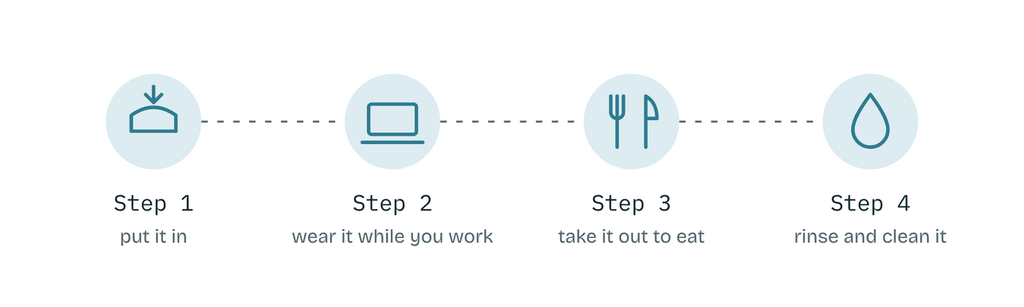
Check the fit first. A day guard should seat firmly and stay put when you talk, swallow and open your mouth slightly. If it rocks, pinches or presses on your gums, have it adjusted before you build up wear time.
Build wear time slowly.
| Days | Where to wear it | Goal |
|---|---|---|
| 1–3 | Solo desk work, driving | 1–2 hours a day, get used to the feel |
| 4–7 | Internal calls, the gym | Practise speaking; read aloud for 5 minutes |
| 8–14 | Most of your clenching hours | Wear through meetings if speech feels natural |
Check the fit regularly. If the guard starts to feel loose, tight or uneven, get it adjusted rather than wearing through the discomfort.
Clean it after every session. Use soap and warm water, never boiling water, the dishwasher or direct sun, since heat can deform it. Take it out to eat. Our cleaning guide covers storage and deep cleans.
Pair it with a habit cue. Each time you notice the guard, check your rest position: lips together, teeth apart, tongue on the palate. The guard protects your teeth; the habit check is what reduces the clenching itself.
Frequently asked questions
What is an ultra-thin daytime mouth guard?
It’s a low-profile guard designed to be worn while you’re awake, usually for clenching at work, while driving or during exercise. It trades some of a night guard’s bulk for easier speech and a less visible fit.
Can people tell I’m wearing one?
With a clear, well-seated guard, usually not at normal distance. Speech is the bigger giveaway than looks, and that improves over the first week or two.
Will it make me lisp?
A slight lisp on “s” and “th” sounds is common at first. Reading aloud for a few minutes a day speeds up adjustment. Many people still remove it for long conversations or presentations.
Is thinner always better?
No. Clarity, a smooth front and a secure fit often matter more. A slightly taller guard that stays put can be less noticeable than a thinner one that shifts.
Flat-plane or thin custom?
A flat-plane guard suits most clenchers, because the jaw can rest without locking into one position. A thin custom guard is the better pick when being invisible matters most.
Can I wear a day guard at night?
Some day guards can be worn at night. If you grind hard in your sleep, a dedicated night guard is usually the better choice.
How long does a day guard last?
It depends on how hard you clench and how well you care for it. Replace it once it cracks, wears through, or stops fitting snugly. See How Often Should You Replace Your Mouthguard?
The bottom line
Judge an ultra-thin daytime mouth guard by how it behaves in a real workday, not by the word “thin” on the box. Clear, smooth at the front, securely seated and low enough to talk over: that combination is what disappears.
Want the wider picture first? Read Daytime Mouth Guards: The Complete Guide (2026) and Ultra-Thin, No-Show Mouth Guards for Daytime Clenching.
Ready to protect your teeth during the day? Browse low-profile daytime guards made for work, calls and the gym.
This article is for general information only.