
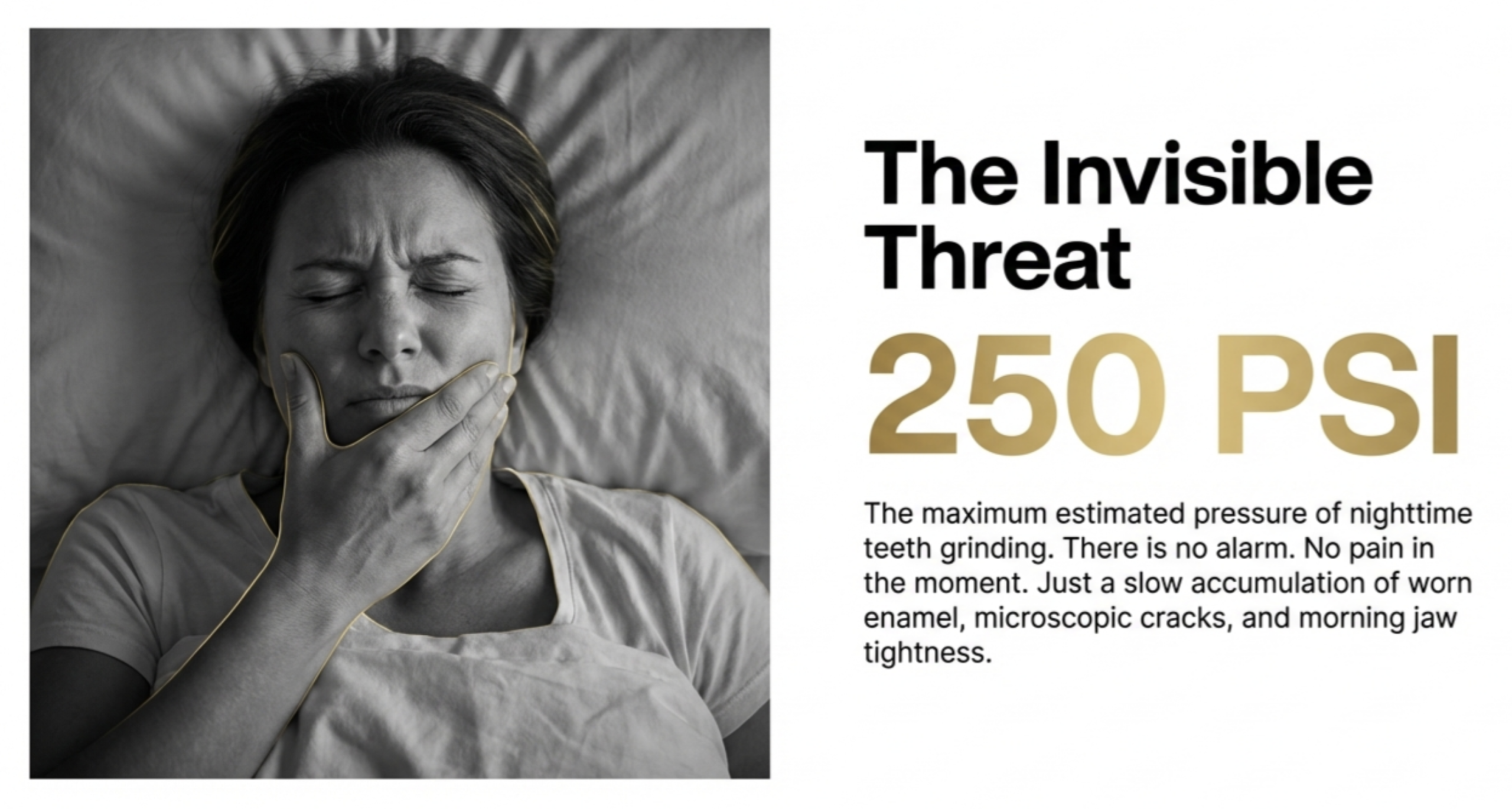
Most people who grind their teeth don’t know they do it.
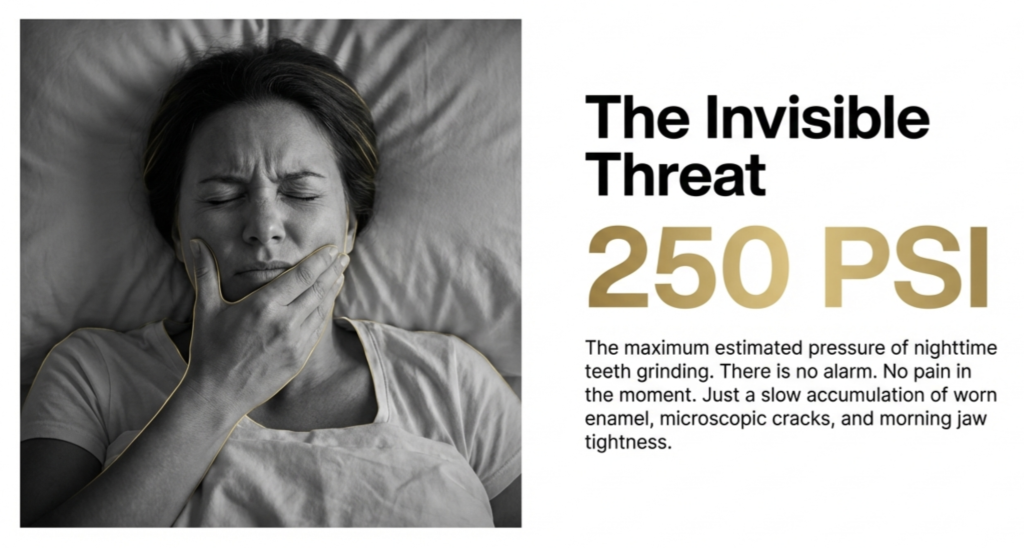
There’s no alarm. No pain in the moment. Just a slow accumulation — worn enamel, a sore jaw in the morning, a dentist who notices the damage before you do.
If you’ve been told you grind your teeth, or if you’ve started to suspect it, a night guard for teeth grinding is the most effective way to protect your enamel from further damage. But not every guard is built the same — and choosing the wrong one means paying for something that won’t actually do the job.
This guide walks you through exactly what to look for, what to avoid, and how to match the right appliance to your specific grinding pattern.
Already know you need one?
Explore the full Reviv range →Why Teeth Grinding Needs a Dedicated Appliance
Teeth grinding — clinically called bruxism — generates far more force than normal chewing. Some studies estimate grinding pressure can reach up to 250 pounds per square inch. Your enamel is tough, but it isn’t designed to absorb that kind of repeated load night after night.
Over time, unprotected grinding leads to:
- Flattened, shortened, or chipped teeth
- Increased tooth sensitivity as enamel thins
- Microscopic cracks that deepen with continued grinding
- Worn-down cusps that alter how your bite fits together
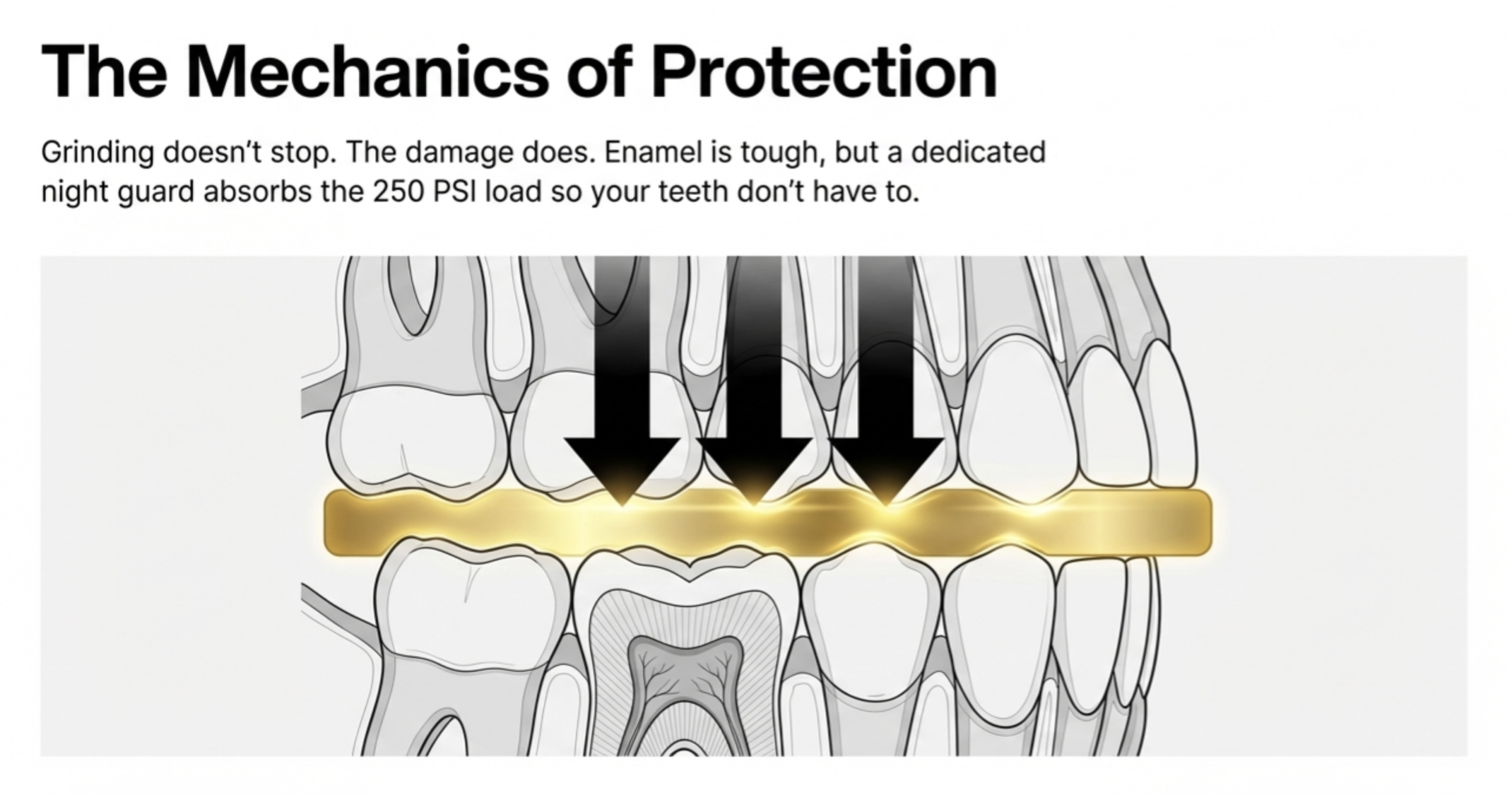
A night guard for teeth grinding works by placing a durable barrier between your upper and lower teeth. Instead of your enamel absorbing the grinding force, the appliance does. The grinding habit itself doesn’t stop — but the damage does.
That’s the core value proposition, and it’s a significant one. Dental restoration for grinding damage is expensive. A well-chosen night guard is not.
The 5 Things That Separate a Good Grinding Guard from a Bad One
Not all night guards are created equal, and the difference matters more for grinders than for anyone else. Here’s what to actually evaluate before you buy.
1. Material hardness matched to your grinding intensity
This is the single most important variable — and the one most people get wrong.
Soft guards are made from flexible, rubber-like material. They feel comfortable initially and are popular as a first purchase. The problem: for moderate-to-heavy grinders, the soft surface can actually stimulate more grinding. The jaw interprets the pliable texture as resistance to chew through, and bite activity increases. Many heavy grinders chew through a soft guard within weeks.
Hard guards — typically acrylic — don’t flex or deform under pressure. They distribute grinding force evenly across the surface, absorb it without encouraging more biting, and last significantly longer. They take longer to adapt to (usually 1–3 weeks), but for anyone with a moderate-to-heavy grinding pattern, hard is the right choice.
Dual-layer guards offer a hard outer shell with a softer inner lining for comfort. These can be a good middle ground for people who found hard guards too uncomfortable but wore through soft guards too quickly.
2. Full arch coverage
Some cheaper guards cover only the front teeth. This is inadequate for grinding protection because grinding force is distributed across the entire arch — molars included. A guard that only covers incisors leaves your back teeth completely exposed to the pressure that causes the most damage.
Always choose a guard that covers the full upper or lower arch from molar to molar.
3. Precise fit
A grinding guard that doesn’t fit your bite correctly can shift during sleep, create uneven pressure on specific teeth, or — in the case of a guard that’s too loose — fall out entirely, giving you zero protection for the night.
The fit hierarchy, from worst to best:
- Stock (pre-formed): One size fits no one well. Minimal protection.
- Boil-and-bite: A rough approximation of your bite. Adequate for light grinding only.
- Custom mail-order: A guard fabricated from an impression of your actual teeth. Significantly better fit, comfort, and protection.
- Dentist-fabricated: The most precise fit available, made from an in-office impression.
For anyone with a moderate or heavy grinding pattern, custom fit isn’t a luxury — it’s a prerequisite for effective protection.
4. Appropriate thickness
Thickness determines how much grinding force the guard can absorb before it transfers to your teeth. Thicker guards protect better, but are more noticeable to wear.
| Thickness | Best for | Notes |
|---|---|---|
| 1–2 mm | Light grinders, first-time wearers | May wear through faster for heavy grinders |
| 2–3 mm | Moderate grinders | Best balance of protection and comfort |
| 3+ mm | Heavy grinders | Most protective; requires adjustment period |
Thickness guide by grinding intensity.
If your grinding is severe — your dentist sees significant wear, or you’ve broken previous guards — opt for the thicker end of the range.
5. Durability and replaceability
A grinding guard is a consumable. It absorbs punishment so your teeth don’t have to, and over time it will show wear. Before you buy, understand:
- What the expected lifespan is at your grinding intensity
- Whether the provider has a replacement or warranty programme
- What the cost of a replacement looks like versus starting over
Mail-order custom providers typically make replacement easier and cheaper than going back to a dentist each time.
Custom vs OTC: The Honest Comparison for Grinders
Over-the-counter guards have their place — but for anyone with a confirmed grinding habit, the case for custom fit is strong.
| OTC (boil-and-bite) | Custom (mail-order) | |
|---|---|---|
| Fit quality | Approximate | Precise |
| Material options | Usually soft only | Soft, hard, or dual-layer |
| Durability | Weeks to months | 1–3 years |
| Comfort | Variable | High |
| Cost | $20–$60 | $80–$200 |
| Protection level | Moderate | Good to excellent |
The cost difference is real — but so is the performance gap. A custom guard that lasts two years and does its job properly costs far less than restorative dental work on enamel that wasn’t protected.
Not sure which appliance is right for your grinding pattern?
Use the Reviv how-to-choose guide →Upper vs Lower: Which Arch Should Your Guard Cover?
Most night guards for teeth grinding are designed for the upper arch, and for good reason: upper guards tend to be more stable during sleep and are less likely to dislodge.
Lower arch guards are a valid alternative for people who find upper guards trigger a gag reflex. They’re often thinner and feel less intrusive. Some grinders also find them easier to adapt to initially.
If you’re starting from scratch, begin with an upper guard. If you’ve tried upper guards and found them consistently uncomfortable or gag-inducing, a lower guard is worth trying.
Signs Your Current Guard Isn’t Working
If you already own a night guard for teeth grinding, here’s how to know whether it’s actually protecting you:
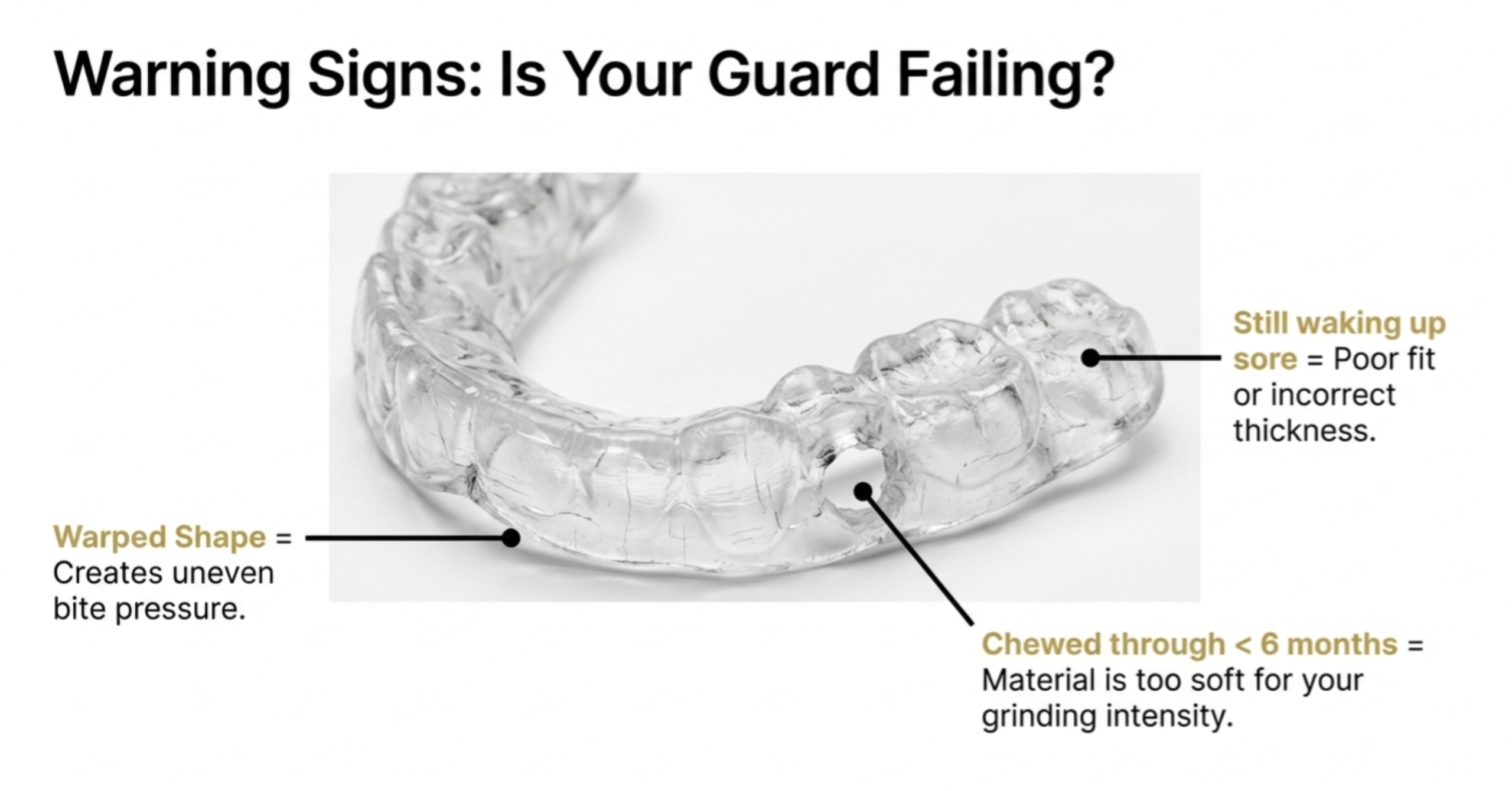
- Your dentist still sees new enamel wear at your check-ups — the guard isn’t absorbing enough force
- You chewed through it in under 6 months — the material isn’t matched to your grinding intensity
- You wake up with jaw soreness despite wearing it — fit or material may need to change
- It falls out during the night — fit is too loose; a custom guard will hold properly
- It’s noticeably warped or deformed — replace it; a warped guard creates uneven bite pressure
Any one of these is a signal to reassess what you’re wearing. The guard is doing its job of absorbing force — but if it’s failing structurally, your teeth aren’t being protected.
How to Get Used to Wearing a Night Guard
The biggest reason people stop wearing their guard is discomfort during the adjustment period — not a problem with the guard itself. Here’s how to get through it.
Week 1: Build the habit, not the duration
Put the guard in each night. If you can only tolerate it for an hour before removing it in your sleep, that’s fine. The goal in week one is consistency, not duration.
Week 2: Expect improvement
Most people find a significant drop in conscious discomfort by day 7–10. The jaw adjusts to the new resting position. Keep going.
Week 3 and beyond: Full adaptation
The majority of wearers reach full adaptation — where the guard feels unremarkable — within 3 weeks. At this point, you should be wearing it through the night without noticing it.
How to Care for a Grinding Guard
A grinding guard works harder than a standard night guard — it absorbs significant force every night. That means care matters more.
Every morning
- Rinse immediately under cool water — never hot, which warps the shape
- Brush with a soft toothbrush and mild hand soap — toothpaste is too abrasive
- Air-dry fully before storing in a ventilated case
Weekly
Soak for 15–30 minutes in a diluted dental appliance cleaner or a 50/50 water and white vinegar solution. This removes biofilm that brushing misses.
Watch for
- Visible holes or thinning in the bite surface — time to replace
- Persistent odour that cleaning doesn’t resolve — bacterial build-up, consider an ultrasonic cleaner
- Any cracking or structural deformation — replace immediately
Looking for a low-effort cleaning routine?
Browse Reviv appliance accessories →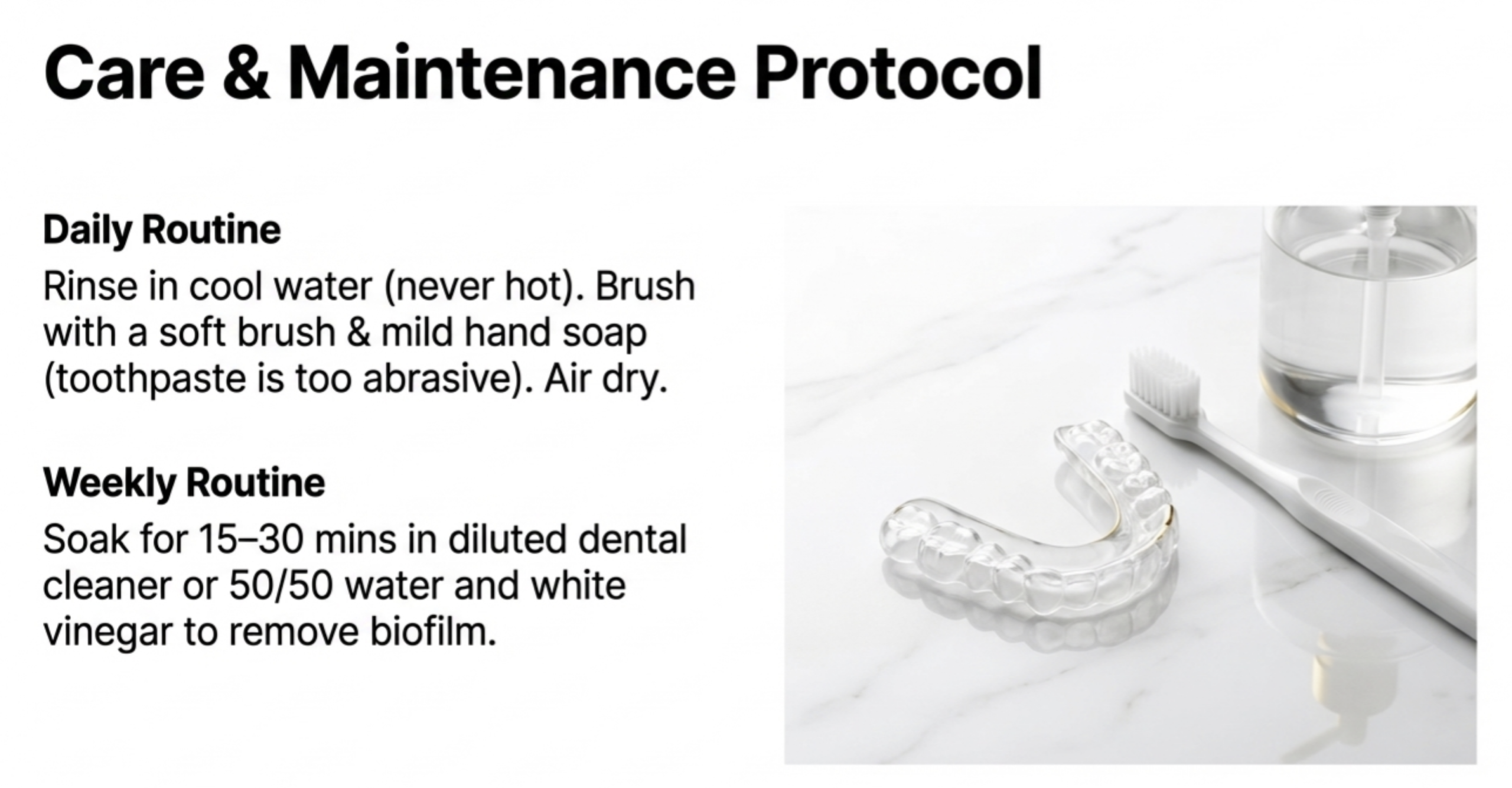
What to Expect at Different Price Points
- $5–$25 (stock guards): Pre-formed, no customisation, minimal protection. Not suitable for a confirmed grinding habit.
- $20–$60 (boil-and-bite): Rough custom fit, usually soft material only. Adequate for very light grinding; insufficient for moderate or heavy bruxers.
- $80–$200 (custom mail-order): Impression-based fit, choice of material and thickness, significantly better protection and durability. The best value option for most grinders.
- $300–$800+ (dentist-fabricated): Maximum precision fit. Often partially covered by dental insurance or payable via HSA/FSA.
For most people with a confirmed teeth grinding habit, the mail-order custom tier offers the best combination of protection, comfort, and cost.
The Bottom Line
A night guard for teeth grinding isn’t a luxury purchase. It’s protective equipment for a habit that quietly erodes your teeth while you sleep.
The right one for you depends on how heavily you grind, what your budget looks like, and how important fit comfort is to you. What matters most is that it covers your full arch, matches your grinding intensity in material and thickness, and fits well enough that you’ll actually wear it every night.
If you’re not sure which appliance is the right match, the Reviv how-to-choose guide walks you through the decision step by step. Or browse the full Reviv range to compare FDA-registered Class I oral appliances designed specifically for grinding protection.
Your teeth are worth it.