


What are the side effects of a night guard?
Is it normal for a night guard to hurt?
Why does my bite feel off after wearing it?
Can a night guard make jaw pain worse?
When should I stop wearing my night guard?

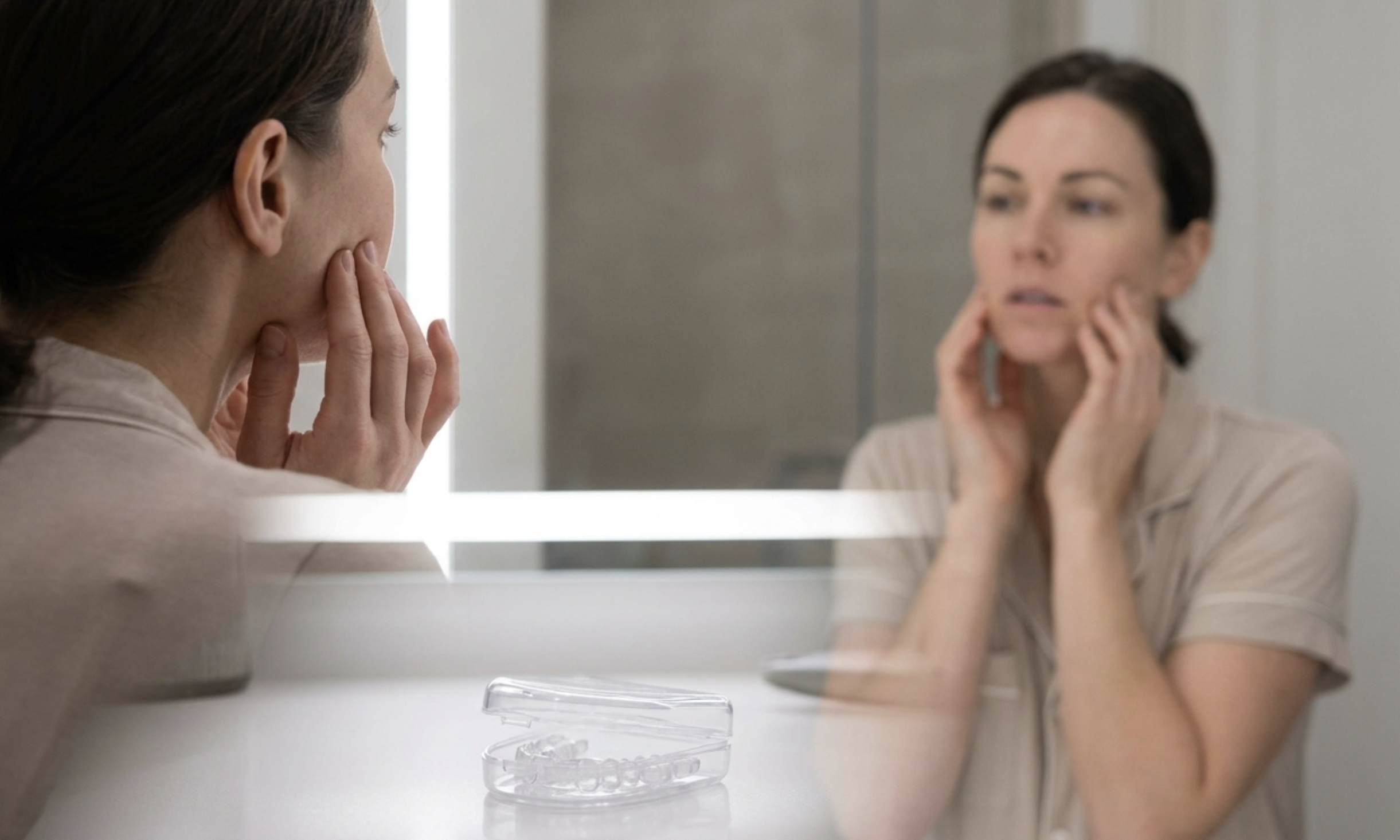

If you’ve searched “night guard side effects” you’ve already found the generic lists: soreness, jaw fatigue, bite feels off, excessive saliva. What those lists don’t tell you is which of those things are normal and expected, which ones signal a problem with your guard, and which ones mean you should stop wearing it and see a dentist.
That distinction matters enormously — because the right response to “my jaw is sore in the morning” depends entirely on whether it’s week one or week six, and whether the soreness is diffuse muscle awareness or sharp pressure on a specific tooth.
This guide organises night guard side effects into three tiers — normal adjustment, fit-related problems, and red flags — with the rationale for each categorisation and what to do about it.
The Framework: Three Categories of Night Guard Effects
Most articles lump every side effect together, which is why people abandon guards they should keep wearing, or continue wearing guards they should adjust. The reality is that night guard effects fall into three meaningfully different categories:
- Tier 1 — Normal adjustment effects: Expected when starting any new oral appliance. Resolve on their own within 1–3 weeks with consistent wear. No action required except patience.
- Tier 2 — Fit-related problems: Not inevitable — they’re caused by a guard that doesn’t fit correctly, the wrong material for your bruxism pattern, or a guard that has worn out. Require adjustment, replacement, or upgrading the guard. Will not resolve on their own.
- Tier 3 — Red flags: Signals that something is wrong beyond a fit issue. Stop wearing the guard and consult your dentist before resuming.
The most important skill with a night guard is knowing which category your experience falls into.
Tier 1: Normal Adjustment Effects
These are expected with any new oral appliance — dentist-made or DTC, hard or soft. They are your mouth adapting to a foreign object, not signals of a problem.
Increased saliva production
The most universally reported first-week effect. Your salivary glands respond to the guard as a food stimulus — the same way a new retainer or any unfamiliar object in the mouth triggers saliva. It’s uncomfortable and causes some people to swallow repeatedly through the night. It resolves typically within 5–10 nights as your nervous system recalibrates and stops treating the guard as an eating cue. No action needed — just consistent wear.
Mild jaw muscle awareness or stiffness in the morning
The guard changes the resting position of your jaw slightly — particularly a thicker guard that increases vertical dimension. Your masseter and temporalis muscles are adapting to this new position. Some stiffness or general jaw awareness in the first two weeks is expected. This is different from sharp, localised pain — it’s the diffuse sensation of muscles that were asked to do something slightly different all night. Resolves as the muscles adapt.
Temporary bite feeling different after removal
Many first-time wearers are alarmed by this one: you remove the guard in the morning and your back teeth don’t seem to meet properly for a few minutes. This is the jaw settling back into its natural position after spending the night in the slightly altered position the guard creates. It should resolve within 10–30 minutes. If it resolves within that window, it’s normal. If it persists for hours or is changing over weeks, it moves to Tier 2.
Slight speech difficulty in the first few nights
Some people find certain sounds harder to produce with the guard in. This is purely mechanical — your tongue and lips adjusting to the altered oral geometry. Most people don’t notice it after 3–5 nights. Not a reason to stop wearing the guard.
Dry mouth or slightly altered breathing feel
A guard that encourages mouth breathing can produce morning dry mouth. This is more common with upper guards that contact the palate and feel claustrophobic to some wearers. A lower guard often resolves this — the profile is smaller and less intrusive. If dry mouth is persistent and significant, mention it to your dentist or DTC provider.
Tier 2: Fit-Related Problems
These effects don’t resolve with time because they’re caused by something structural — the guard doesn’t fit correctly, the material is wrong for your bruxism pattern, or the guard has worn out and no longer provides the protection or the contact geometry it was designed for. They require action.
Sharp or localised pressure on a specific tooth
This is the clearest fit-problem signal. If a specific tooth feels like it’s being pressed or loading unevenly, the guard has a pressure point — an area where the fit is creating concentrated contact rather than distributing load evenly across the arch. This is uncomfortable and, if sustained, can affect that tooth’s position over time.
What to do: Contact your DTC provider or dentist. Most reputable labs will adjust or remake the guard. This is not a reason to stop wearing guards — it’s a reason to get this particular guard adjusted.
The guard shifts or falls out during sleep
A guard that doesn’t stay in place isn’t providing protection and may be creating uneven contacts as it moves around. Usually a fit issue — the guard doesn’t engage securely with the arch because the impressions were poor, the guard has worn and deformed, or the sizing is off.
What to do: If the guard is new, contact the lab for a re-impression and replacement. If the guard has been worn for a year or more, it may have deformed and needs replacing. For OTC boil-and-bite guards, the fit is approximate by design — if this is a persistent problem, the upgrade to a custom-fit guard resolves it.
Morning bite shift that takes more than 30 minutes to resolve
A temporary post-guard bite shift of under 30 minutes is normal adjustment. If the shift is taking hours to resolve, or if you notice over weeks that your bite is progressively changing, the guard is creating uneven occlusal contacts that are altering how your jaw closes. This is a fit issue — the contact points on the guard surface don’t correctly mirror your natural bite geometry.
What to do: Have the guard assessed. A dentist can identify which contact points are high and adjust the guard surface — this is often a simple grinding procedure. Don’t continue wearing a guard producing sustained bite changes.
Jaw pain or soreness that is worsening after 3 weeks
General muscle adaptation should be improving by week 3, not worsening. If soreness is increasing, there are two likely causes: the guard is creating asymmetric jaw loading (fit issue), or — especially for clenchers — the guard material is wrong (see Tier 2 soft guard section below).
What to do: Assess both the fit and the material. If you’re a clencher on a soft guard, that’s the most likely cause. See the section below.
Gum irritation or soft tissue soreness
The guard edge sits at or near the gum line. If the margin is too sharp, too thick, or poorly contoured, it creates chronic irritation against the gum tissue. More common with OTC guards whose margins aren’t trimmed to fit your specific gum profile.
What to do: For OTC guards with sharp edges, careful trimming with small scissors or a nail file can reduce irritation. For custom guards, the lab can adjust the margin. If the gum irritation is significant, don’t continue wearing until it’s resolved — chronic gum irritation is a hygiene and health issue.
Tier 3: Red Flags — Stop and See a Dentist
These are not fit problems or adjustment issues. They are signals that something more significant may be occurring and require professional assessment before you continue using any guard.
Your teeth feel like they have shifted
If you have a clear sense that your teeth are in different positions than before you started using the guard — not a temporary morning bite shift, but a persistent sense of dental movement — stop using the guard immediately and contact your dentist. An ill-fitting guard applying sustained asymmetric pressure can produce actual tooth movement, particularly if used long-term. This is reversible if caught early; less so if not.
New jaw clicking or locking that wasn’t present before
If you develop TMJ clicking, popping, or restricted opening that wasn’t present before you started wearing the guard, the guard may be altering your jaw’s resting position in a way that is creating joint strain. Discontinue use and see your dentist or a TMJ specialist. Do not assume this will resolve on its own.
The guard affects your ability to breathe normally
A guard should not alter your breathing. If you consistently wake feeling short of breath or struggling to breathe through your nose while wearing the guard, this needs clinical assessment. Note: this is different from the general adjustment discomfort of having something in your mouth — it’s a specific sense of airway restriction.
Bleeding gums after wearing
Some initial gum sensitivity is normal; bleeding is not. Consistent post-guard bleeding indicates either gum disease that needs treatment before using any appliance, or the guard edge is actively traumatising gum tissue. Stop using, have your gums assessed, and address the underlying issue before resuming.
The Soft Guard Problem for Clenchers
This deserves its own section because it explains a significant portion of the “my night guard made things worse” experiences online, and because it’s both common and entirely avoidable.
Soft guards compress under loading force. When a clencher — someone whose bruxism is primarily vertical compression rather than lateral grinding — loads a soft guard, the compressible material gives way under the jaw’s closing force, and the proprioceptive system responds by increasing muscle activation to continue compressing the material. The result is that the jaw muscles work harder during the night, not less. Morning jaw soreness worsens; headaches may increase.
The solution is a hard or dual-laminate guard — the hard contact surface doesn’t give way, which allows the jaw muscles to rest rather than continuing to load. If you’re a clencher who has found your symptoms worsening since starting a soft guard, changing to a hard guard is typically the correct intervention, not stopping guards altogether.
Hygiene-Related Side Effects
A guard you clean inadequately becomes a biofilm reservoir sitting against your teeth for 7–8 hours every night. The downstream effects — persistent bad breath from the guard, increased plaque on the teeth it contacts, and occasional gum irritation — are entirely preventable.
The correct routine is straightforward: rinse immediately after removing (cool water, not hot — hot water can warp thermoplastic), brush with a soft toothbrush and mild soap (not toothpaste, which is abrasive and scratches the guard surface over time), and air-dry before returning to the ventilated case. Weekly soaking in diluted dental appliance cleaner or a 50/50 water and white vinegar solution removes biofilm that daily brushing misses. Full detail: complete night guard cleaning guide →
If your guard consistently smells despite cleaning, the material may be past its serviceable life — acrylic becomes microporous over time and harbours bacteria that cleaning can’t reach. Persistent odour despite a good cleaning routine is a replacement signal — at that point the material has become microporous and cleaning alone won’t resolve it.
How to Shorten the Adjustment Period
Tier 1 adjustment effects are inevitable to some degree, but their duration varies depending on how you approach the first two weeks.
- Wear it consistently. People who wear the guard every night adapt faster than those who wear it every other night. Consistent exposure is what trains the nervous system to stop treating the guard as a foreign object.
- Start with naps if nights feel impossible. Wearing the guard for 30–60 minute daytime naps first lets you adapt in shorter, more manageable sessions before committing to the full night.
- Don’t try to force the guard into a more comfortable position. If it feels slightly tight at first, that’s often the correct fit — custom guards are designed to engage securely with the arch. Forcing or adjusting it yourself risks distorting the fit.
- Give it 21 nights before concluding it’s not working. Most Tier 1 adjustment resolves by night 14–21. Abandoning before that window closes means stopping during the adjustment period rather than after it.
The adjustment period also varies by guard thickness and material — people on thicker guards or harder acrylic often take longer, while those on thinner, correctly sized guards typically adjust faster.
Frequently Asked Questions
What are the side effects of wearing a night guard?
Three categories: normal adjustment effects that resolve in 1–3 weeks (increased saliva, mild jaw awareness, temporary morning bite shift); fit-related problems that require action (localised tooth pressure, guard shifting, sustained bite changes, worsening soreness); and red flags that require stopping and seeing a dentist (teeth feeling shifted, new jaw clicking, breathing affected). Most people who search this question are experiencing normal adjustment.
Is it normal for a night guard to hurt?
Mild diffuse discomfort in the first 1–2 weeks is normal — jaw muscles and soft tissues adapting. Sharp pain on a specific tooth is not normal and indicates a pressure point in the fit. Pain persisting past 3 weeks without improvement is not normal. The key distinction: general jaw muscle awareness is adjustment; localised tooth pain is a fit problem that needs addressing.
Why does my bite feel off after wearing a night guard?
A few minutes of temporary bite shift after removal is normal — the jaw re-settles as muscles relax. If the shift lasts more than 30 minutes or is changing progressively over weeks, the guard is creating uneven contact points that cause the jaw to close differently under the guard than in its natural position. Have the fit assessed.
Can a night guard make jaw pain worse?
Yes — in two specific scenarios. First, a soft guard used by a clencher stimulates more muscle force rather than less. Second, a poorly fitted guard creating uneven contacts causes asymmetric jaw loading. A well-fitted hard or dual-laminate guard should not worsen jaw pain after the adjustment period — if it does, the material or fit is the issue, not the guard concept.
When should I stop wearing my night guard?
Stop and see a dentist if: your teeth feel shifted, your bite has changed noticeably, you have sharp persistent pain on a specific tooth, you develop new jaw clicking or locking, or breathing is affected. Normal adjustment discomfort — even significant discomfort in the first two weeks — is not a reason to stop.
The Bottom Line
The most important thing to understand about night guard side effects is that the vast majority of people who stop wearing their guard because of “side effects” are abandoning during the normal adjustment period, not because something is wrong. If you’re in the first three weeks and experiencing diffuse jaw awareness, extra saliva, or a temporary morning bite shift — those are expected. Push through the adjustment window.
If you’re past three weeks and something is worsening, or if you have any of the Tier 3 red flags, that’s a different situation requiring action. The most common underlying cause of genuine problems is a fit issue — either wrong material for your bruxism pattern or a guard that doesn’t correctly match your arch. Both are solvable.
If you’re experiencing symptoms that suggest the wrong guard type, the Reviv model selector matches your grinding and clenching pattern to the right design, or browse the full range of FDA-registered Class I appliances.