
Why do NBA players chew their mouthguards?
Why do NBA players wear mouthguards?
How many blocks did Wembanyama get vs Timberwolves?
Is a sports mouthguard the same as a night guard?
Do I need a night guard if I clench at my desk?

In Game 1 of the 2026 Western Conference Semifinals, Victor Wembanyama set the NBA postseason single-game blocks record with 12 blocks against the Minnesota Timberwolves — an historic defensive performance that still wasn’t enough, as the Timberwolves escaped with a 104-102 win. Every one of those 12 blocks required an explosive, full-body defensive commitment: the leap, the arm extension, the jaw set tight under exertion.
And somewhere in the Frost Bank Center that night, Wembanyama was wearing a mouthguard.
This is a story about what NBA players actually do with mouthguards — why they wear them, why some of them chew them compulsively, and why the jaw science behind elite athletic performance is directly relevant to anyone who wakes up with a sore jaw after a stressful week at work.
Wembanyama’s 12-Block Game and the Jaw
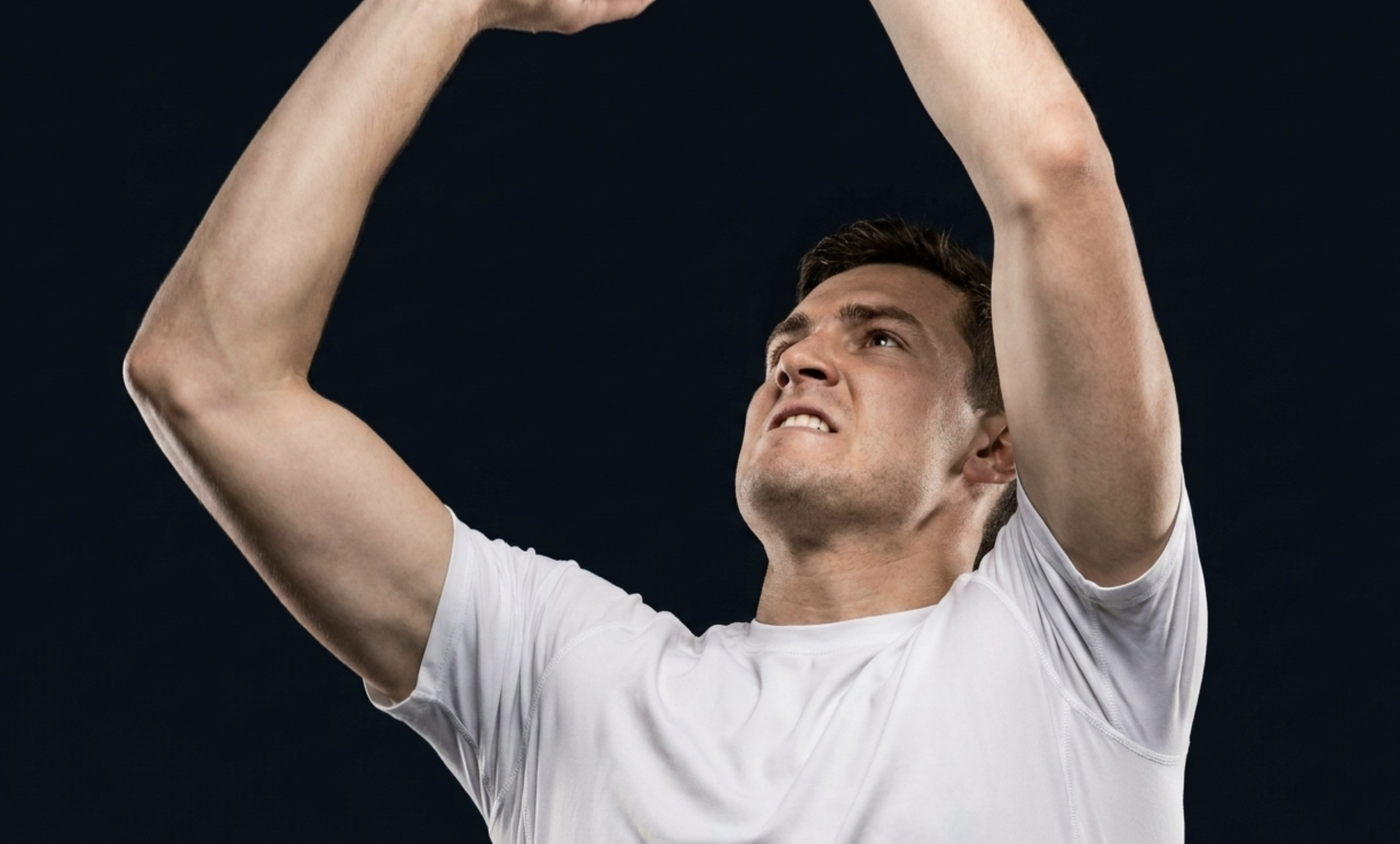
To block a shot at Wembanyama’s level is not a passive act. He became the first player in more than a decade to reach 12 blocks in a postseason game, erasing shots in rotation, challenging drivers who thought they had angles, and changing possessions even when he didn’t get credit for a block. Each defensive contest involves an explosive vertical leap, a reaching arm extension, and — universally, across athletes — a jaw clenched hard under the exertion.
This isn’t incidental. Research on bite force during athletic exertion shows that jaw clenching is a component of the body’s force generation system — the same neuromuscular activation that drives a sprinter’s stride or a basketball player’s vertical leap also elevates jaw muscle tone. The masseter and temporalis muscles tighten as part of the full-body effort. Wembanyama’s 12 blocks represent 12 high-intensity defensive moments, each one accompanied by jaw forces that a mouthguard intercepts before they reach enamel.
The Steph Curry Mouthguard Habit — Explained by the Science
While Wembanyama dominates the defensive headlines, the most culturally significant mouthguard story in NBA history belongs to Steph Curry. Curry started wearing a mouthguard after taking an elbow to the mouth as a Davidson sophomore in 2007 — seven stitches at halftime, fitted the next day, never stopped. What became famous wasn’t the wearing — it was the chewing.
Curry doesn’t just wear his mouthguard during play. He removes it, holds it between his teeth on the side, chews it during huddles and free throws, dangles it from his lips. He goes through approximately 12 mouthguards per season, swapping out every 6–10 games. His mother has publicly given up trying to get him to stop. A used Curry mouthguard once sold at auction for over $3,000.
The chewing habit has a straightforward neurological explanation: it’s a stress response. According to a Harvard psychologist cited by ESPN, the chewing “offers a rhythm unique to him” — the oral motor activity of chewing is soothing in the same way gum-chewing reduces stress or finger-tapping provides an outlet for nervous energy. The sympathetic nervous system activation of high-stakes NBA competition elevates jaw muscle tone — the same mechanism that causes people to grind their teeth at night under stress. Curry’s visible chewing is the conscious outlet for a jaw that wants to clench.
The data point that makes this genuinely interesting: Curry shoots 92% from the free throw line when chewing his mouthguard, compared to 89% when he keeps it in place. The chewing habit may be functioning as a focus ritual — the oral motor activity channelling stress arousal into a consistent pre-shot routine rather than letting it dissipate as jaw tension.
Why NBA Players Wear Mouthguards
The primary reason is obvious: basketball involves elbows, hands, forearms, and heads moving at high speed in close proximity to other people’s faces. An elbow to the mouth — exactly what happened to Curry in 2007 — can crack or remove teeth. A mouthguard absorbs and distributes the impact force before it concentrates on individual teeth, lips, or the jaw joint.
But impact protection is only half the story. The second reason is the one that connects NBA mouthguards to non-athletes.
Explosive athletic movement — a vertical leap, a defensive sprint, a contested block — involves jaw clenching as part of the full-body force generation. Athletes clench their jaw under exertion in the same way they hold their breath: it’s part of the neuromuscular activation pattern of high-intensity physical effort. During a game, this can happen dozens or hundreds of times. The cumulative bite force across a full NBA game, if unprotected, would produce measurable enamel wear. The mouthguard intercepts this force.
The Jaw Force Science
The human jaw is capable of generating significant force. Average bite force in adults is typically in the range of 100–200 lbs of pressure at the molars. Under maximal exertion — a heavy deadlift, a defensive block, an all-out sprint — jaw clenching force can exceed this significantly as part of the sympathetic activation that drives the effort.
For NBA players across a 48-minute game with repeated explosive efforts, the cumulative jaw force without a guard would be substantial. This is the same force that causes enamel wear in people with bruxism — the difference is simply that bruxers generate it during sleep rather than athletic exertion, and for 7–8 hours rather than 48 minutes.
The mechanism is identical: sympathetic nervous system activation elevates jaw muscle tone, the masseter and temporalis engage, and force is transmitted through the teeth. Whether the trigger is a playoff block, a stressful deadline, or a stimulant medication, the jaw’s response is the same. The mouthguard’s job is the same: intercept the force before it damages enamel. For more on how clenching force differs between exertion and sleep patterns, the specific mechanics are worth understanding before choosing the right guard type.
Clenching Is Not Just an Athlete Problem
Here’s the direct connection to the person reading this who has never blocked a shot in their life.
The jaw clenching that NBA players manage with mouthguards is driven by the same neurological mechanism that causes people to clench during:
- Focused desk work — the sympathetic activation of concentration raises jaw muscle tone, producing the same silent clenching that Curry’s chewing habit represents
- Stressful periods — elevated cortisol and adrenaline maintain high baseline jaw muscle tone, particularly during demanding work periods
- Stimulant medication — Adderall, Vyvanse, and similar medications activate the same dopaminergic and noradrenergic pathways that athletic exertion does, producing medication-driven jaw clenching
- Exercise — anyone who lifts weights or runs hard knows the jaw clench of exertion; gym sessions produce the same bite force that basketball does
The difference between an NBA player and a desk worker is that the NBA player has a mouthguard. The clenching mechanism is the same. The dental consequences — enamel wear, cracked cusps, worn restorations, morning jaw soreness — accumulate in non-athletes exactly as they would in unprotected athletes, just over a longer time frame and with sleep bruxism as the additional nighttime contribution.
Sports Guard vs Night Guard: Different Tools for Different Force Patterns
Steph Curry’s mouthguard and your night guard are not the same object, and this distinction matters.
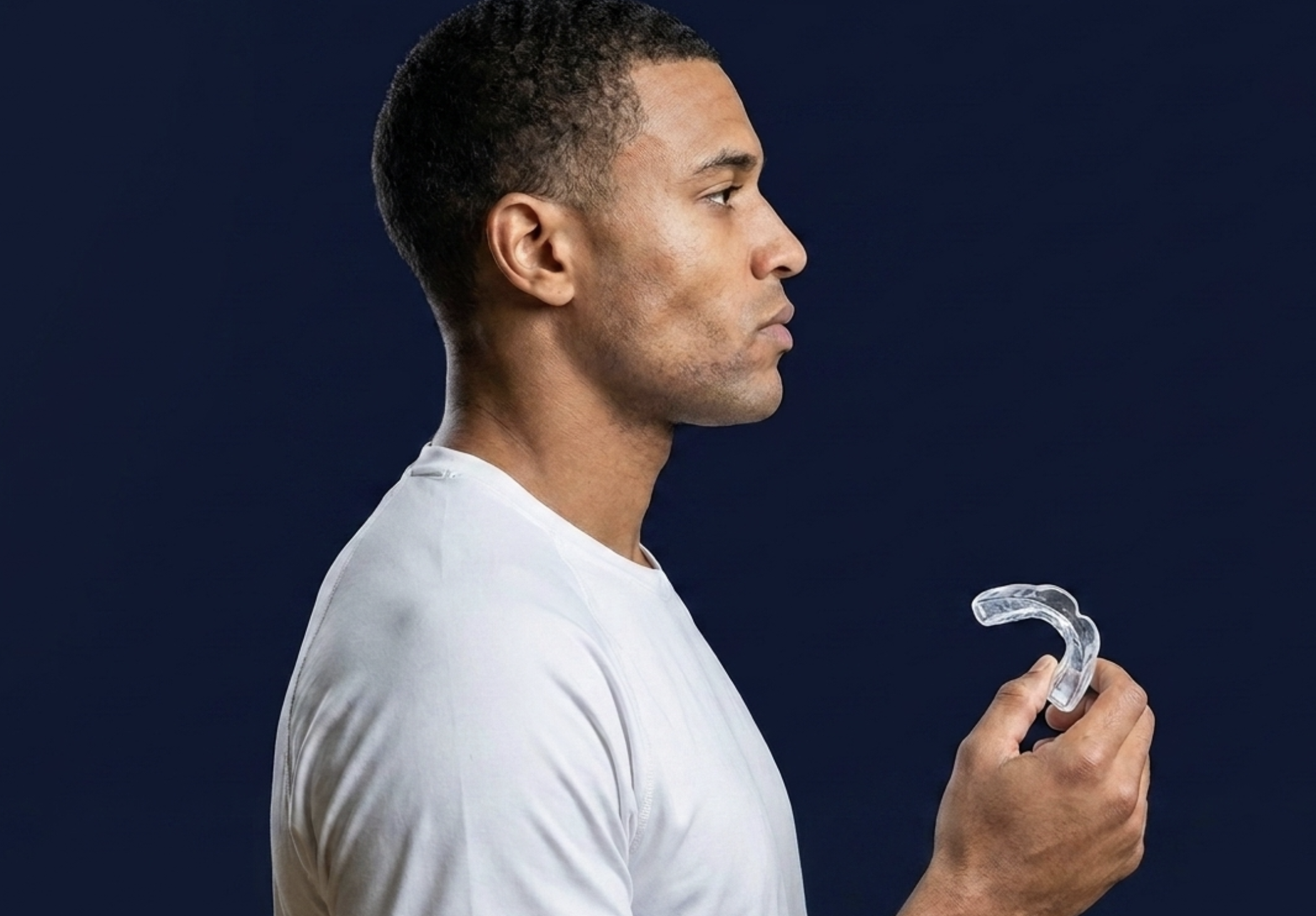
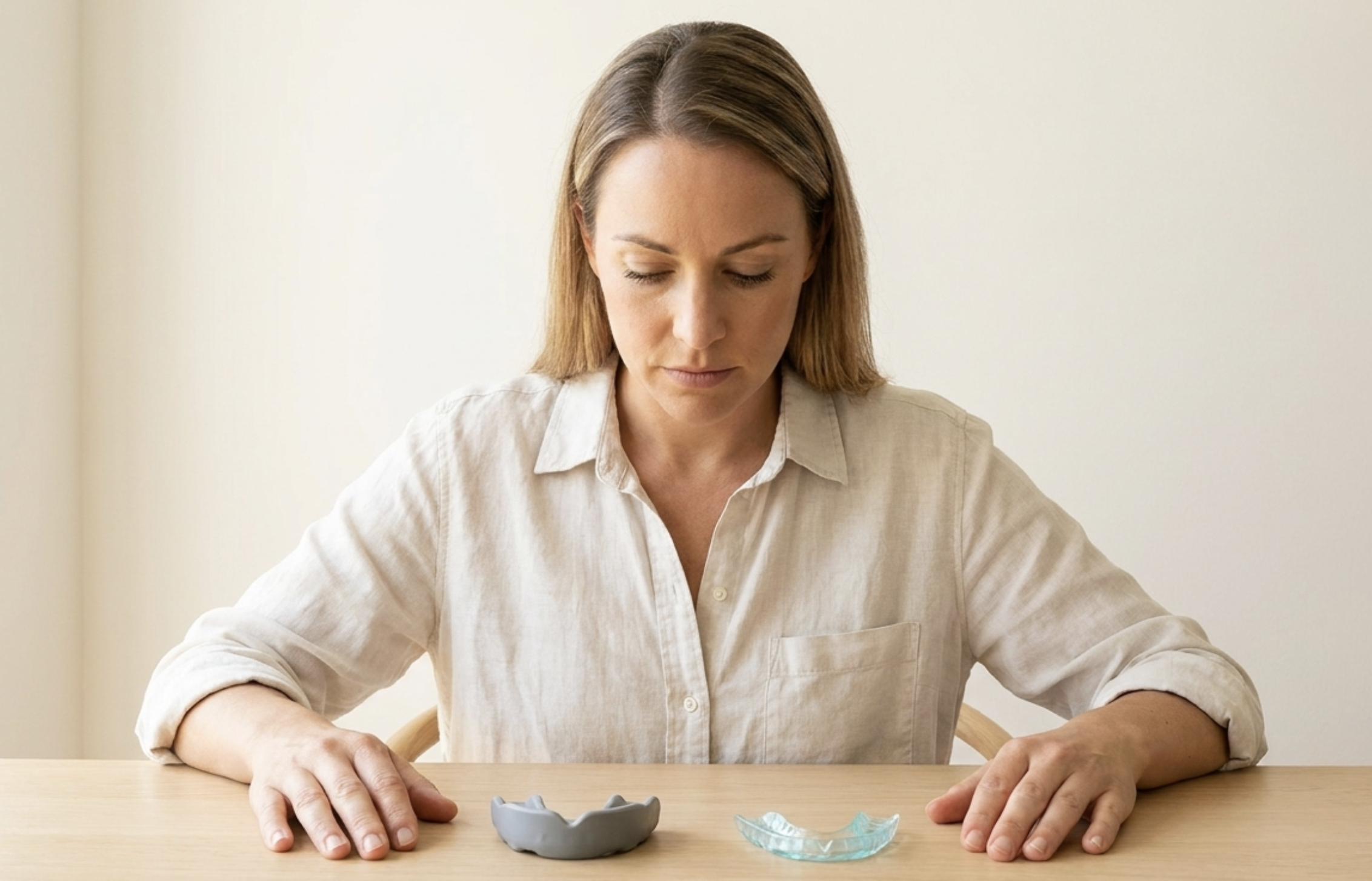
Sports mouthguard: Designed for impact distribution. Thicker — typically 3–5mm — because the primary threat is a sudden high-force collision: an elbow, a ball, a floor. The thickness and softness absorb and distribute impact energy laterally. Custom sports guards like Curry’s are typically between 3mm and 5mm, with custom trim lines for each player’s preference. They are worn during active play and removed between sessions.
Night guard: Designed for sustained compressive force. The threat is not impact but sustained clenching and grinding across 7–8 hours of sleep — a fundamentally different force pattern. Hard acrylic or dual-laminate material that doesn’t compress under sustained load. Fitted precisely to the arch to distribute force evenly rather than absorbing it through thickness. Custom fit from dental impressions rather than general thickness.
A sports guard used as a night guard for bruxism is the wrong tool — its soft compressible material designed for impact absorption is exactly wrong for sustained clenching. For confirmed clenchers, soft compressible material can stimulate more muscle force, not less. The right night guard for the clenching pattern Curry’s chewing habit represents is hard acrylic, not soft thermoplastic.
What This Means for You
If you wake up with a sore jaw, clench during stressful work periods, or notice your teeth are showing wear at dental check-ups — you are experiencing the same jaw force mechanism that NBA players manage as a matter of professional necessity. The difference is that they have a mouthguard for every game, and you may have nothing for 8 hours of sleep or 10 hours at a desk.
The appropriate guard for non-athlete jaw clenching is not a sports guard — it’s a custom-fit hard acrylic night guard for nighttime bruxism, or an ultra-thin custom daytime guard for desk clenching. Both protect teeth from the sustained compressive force that the NBA mouthguard is protecting against in a different context.
Every player on both playoff rosters wears a mouthguard. The question is whether you have equivalent protection for the 8-hour shift your jaw runs every night.
The Reviv model selector matches your clenching pattern to the right FDA-registered Class I appliance — or browse the full range.
Frequently Asked Questions
Why do NBA players chew their mouthguards?
It’s a habitual stress response — the same neurological mechanism that drives teeth grinding at night. High-intensity sport produces sympathetic nervous system activation that elevates jaw muscle tone. Chewing the guard provides an oral motor outlet for that tension. Steph Curry’s documented chewing habit is the most visible example, and a Harvard psychologist described it as providing “a rhythm unique to him” — a focus ritual that channels arousal into consistent pre-shot behaviour rather than dissipating as jaw tension.
Why do NBA players wear mouthguards?
Two reasons. Primary: impact protection from elbows, hands, and heads at speed — the elbow that gave Curry seven stitches and launched the most famous mouthguard habit in sports. Secondary: jaw force management during exertion. Explosive athletic movement involves jaw clenching as part of full-body force generation. A mouthguard distributes this force and protects teeth from the cumulative damage of repeated clenching episodes during play.
How many blocks did Wembanyama get in Game 1 vs Timberwolves?
Victor Wembanyama recorded 12 blocks in Game 1 of the 2026 Western Conference Semifinals against the Minnesota Timberwolves — setting the NBA postseason single-game blocks record. He finished with 11 points, 15 rebounds, and the historic 12 blocks in a 104-102 loss. The previous record of 10 had been matched only three times in postseason history.
Is a sports mouthguard the same as a night guard?
No — they serve different primary purposes with different specifications. A sports guard is designed for impact distribution: thicker (3–5mm), softer material, absorbs sudden collision force. A night guard is designed for grinding and clenching protection: fitted precisely to your arch in hard acrylic or dual-laminate, absorbs sustained compressive force during sleep. Using a sports guard as a night guard for bruxism is the wrong tool — its soft material is exactly wrong for clenchers, who need a non-compressible surface.
Do I need a night guard if I clench during exercise or at my desk?
If you clench during exercise or concentration and also grind at night, a night guard protects your teeth from the nighttime force — the same principle as an NBA guard for on-court force. If you primarily clench during the day, an ultra-thin custom daytime guard is the right appliance. Both protect teeth from clenching force; they differ in thickness (3mm for night, 1mm for day) and whether they suit daytime speech and discretion.