


Can magnesium stop jaw clenching?
Which type of magnesium is best?
How long before it helps?
Can I use it instead of a night guard?
Signs of magnesium deficiency?

If you suffer from chronic jaw clenching, you’ve probably tried several approaches: exercises, heat packs, stress reduction, maybe a night guard. But there’s one intervention that most people overlook — a mineral that’s involved in over 300 biochemical reactions in the body, many of which directly relate to muscle function, nerve signalling, and stress response.
Magnesium is often called “nature’s muscle relaxant.” For chronic clenchers, a suboptimal magnesium level could be a meaningful contributing factor to jaw muscles that stay in a state of tension when they shouldn’t.
This article covers how magnesium works, why it matters for jaw clenching specifically, which forms are worth taking, and how it fits into a complete protective approach alongside a night guard.
The Role of Magnesium in Muscle Function
To understand why magnesium matters for jaw clenching, you need to understand how muscles contract and relax at the cellular level.
When your brain sends a signal to clench, calcium rushes into muscle cells, causing the muscle fibres to shorten and contract. For the muscle to relax, calcium must leave the cell — and magnesium must enter. Magnesium acts as a natural calcium antagonist, blocking calcium from keeping the muscle in a contracted state and allowing the fibres to lengthen and release.
When magnesium levels are suboptimal, muscles can stay in a state of semi-contraction — more easily triggered into full contraction and slower to fully relax. For jaw muscles that are already predisposed to tension through stress, posture, or bruxism, inadequate magnesium removes a key mechanism for releasing that tension.
The jaw muscles affected most by this are the masseter and temporalis — the primary clenching muscles. Both are powerful, frequently overloaded in bruxers, and responsive to the calcium-magnesium balance.
Magnesium and the Stress Response
Chronic stress is a major driver of jaw clenching. Magnesium plays a direct role in regulating how the body responds to stress — through two primary mechanisms.
GABA receptor modulation
Magnesium binds to and modulates GABA receptors — the same receptors targeted by anxiolytic medications. GABA is the primary inhibitory neurotransmitter in the central nervous system: it reduces neural excitability and promotes calm. Adequate magnesium supports GABA activity, reducing the nervous system’s overall level of arousal. Less neural arousal translates to less jaw muscle activation at rest.
Cortisol regulation
Magnesium helps regulate cortisol release. High cortisol is directly linked to increased muscle tension — it’s part of the sympathetic activation response. Sustained high cortisol from chronic stress keeps muscles in a higher baseline tone, including the jaw. Adequate magnesium moderates this response.
There’s also a feedback loop worth knowing: stress depletes magnesium stores. The more stressed you are, the more magnesium you use — which reduces your capacity to regulate the stress response, which increases jaw tension. Supplementing during high-stress periods directly addresses this depletion.
Are You Getting Enough Magnesium?
A significant proportion of adults don’t meet recommended magnesium intake through diet alone. Contributing factors include reduced magnesium in depleted agricultural soils, food processing that removes magnesium from whole foods, and diets low in the specific food categories where magnesium is concentrated.
Signs that magnesium intake may be suboptimal include:
- Muscle cramps and twitches, especially leg cramps at night
- Chronic jaw clenching that worsens under stress
- Tension headaches, particularly at the temples
- Difficulty falling or staying asleep
- Anxiety and irritability without clear cause
- Chronic fatigue that isn’t explained by sleep quantity
None of these symptoms is diagnostic of deficiency — they overlap with many conditions. But if several apply, optimising magnesium intake is a low-risk intervention worth trying.
Dietary Sources: The Foundation
Food sources of magnesium are the best starting point — the mineral is absorbed effectively from whole foods and comes with other beneficial nutrients.
Foods with the highest magnesium content per serving:
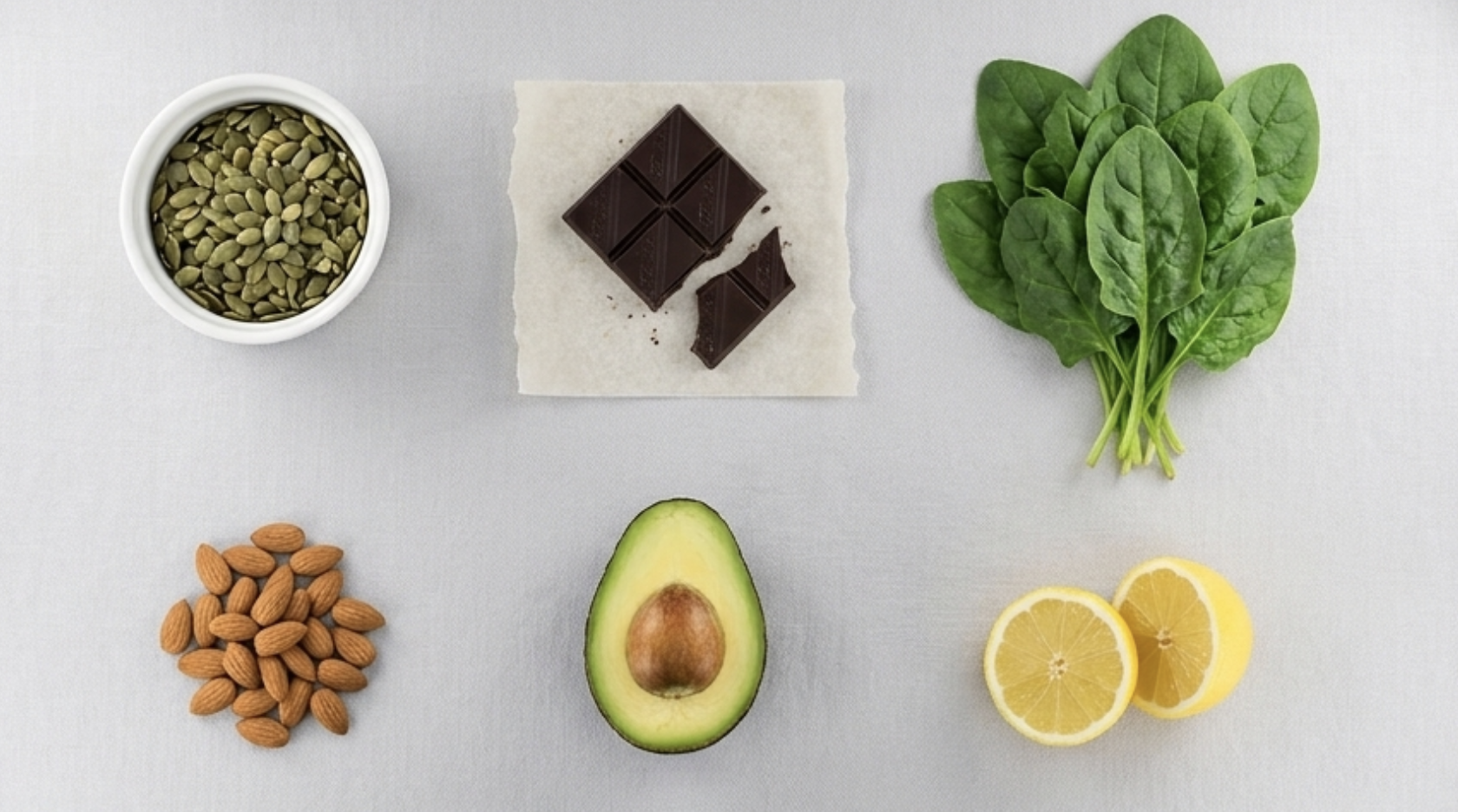
- Leafy greens — spinach, kale, Swiss chard (the chlorophyll molecule contains magnesium at its centre)
- Nuts and seeds — pumpkin seeds are exceptionally high; almonds, cashews, chia seeds
- Legumes — black beans, lentils, chickpeas
- Whole grains — brown rice, whole wheat, oats
- Dark chocolate — 70% cocoa or higher; a small square provides meaningful magnesium alongside flavonoids
- Avocado — good source alongside healthy fats
A varied diet that includes several of these categories daily will cover much of your magnesium requirement. The issue for many people is consistency — these foods require deliberate inclusion rather than appearing in the standard Western diet by default.
Supplementation: Which Form Matters
Not all magnesium supplements are equally effective. The form determines bioavailability — how much of the dose is actually absorbed and used by the body.
| Form | Best for | Notes |
|---|---|---|
| Magnesium glycinate | Muscle relaxation and sleep | Highly bioavailable, least likely to cause digestive upset. Glycine component has additional calming effects. The recommended form for jaw clenching. |
| Magnesium citrate | General supplementation | Good absorption. High doses have a laxative effect — start low and adjust. |
| Magnesium threonate | Cognitive function, anxiety | Crosses the blood-brain barrier effectively. More expensive. Good for anxiety-driven clenching. |
| Magnesium malate | Energy, muscle fatigue | Malate involved in energy production. Good option for people with chronic fatigue alongside clenching. |
| Magnesium oxide | Antacid / constipation | Poorly absorbed as a magnesium supplement. Not appropriate for muscle relaxation. |
For jaw clenching specifically: Magnesium glycinate is the most commonly recommended form. Take it in the evening — the muscle-relaxing and sleep-promoting effects are most useful during the hours when nighttime clenching occurs. Standard supplementation doses range from 200–400mg elemental magnesium daily; start at the lower end and assess tolerance.
Topical Application: A Complementary Approach
Magnesium can also be absorbed transdermally — through the skin — bypassing the digestive system. Topical application is a useful complement to oral supplementation, particularly for targeted relief.
Epsom salt baths
Epsom salt is magnesium sulfate. Soaking in a warm bath with 1–2 cups of Epsom salt provides whole-body muscular relaxation, including the jaw. Useful as an evening wind-down routine that supports both physical and nervous system relaxation before sleep.
Magnesium oil or spray
Applied directly to the jaw, neck, and shoulder muscles, magnesium chloride sprays can provide targeted relief for tension in the specific areas most affected by clenching. Some people find this more practical than a bath for regular use. Apply to the masseter and neck muscles in the evening as part of the pre-sleep routine.
The Magnesium and Night Guard Pairing
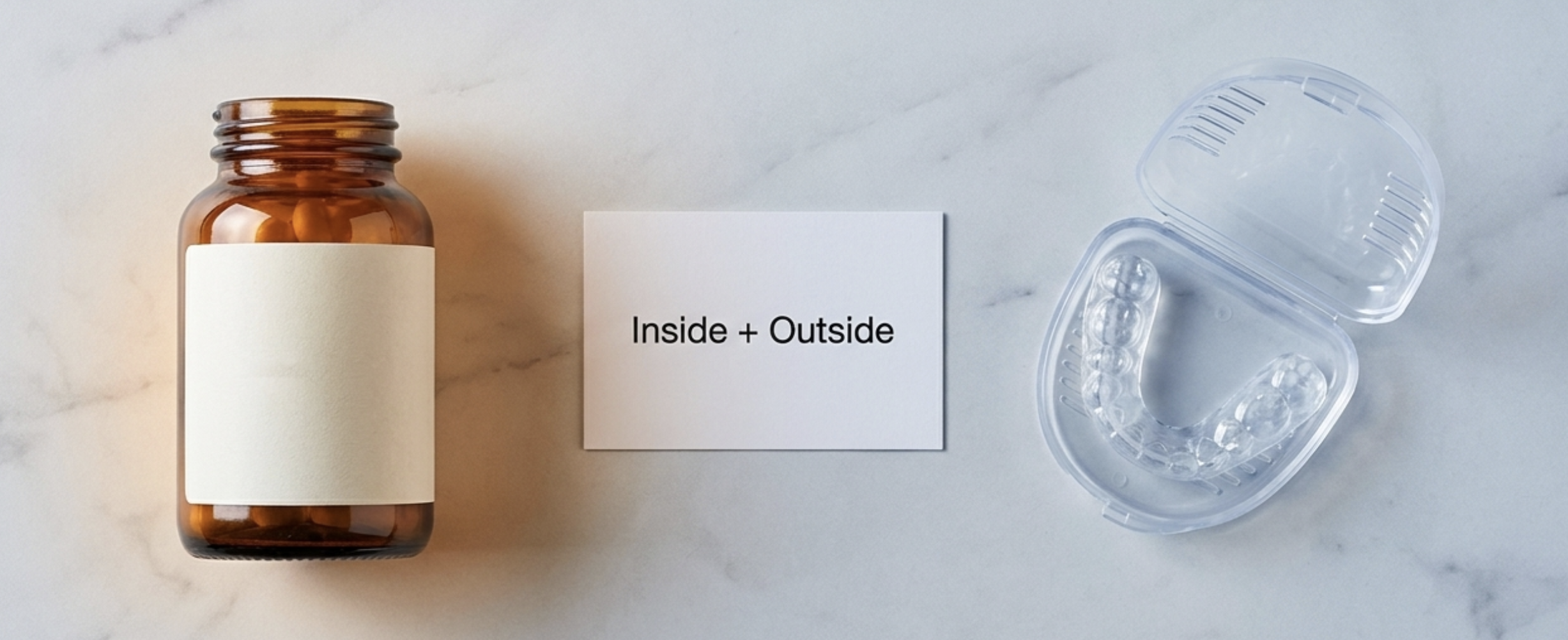
Magnesium and a night guard address jaw clenching through completely different mechanisms — which is exactly why they work well together rather than being alternatives to each other.
Magnesium works chemically — reducing the muscle excitability and nervous system arousal that drives clenching. It makes clenching episodes less frequent and less forceful. It does not protect your teeth from the force of whatever clenching does occur.
A night guard works mechanically — absorbing the compressive force before it reaches your enamel. It does not reduce the frequency or intensity of clenching. It protects against the dental consequences of whatever clenching occurs.
Used together: magnesium reduces what the guard needs to absorb; the guard absorbs what the magnesium doesn’t prevent. Each covers the other’s limitation. Choosing the right guard for your clenching pattern matters as much as choosing the right magnesium form.
A Word of Caution
Magnesium is generally well-tolerated, but a few notes worth knowing:
- Kidney disease: Impaired kidneys cannot excrete excess magnesium efficiently. People with kidney disease should not supplement without medical guidance.
- Medication interactions: Magnesium can interact with certain antibiotics, diuretics, and proton pump inhibitors. Check with your prescriber if you take prescription medications.
- Digestive effects: Magnesium citrate and oxide in high doses can cause loose stools. Magnesium glycinate is much less likely to cause this.
- Upper tolerable limit: The upper tolerable limit for supplemental magnesium is 350mg/day for adults (not counting dietary magnesium). Doses above this should be taken under medical guidance.
Frequently Asked Questions
Can magnesium stop jaw clenching?
Magnesium supports muscle relaxation by reducing cellular excitability — it allows muscles to release contraction rather than staying in a semi-contracted state. It doesn’t stop the neurological clenching reflex, but adequate magnesium reduces the muscle excitability that makes clenching worse and more forceful. Most effective as one part of a broader approach alongside a night guard.
What type of magnesium is best for jaw clenching?
Magnesium glycinate is the most commonly recommended form. It’s highly bioavailable, least likely to cause digestive upset, and the glycine component has additional calming effects on the nervous system. Take in the evening for maximum muscle-relaxing and sleep-promoting benefit. Magnesium threonate is an alternative if anxiety is a primary driver.
How long does magnesium take to help with jaw clenching?
Most people who respond to magnesium supplementation report noticing reduced jaw tension within 2–4 weeks of consistent daily use. People with significant depletion tend to respond faster as stores replenish. Magnesium is not an immediate intervention — it works by gradually restoring depleted stores and rebalancing the calcium-magnesium ratio in muscle tissue.
Can I use magnesium instead of a night guard?
No — they address different aspects of the same problem. Magnesium reduces the frequency and intensity of clenching; a night guard absorbs the compressive force of whatever clenching occurs. Enamel doesn’t regenerate — the mechanical protection of a guard is not optional for confirmed clenchers. Magnesium without a guard leaves your teeth unprotected from the force that does occur.
What are the signs of magnesium deficiency related to jaw clenching?
Muscle cramps and twitches (particularly leg cramps at night), jaw clenching that worsens markedly under stress, tension headaches at the temples, difficulty sleeping, anxiety and irritability, and chronic fatigue. These symptoms overlap with many conditions, but if several apply together, optimising magnesium intake is a reasonable low-risk intervention.
