
What is masseter Botox?
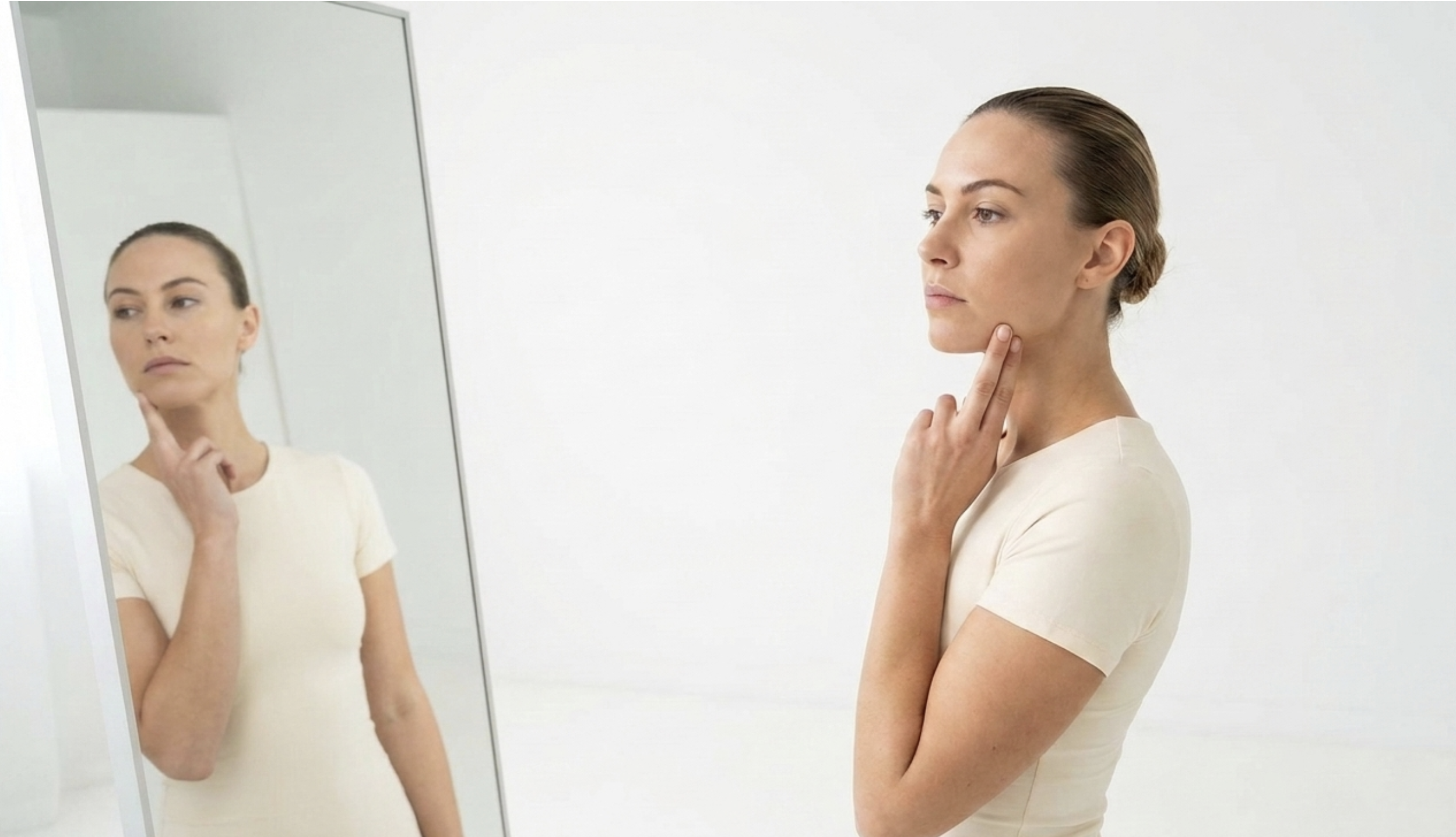
Does grinding change your face shape?
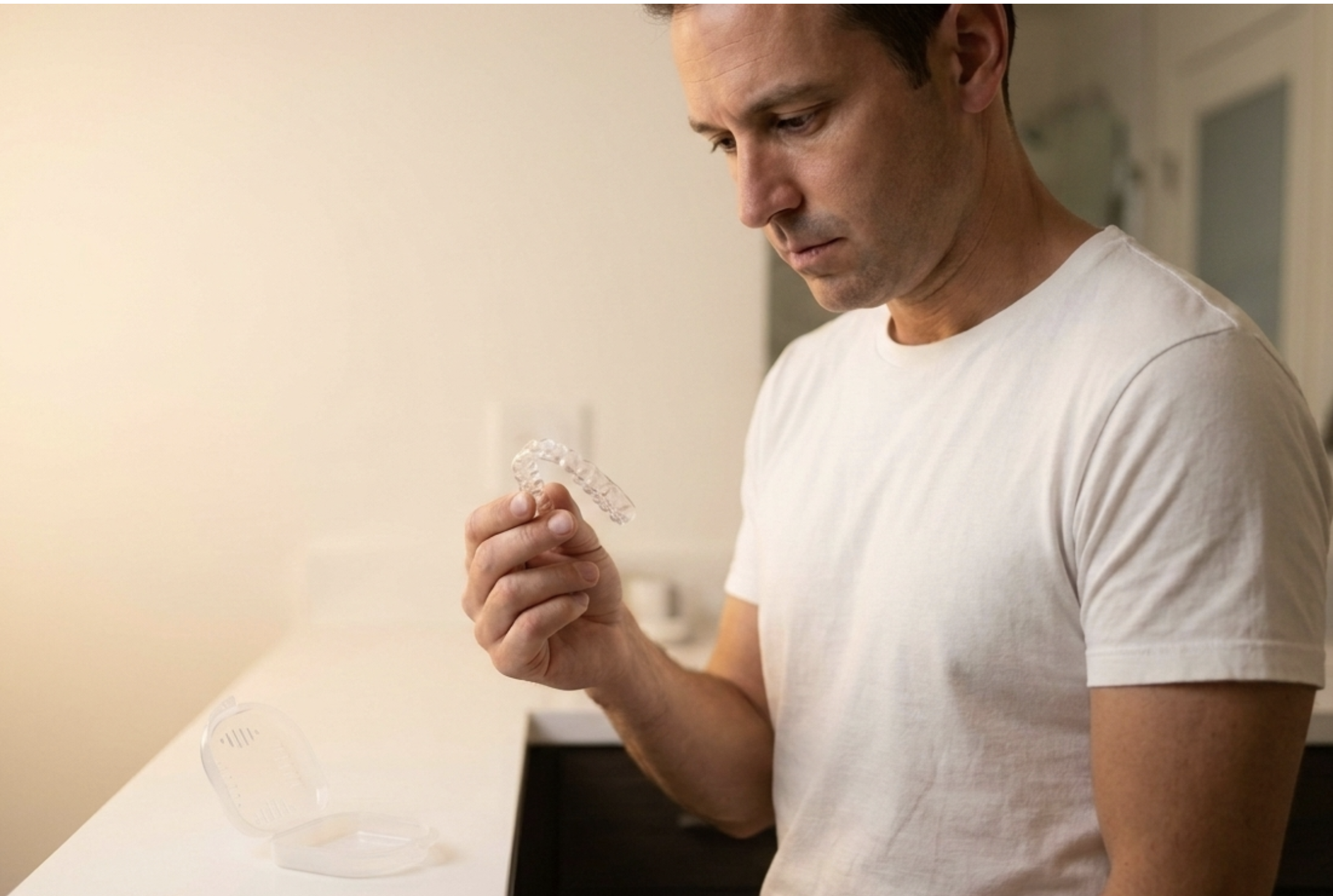
Should I get a night guard before Botox?
What is cortisol face?
Can a night guard slim your face?

The Met Gala red carpet is many things — a fashion event, a cultural spectacle, an annual audit of who has aged well and who hasn’t. In 2026, the beauty conversation that keeps surfacing alongside the gowns is the jawline. Sharp, defined, architecturally clean lower faces have become the aesthetic benchmark, and the beauty press is both celebrating them and quietly asking how they got that way.
Marie Claire’s live coverage of the 2026 Met Gala called out that “Olivia Wilde has the best jawline in Hollywood.” The conversation is not unique to this year — but the frankness about what’s driving these looks is new. Masseter Botox has gone mainstream. “Cortisol face” has entered the cultural vocabulary. And the aesthetic medicine industry is openly calling the jaw-slimming injection “the Red Carpet Jawline.”
This article separates the three things that are being conflated in this conversation: what’s real anatomy, what’s aesthetic intervention, and what’s tension-induced change that has nothing to do with either.
The Jawline Conversation at the Met Gala 2026
The 2026 Met Gala theme of “Costume Art” brought the usual extraordinary fashion — but the beauty commentary running alongside it has a recurring preoccupation with jaw definition. Sharp lower face angles have become the aesthetic marker of the moment, and the frankness about how they’re achieved has shifted significantly.
In 2026, aesthetic medicine coverage describes masseter Botox as “the Red Carpet Jawline” — originally developed to treat teeth grinding, now one of the most requested procedures in aesthetic medicine. The double function of this single injection — therapeutic and cosmetic — is why it has crossed from dental practice into celebrity beauty coverage, and why it’s appearing in the same sentence as Met Gala jawlines.
The question worth asking is: how much of what you’re seeing on a red carpet is the result of injectable intervention, how much is anatomy, and how much is the visible consequence of chronic jaw tension that’s been addressed or left unaddressed? The answer is different for different faces — and understanding the distinction matters if you’re considering any of these options for your own.
The Masseter: The Muscle Behind the Look
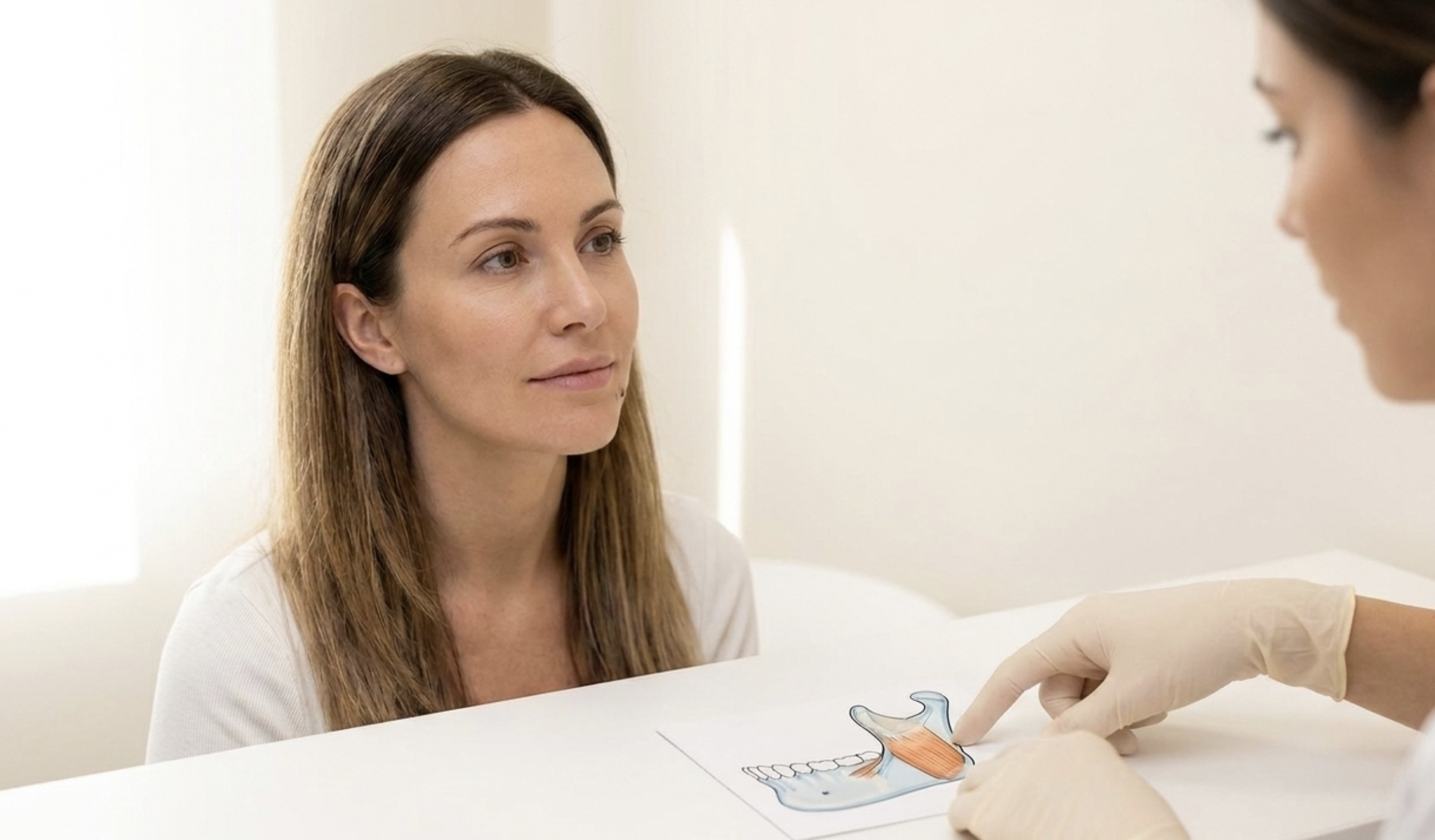
The masseter is the primary jaw-closing muscle. It runs from the zygomatic arch (cheekbone) to the angle of the mandible (lower jaw) on each side of the face. When you bite, chew, or clench, the masseter is the primary driver. It is one of the strongest muscles in the human body relative to its size — capable of generating significant sustained force, which is exactly why chronic overuse has consequences.
Like any skeletal muscle subjected to repeated high-force contractions, the masseter hypertrophies under chronic loading. A confirmed heavy bruxer — someone grinding or clenching with significant force for hours every night — is effectively training their masseter the same way someone training their biceps would enlarge that muscle over months and years. The result is a visibly wider, squarer lower face with more prominent jaw angle definition.
This is the biomechanical fact that connects red-carpet jawline aesthetics to a dental health conversation. The defined lower face that aesthetic medicine is now openly trying to create or preserve is, for a subset of people, the unintentional consequence of a jaw muscle that has been overworked by bruxism.
What Masseter Botox Actually Does — Both Functions
Masseter Botox — botulinum toxin injected into the masseter — was developed and is clinically validated as a treatment for bruxism and jaw tension. The mechanism: the toxin temporarily blocks the nerve signals that cause the muscle to contract at full force. The masseter still functions for eating and normal jaw movement, but the involuntary high-force clenching episodes are significantly reduced.
The aesthetic consequence of this therapeutic effect is what drove masseter Botox into the beauty conversation. When the masseter is no longer contracting at high intensity repeatedly, it reduces slightly in size over 6–12 weeks — the same way any muscle used less will reduce. For someone whose masseter was visibly enlarged from grinding, this reduction creates a slimmer, more angular lower face profile.
The procedure requires repeat treatment every 4–6 months to maintain results, because the nerve signals eventually recover and muscle activity returns to baseline. The facial change is not permanent — it requires ongoing maintenance in the same way any injectable aesthetic treatment does.
Two important limitations worth naming directly: masseter Botox reduces the muscle’s activity but doesn’t eliminate grinding. Teeth still come into contact during sleep, still generate force, and still cause enamel wear even with Botox on board. And Botox addresses the muscle — it does nothing to protect the teeth from the grinding force that continues.
Cortisol Face, Stress, and the Jaw
“Cortisol face” has moved from wellness social media into broader cultural conversation — the term refers to facial puffiness and fullness associated with chronically elevated cortisol, the primary stress hormone. High cortisol promotes fluid retention and fat redistribution toward the face and midsection, producing the full, slightly puffy facial appearance that the term describes.
The jaw component of cortisol face is worth separating from the fat redistribution piece, because they have different drivers and different interventions.
High cortisol directly elevates sympathetic nervous system tone — the same activation that drives daytime jaw clenching during stress. A person under chronic stress has both elevated cortisol (driving the fluid and fat component) and elevated jaw muscle tone (driving masseter hypertrophy from the clenching response). The lower-face fullness they experience is a combination of both effects.
This is why the cortisol face conversation and the masseter Botox conversation have become linked. Managing stress — which reduces cortisol — addresses the fluid retention component. Managing bruxism — which reduces the clenching that enlarges the masseter — addresses the muscle component. Masseter Botox addresses the muscle component directly, regardless of whether cortisol management is also underway.
For anyone whose “cortisol face” concern centres on the jaw specifically, the question is which component is dominant: the fluid retention driven by stress hormones, or the masseter enlargement driven by stress-induced clenching. Identifying whether jaw clenching is a significant part of your stress response is the starting point for deciding which intervention is most appropriate.
How Grinding Changes Your Face Shape Over Time
The relationship between chronic bruxism and facial structure is direct and progressive, though it develops slowly enough that most people don’t notice it happening.
In the early stages — months of heavy grinding — the masseter may feel sore or fatigued in the morning, but no visible change has occurred. Over one to two years of heavy nightly grinding, the muscle begins to visibly hypertrophy at the jaw angle. Over several years, the change becomes pronounced enough that a dentist or aesthetician can identify it from the face alone without needing to ask about grinding history.
The changes that occur alongside masseter hypertrophy compound the effect: enamel wear flattens the biting surface of teeth, which can slightly reduce facial height and alter the resting relationship between upper and lower jaws. In very long-term severe bruxers, this can subtly change the overall lower face shape beyond just the muscle component.
This is the part of the conversation that rarely appears in beauty coverage of masseter Botox: the muscle that is being treated aesthetically is often enlarged because of a dental health condition that is causing ongoing damage. Slimming the masseter with Botox without addressing the underlying grinding treats the visible consequence while the cause continues.
What’s Real, What’s Aesthetic Intervention, and What’s Just Tension
The three categories that the Met Gala jawline conversation conflates:
Real anatomy
Some people simply have strong jaw angle definition as a function of bone structure — the angle and width of the mandible, the projection of the jaw, and the depth of the chin are primarily genetic. A defined jawline without a history of bruxism or aesthetic intervention is likely structural. Bone structure doesn’t change with Botox — only the overlying muscle does. This is why masseter Botox produces a different facial change in different people: someone with prominent bone structure and a hypertrophied masseter will look very different from someone with less prominent bone structure and the same muscle size change.
Aesthetic intervention
Masseter Botox for jaw contouring in someone without significant bruxism — purely cosmetic, reducing a masseter that hasn’t been enlarged by grinding but is naturally full. The result is a slimmer lower face. This is a legitimate aesthetic choice that has nothing to do with dental health. The distinction from therapeutic Botox is simply the driver: aesthetic vs dental.
Tension-induced change
Masseter hypertrophy from chronic bruxism — the muscle is enlarged because it has been working at high intensity for years. This is where the dental health conversation and the aesthetic conversation intersect directly. The enlarged masseter is both an aesthetic concern (square lower face) and a sign of ongoing dental damage (enamel wear, tooth fractures, restoration failure). Treating the aesthetic component without the dental component is incomplete management.
The Night Guard First Principle
Most dental professionals who see patients seeking masseter Botox for jaw tension or facial contouring will recommend addressing the underlying grinding first — or simultaneously. The reasoning is straightforward.
Masseter Botox reduces the muscle’s force output but does not stop the grinding events. If grinding continues unprotected, the enamel wear continues, the tooth fracture risk continues, and the restorations you’ve invested in remain at risk — even as the muscle slims cosmetically. The Botox is treating the visual consequence; the guard protects the dental consequence. Both may be entirely appropriate, but the guard comes first in the sequence because the dental damage is not reversible in the way that the muscle change is.
The economic argument is also straightforward: a custom night guard costs $80–$200 from a DTC lab. A single masseter Botox session costs $300–$800 and requires repeat treatment every 4–6 months indefinitely. If the bruxism is the driver of the masseter hypertrophy, addressing it with a guard first — and observing whether the muscle reduces over 6–12 months as the grinding stimulus decreases — is a significantly less expensive starting point. For some people it’s sufficient without Botox. For others the Botox is still appropriate, but on top of a foundation of dental protection rather than instead of it.
The relevant article on this specific question is covered more fully here: whether a night guard can change your face shape — with the mechanism and realistic expectations explained honestly.
The Bottom Line
The Met Gala jawline conversation reflects a genuine and interesting intersection of aesthetic medicine and dental health. Masseter Botox is both a legitimate aesthetic procedure and a clinically validated bruxism treatment, and the fact that it serves both purposes is why it has crossed from dental offices into beauty coverage.
But the conversation in beauty media largely skips the dental health component — treating masseter Botox as a purely aesthetic intervention without acknowledging that a significant proportion of people seeking it have an underlying grinding condition that is causing dental damage. For that group, a night guard is not the alternative to Botox — it’s the foundation that makes Botox make sense as the next step.
If you’ve noticed jaw fullness, morning soreness, or been told by a dentist that your teeth show grinding wear — the sequence is guard first, then assess whether Botox is appropriate with the underlying condition being managed. The Reviv model selector matches your pattern to the right FDA-registered Class I appliance as that first step.