
Why do I clench my jaw in cold weather?
Is it normal to wake with jaw pain in winter?
Does cold air make grinding worse?
How do I stop clenching in cold weather?
Why does my jaw hurt more in winter?

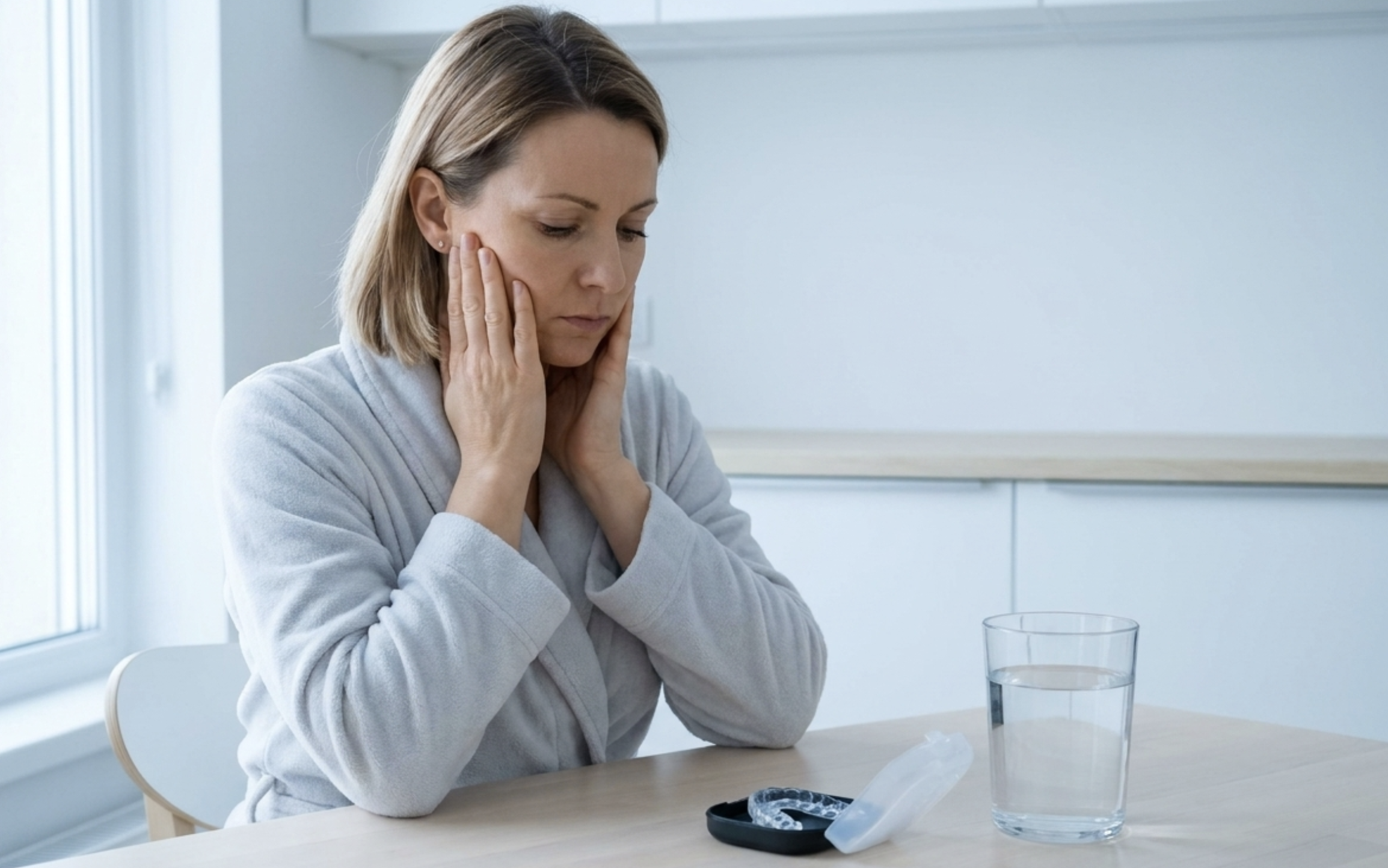
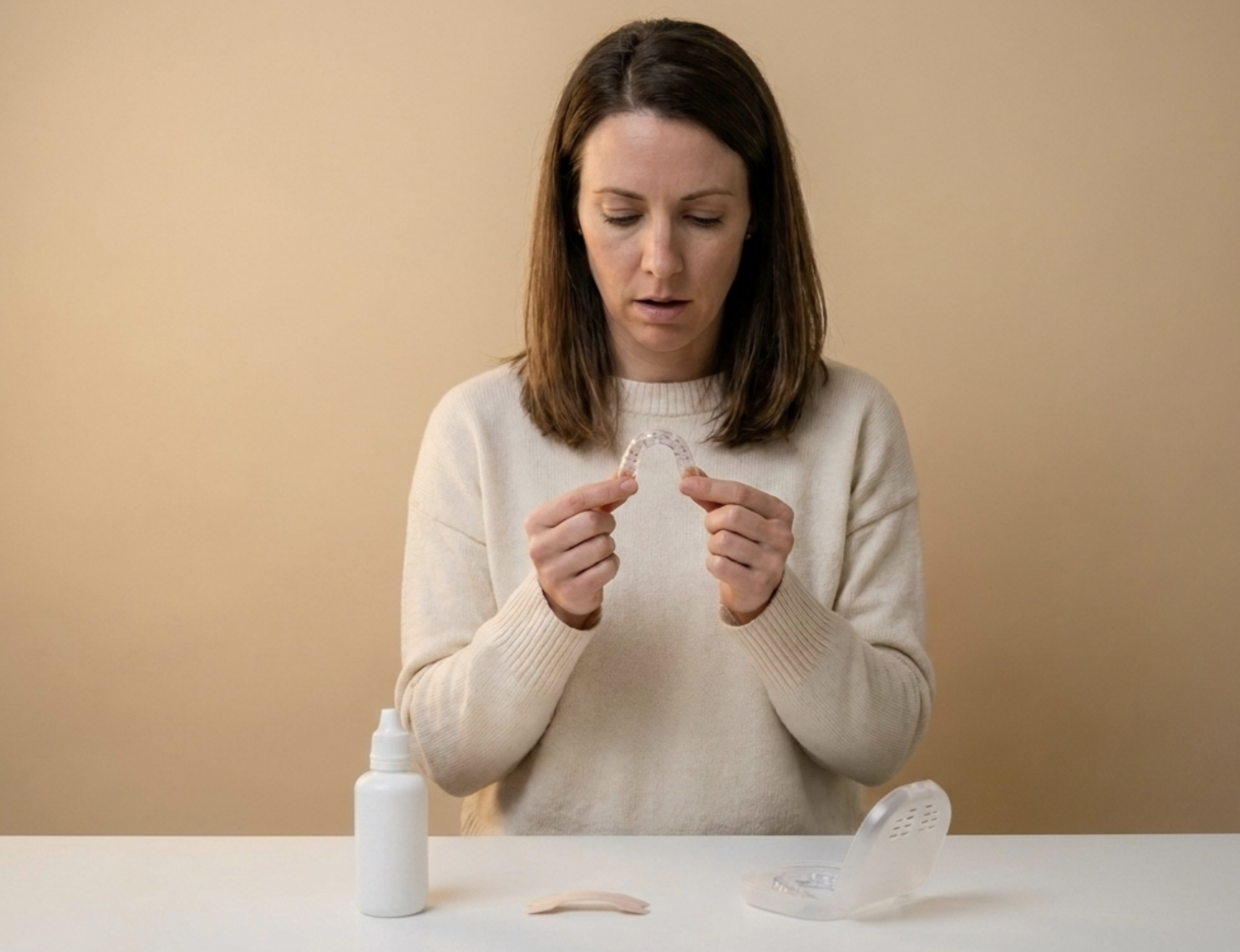
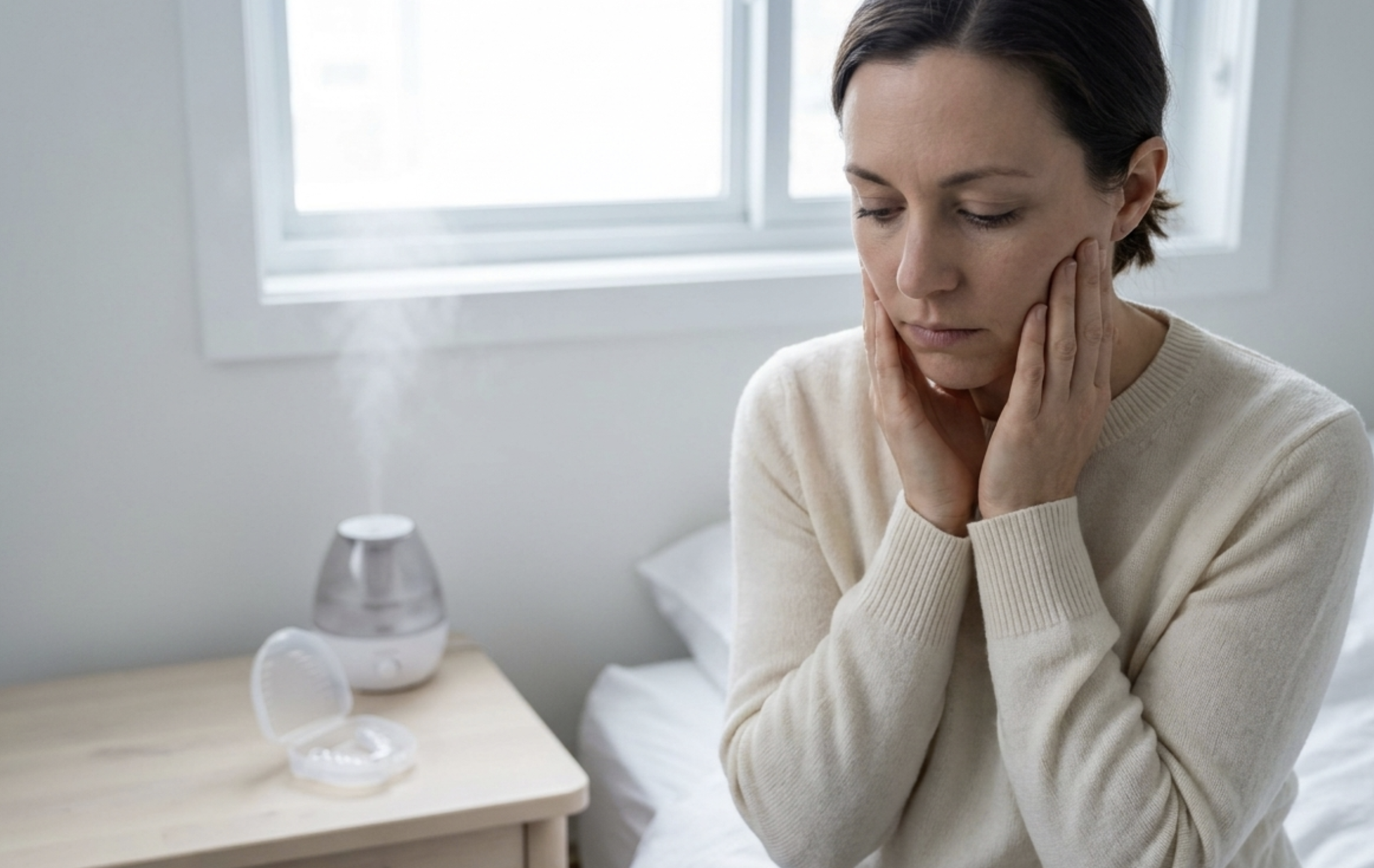
The National Weather Service has issued a Winter Storm Watch for mountain regions of Wyoming — up to 16 inches of snow and 45 mph winds expected through mid-week. For most of the country, the cold season is well underway in winter months, and if you’ve noticed your jaw feels worse in cold weather — tighter, more fatigued in the morning, more prone to the soreness that signals a bad night of grinding — you’re not imagining it.
Cold weather makes jaw clenching worse. The mechanism is not a single thing but four distinct physiological pathways that operate simultaneously when temperatures drop, and understanding them matters because each one has a different intervention.
This article covers all four mechanisms — the shiver-clench reflex, cold air mouth breathing, dry indoor heating air, and barometric pressure changes — and then maps the practical fixes to each.
Cold Weather and Jaw Clenching: The Four-Mechanism Framework
Most articles about seasonal bruxism either don’t exist or stop at “cold weather causes jaw tension” without explaining why. The why matters because each mechanism has a different appropriate response — and treating them as a single problem produces incomplete solutions.
The four pathways through which cold amplifies jaw clenching:
- The shiver-clench reflex — cold activates the sympathetic nervous system, which elevates whole-body muscle tone including the jaw muscles
- Cold air mouth breathing — cold outdoor air triggers nasal breathing difficulty that forces mouth breathing, altering jaw and tongue resting position
- Dry indoor heating air — winter heating systems strip humidity from bedroom air, causing nasal congestion that promotes mouth breathing during sleep
- Barometric pressure changes — research associates weather system pressure changes with increased reported bruxism symptoms
Mechanism 1: The Shiver-Clench Reflex
When your body detects cold, it activates a thermoregulatory response — a coordinated effort to maintain core temperature and protect vital functions. This response is mediated by the sympathetic nervous system: the same pathway that drives the stress “fight or flight” response. The sympathetic activation of cold exposure produces increased heart rate, vasoconstriction in the extremities, shivering in the skeletal muscles, and — critically for jaw health — elevated baseline muscle tone throughout the body.
Jaw muscles are part of this whole-body sympathetic response. When you’re cold, your jaw muscles activate as part of the general protective muscular bracing the body initiates. You feel this consciously when you’re outside in cold wind and your teeth chatter — the jaw-closing muscles are contracting involuntarily as part of the shiver mechanism. What’s less noticed is the sustained mild elevation of jaw muscle tone that cold exposure produces even when you’re not actively shivering.
A person who already has a bruxism tendency is primed for elevated jaw muscle activation. Cold-triggered sympathetic activation adds to that baseline, both during cold exposure outdoors and during the overnight drop in bedroom temperature that occurs when heating systems cycle off. The result is more frequent and more forceful clenching episodes during cold nights — and more jaw soreness in the morning.
Mechanism 2: Cold Air and Mouth Breathing
Cold air is not kind to the nasal airway. The nasal passages warm and humidify incoming air — a process that requires mucous membranes to work harder in cold conditions. Cold air causes the nasal turbinates (the bony structures inside the nose covered in mucous membrane) to swell slightly as they try to warm and humidify more aggressively. The result is increased nasal resistance — and for many people, partial nasal obstruction.
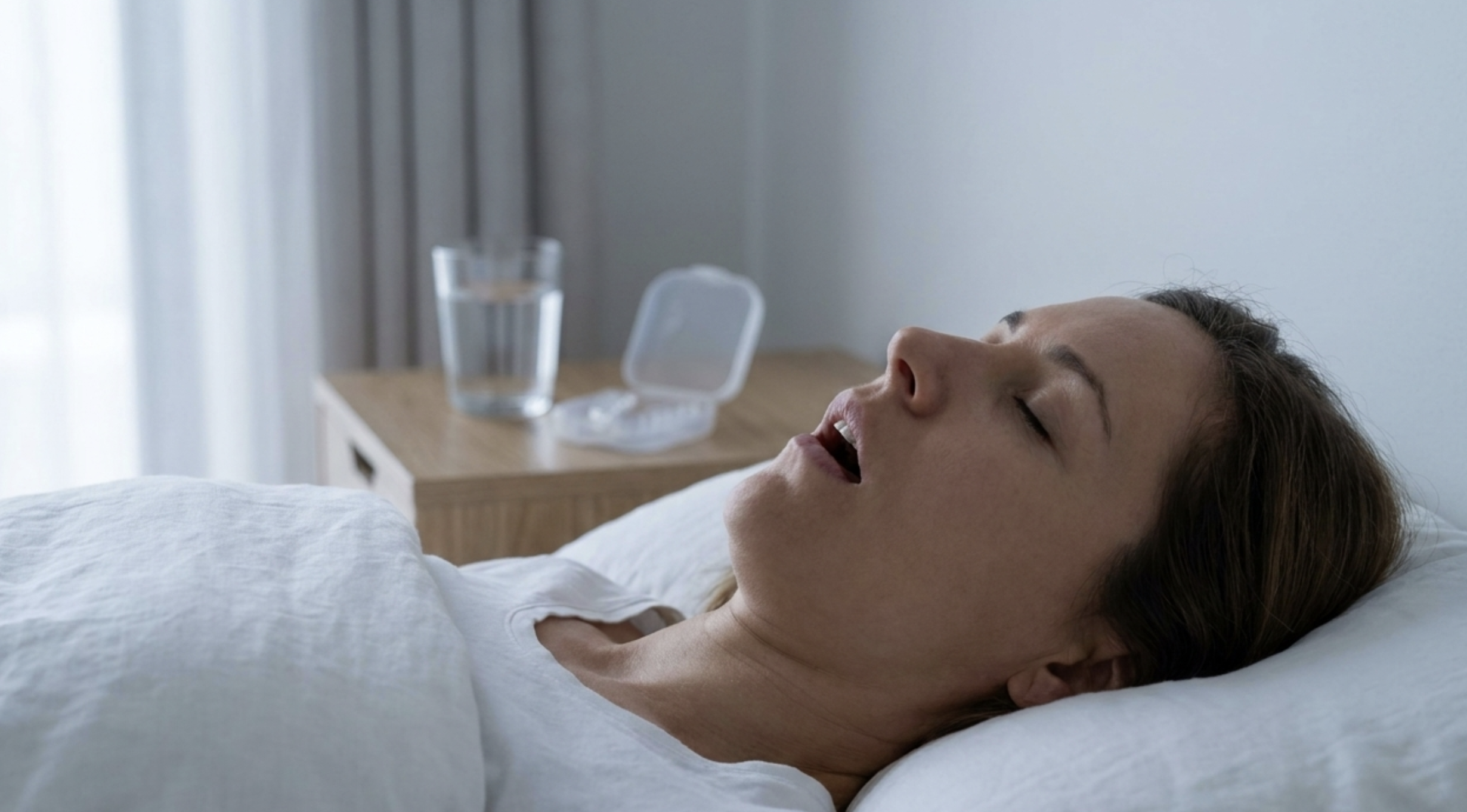
When nasal breathing is compromised, the body shifts to mouth breathing. Mouth breathing during sleep alters the resting position of the tongue (lower and more posterior) and the jaw (slightly open and forward), which increases the likelihood of partial airway obstruction during sleep. As covered in the airway-bruxism connection, airway obstruction during sleep triggers micro-arousals — brief sympathetic nervous system activations that can manifest as jaw clenching and grinding.
The cold-air pathway to worsened bruxism is therefore: cold air → nasal turbinate swelling → increased nasal resistance → mouth breathing → airway obstruction → micro-arousal → grinding episode. Each step is predictable and, importantly, each step is addressable.
Mechanism 3: Dry Indoor Heating Air and Sleep Breathing
This is the mechanism that operates most directly during sleep and is most often overlooked because it’s an indoor phenomenon — people associate cold-weather jaw problems with being outside in the cold, not with their bedroom environment.
Heating systems — whether forced air, radiators, or electric heaters — significantly reduce indoor humidity. In winter months, indoor relative humidity can drop to 20–30%, well below the 40–50% range where nasal passages function well. Low humidity dries the mucous membranes of the nasal passages, reducing their ability to warm and humidify air and promoting the same turbinate swelling and nasal resistance that cold outdoor air produces.
The consequence for sleep: a person whose nasal breathing is marginally adequate at normal humidity levels becomes a mouth breather during sleep in a dry heated bedroom. Their jaw and tongue drop to mouth-breathing position, their airway narrows, and the bruxism micro-arousal cycle described above activates more frequently than it would in a properly humidified room.
This is why many people notice their winter bruxism is worst in mid-season — not when temperatures first drop, but when they’ve been sleeping in a heated, dry room for weeks and the cumulative effect on nasal membrane function becomes significant. It’s also why a humidifier in the bedroom produces a notably faster improvement in morning jaw symptoms than almost any other intervention — it addresses the proximate cause rather than the downstream effects. Winter dry air also accelerates the biofilm formation that makes guard cleaning more important — dry conditions concentrate saliva on the guard surface more rapidly.
Mechanism 4: Barometric Pressure Changes
This is the most speculative of the four mechanisms but worth including because it’s reported consistently enough by people with bruxism to warrant acknowledgment, and because there is a plausible physiological basis for it.
Barometric pressure changes accompany weather system passage — the pressure drops as a storm system approaches and rises as it passes. Research on joint pain and pressure changes shows that many people with musculoskeletal conditions report symptom flares corresponding to pressure changes, with the proposed mechanism involving changes in joint fluid dynamics and tissue expansion as pressure varies.
For the jaw joint (the temporomandibular joint, or TMJ) and the surrounding muscles, similar dynamics may apply. Some people with bruxism report reliably worsened symptoms in the 24–48 hours before a significant storm system arrives — which is consistent with the pressure-drop timing of an approaching weather front.
The winter storm watch issued for Wyoming mountain regions represents exactly the kind of significant pressure event that people with weather-sensitive jaw symptoms notice. The practical takeaway is limited — barometric pressure is not something you can directly intervene on — but knowing that an approaching storm may worsen jaw symptoms provides useful advance notice to be consistent with other interventions in the days surrounding significant weather events.
How Cold Disrupts Sleep Bruxism Specifically
Beyond the four direct mechanisms, cold weather affects the sleep architecture in ways that compound bruxism.
Sleep quality degrades in very cold or very warm bedrooms — the optimal sleep temperature is typically cited as 65–68°F (18–20°C), and temperatures significantly below this produce more frequent arousals and lighter sleep stages. Bruxism occurs predominantly in lighter sleep stages (N1 and N2 non-REM sleep, and during REM). More time in lighter sleep stages means more time in the stages where grinding is most likely.
The seasonal component of reduced daylight also affects bruxism patterns through neurotransmitter pathways. Reduced sunlight exposure in winter months lowers serotonin and dopamine production — both neurotransmitters influence the dopaminergic pathways associated with bruxism. The research on seasonal bruxism variation is not conclusive, but the clinical observation that many patients with bruxism report worse symptoms in winter months is consistent enough to take seriously.
The Practical Fixes — Mapped to Each Mechanism
For the shiver-clench reflex: warmth at the jaw and neck
Keeping the jaw and neck warm during cold exposure directly reduces the cold-triggered sympathetic activation at the source. A scarf that covers the neck and lower jaw during outdoor cold exposure reduces the thermoregulatory demand on the jaw muscles. Inside, a warm shower or warm compress applied to the neck and jaw before bed reduces the muscle tone the body maintains in cold environments.
The bedroom temperature matters more than most people realise. A room that’s too cold produces sustained low-grade sympathetic activation all night. The 65–68°F optimal sleep temperature is worth maintaining actively rather than letting the room cool significantly overnight.
For cold-air mouth breathing: nasal support
- Nasal strips (external nasal dilators) — mechanically open the nasal valve, reducing resistance enough to maintain nasal breathing despite some turbinate swelling
- Saline nasal rinse before sleep — clears mucus and reduces swelling in the nasal passages, making nasal breathing viable through the night
- Nasal corticosteroid spray — for people with allergic rhinitis or significant cold-weather nasal reactivity, a clinician-recommended nasal steroid reduces the inflammatory turbinate response to cold air
For dry indoor heating air: humidity
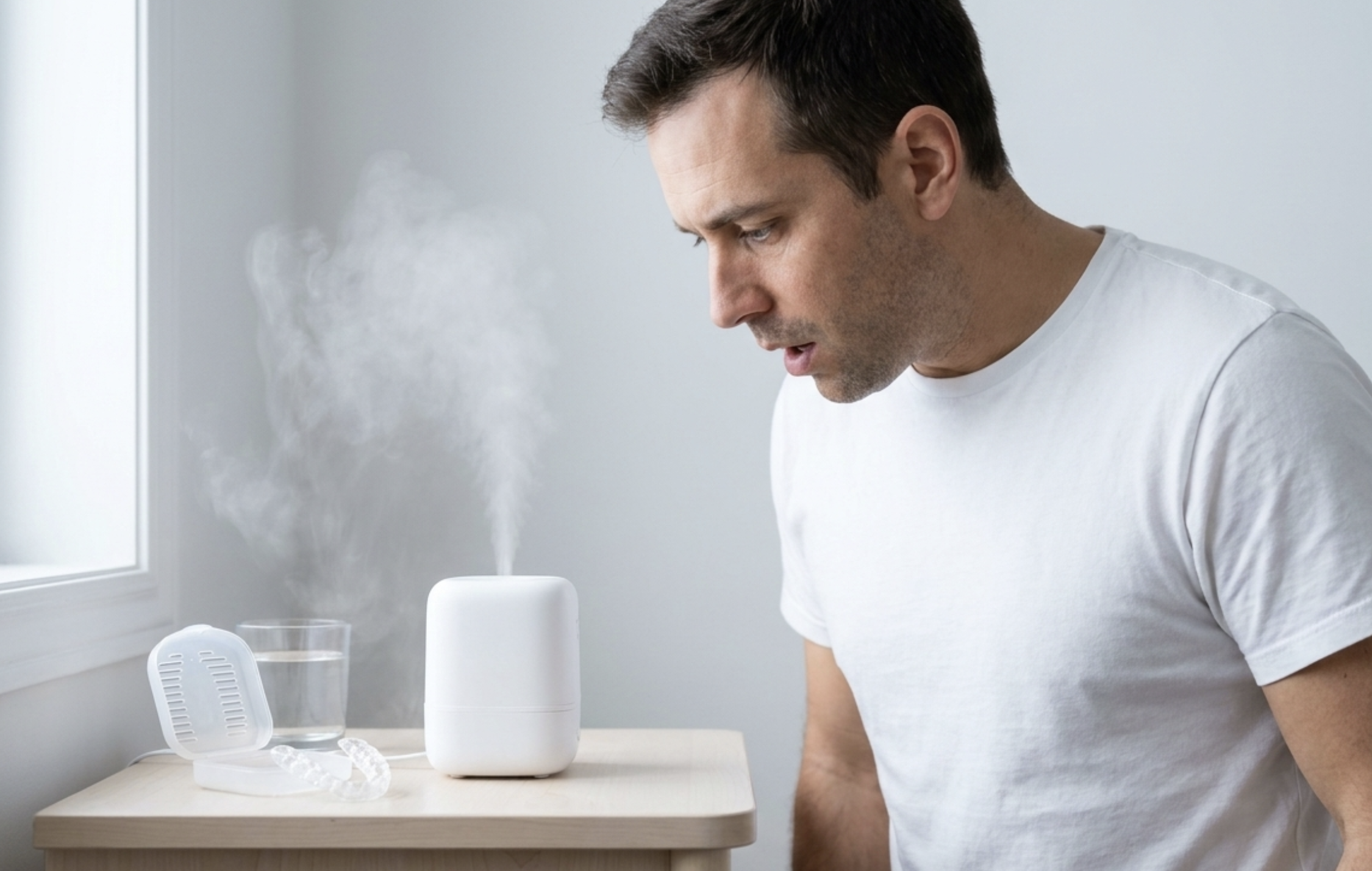
A bedroom humidifier set to 40–50% relative humidity is the highest-impact single intervention for winter bruxism that operates through the dry-air pathway. It prevents the nasal membrane drying that causes congestion-driven mouth breathing during sleep. The improvement in morning jaw symptoms for people whose winter bruxism is primarily dry-air-driven can be significant within a week of consistent humidifier use.
For barometric pressure sensitivity: consistency on storm days
There’s no direct intervention for barometric pressure, but knowing that pressure changes may worsen symptoms means being especially consistent with all other interventions during the 24–48 hours surrounding significant weather events — guard wear, humidifier, nasal support, and magnesium.
For sleep architecture disruption: sleep environment optimisation
Bedroom temperature at 65–68°F, darkness maintained (shorter winter days mean earlier light intrusion), and consistent sleep schedule (circadian disruption from cold season schedule changes increases bruxism frequency). These are the same sleep hygiene recommendations that apply year-round, but their impact on bruxism is amplified in winter when multiple other factors are simultaneously active.
The Night Guard in Winter
A night guard does not address any of the four cold-weather mechanisms. It doesn’t reduce sympathetic activation, doesn’t improve nasal breathing, doesn’t humidify the bedroom, and doesn’t affect barometric pressure. What it does is absorb the force of whatever grinding occurs as a result of these mechanisms before it reaches your enamel.
For people who only grind lightly in summer and heavily in winter — a common pattern — a night guard that was adequate in warmer months may wear through more quickly in cold months. If you’re noticing your guard thinning, cracking, or wearing through at unusual speed during winter, this is consistent with the seasonal bruxism increase the mechanisms above describe. It’s also a signal that the guard material or thickness may need upgrading for the force volume your winter grinding produces.
The sequence that makes most sense for winter bruxism management: address the mechanisms (humidifier, nasal support, bedroom temperature, neck warmth) to reduce the frequency and intensity of grinding, and wear the guard to protect teeth from whatever grinding still occurs. Both components are needed; neither substitutes for the other.
The Bottom Line
Cold weather makes jaw clenching worse through four simultaneous mechanisms — the shiver reflex, cold-air mouth breathing, dry indoor heating air, and barometric pressure changes. They compound each other, which is why winter bruxism can feel significantly worse than summer bruxism even in people whose baseline grinding pattern hasn’t changed.
The interventions are specific to each mechanism: warmth for the shiver reflex, nasal support for cold-air mouth breathing, a humidifier for dry indoor air, and consistent guard wear and magnesium for the overall elevated grinding load. Addressing only one or two while the others remain active produces partial improvement. Working through all four systematically is what produces the meaningful seasonal change.
If cold weather has revealed that your current guard isn’t adequate for your winter grinding volume, the Reviv model selector matches your pattern to the right FDA-registered Class I appliance — or browse the full range.