

Can SSRIs cause teeth grinding?
Why does jaw clenching get worse when stopping an SSRI?
Can I stop SSRIs to fix jaw clenching?
What helps SSRI jaw clenching without stopping?
Is SSRI jaw clenching permanent?

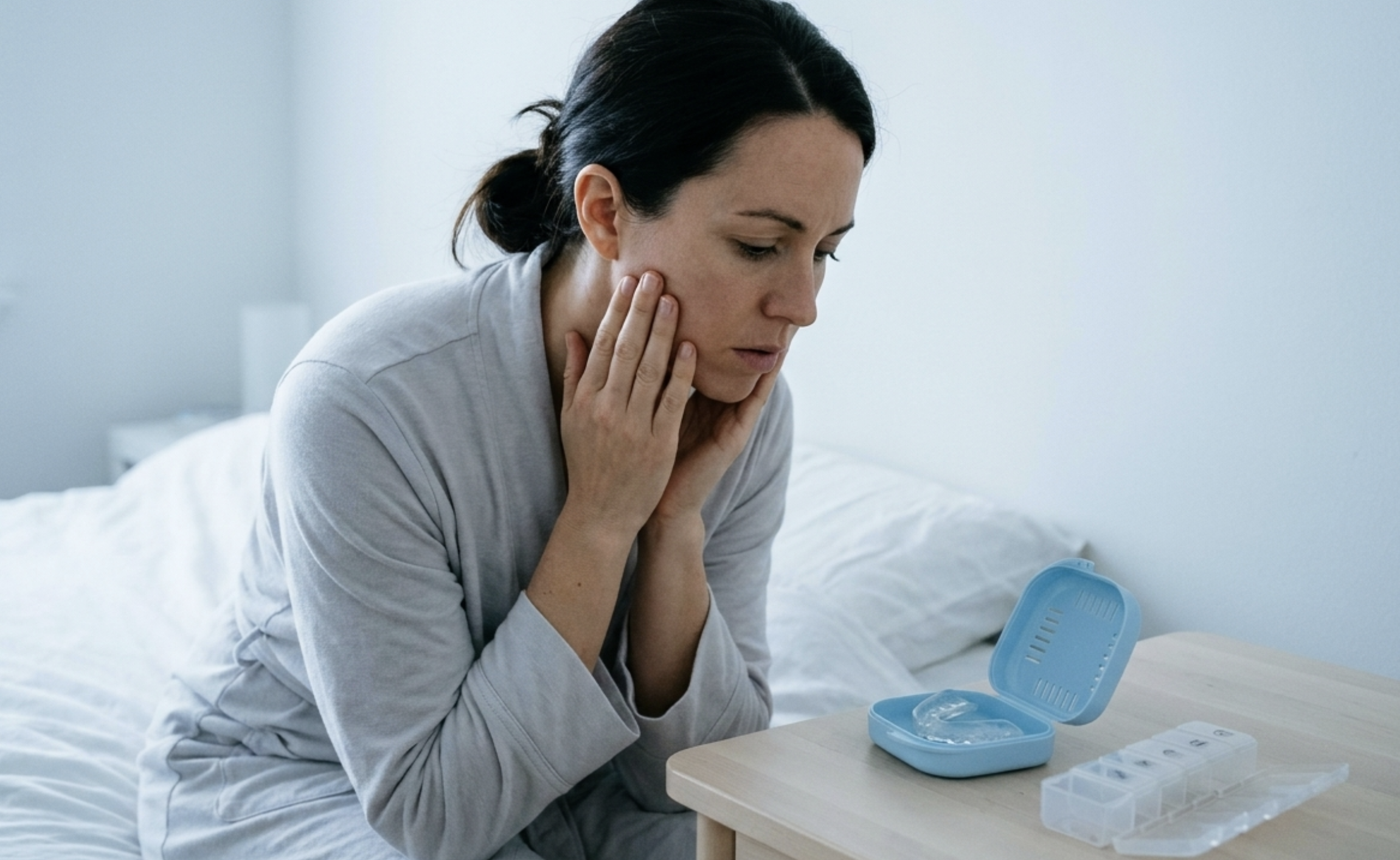

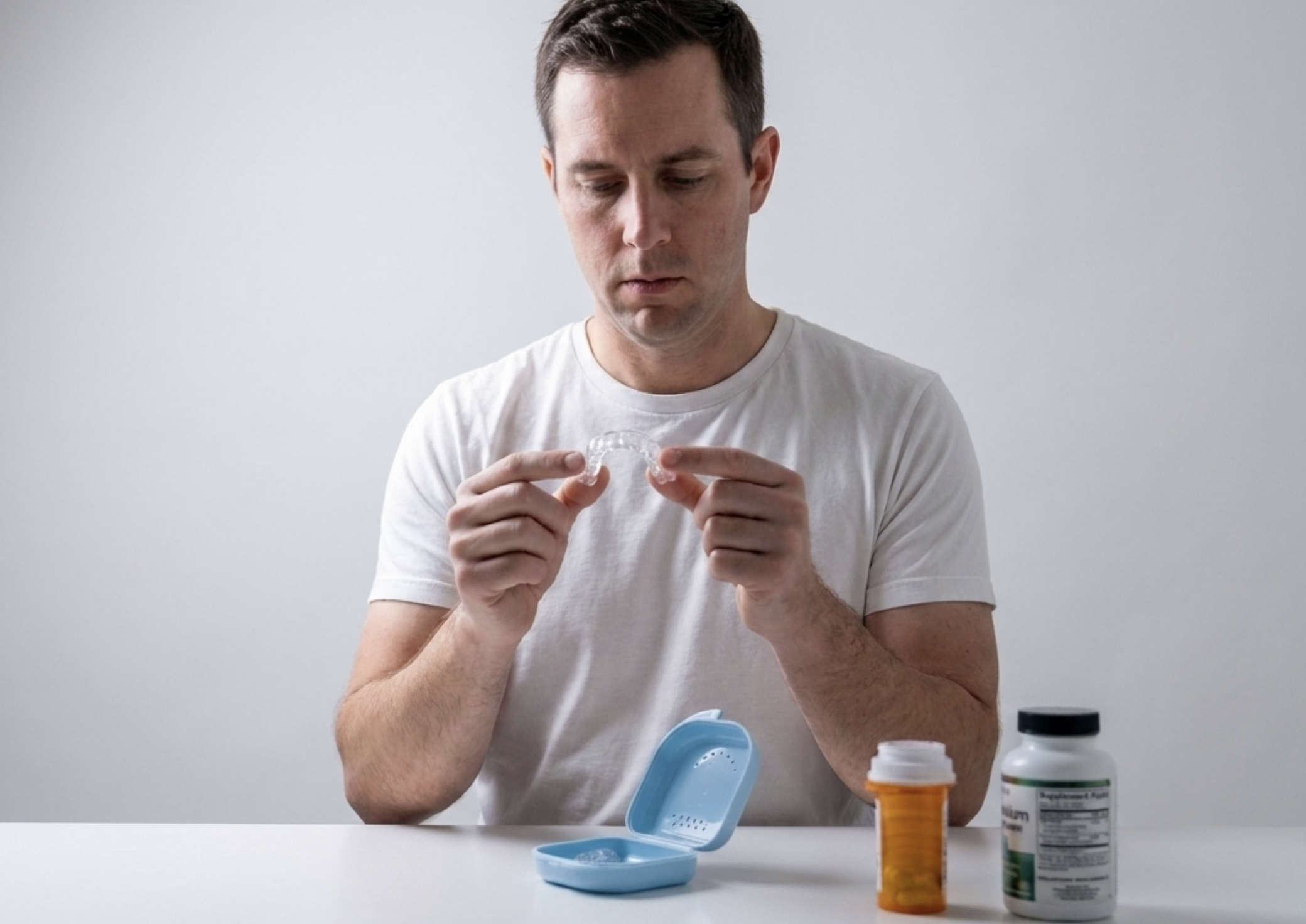
If you take an antidepressant — an SSRI or SNRI — and you grind or clench your teeth at night, there is a direct pharmacological connection between those two facts. And if you are currently tapering off an SSRI, or considering it, you may notice your jaw symptoms getting temporarily worse before they improve.
This is not a coincidence. It is a documented, mechanistically understood side effect that affects an estimated 20–24% of SSRI users — yet it appears on almost no medication information sheets and is rarely discussed at the prescribing appointment.
This article explains the mechanism, the discontinuation dynamic, and the practical tooth-protection steps that apply whether you stay on your medication or taper off it. It takes no position on the current federal policy debate around antidepressant prescribing. The pharmacology is the same regardless of the politics.
The Current Context — And What This Article Is Not About
On May 4, 2026, HHS Secretary RFK Jr. announced federal initiatives aimed at reducing SSRI prescribing and supporting deprescribing of psychiatric medications. The announcement has generated significant coverage and, for millions of people currently on SSRIs, a wave of questions about their medications.
This article is about one specific, documented pharmacological reality: SSRIs cause jaw clenching and teeth grinding in a significant minority of users, and the mechanism explains both why the side effect occurs and why it can temporarily worsen during tapering. This is a dental health question, not a policy one. This article takes no position on whether SSRIs are overprescribed, whether deprescribing initiatives are appropriate, or whether any individual should change their medication. Those are medical and policy questions that belong to clinicians and policymakers.
What belongs in a jaw health resource is the answer to: if I am on an SSRI and grinding my teeth, what is happening and what protects my teeth?
How Common Is SSRI-Induced Bruxism?
Bruxism is listed as a side effect on SSRIs in pharmacological literature, but its prevalence is significantly underreported on standard medication information documents because it was identified primarily through post-market pharmacovigilance rather than pre-approval trials.
Multiple case series and pharmacovigilance studies have estimated SSRI-induced bruxism prevalence at approximately 20–24% of users. A review of spontaneous reports in international adverse event databases found bruxism reported disproportionately with SSRIs and SNRIs compared to other antidepressant classes. Case series in the dental literature describe the classic presentation: a patient with no prior bruxism history develops new-onset nocturnal grinding within weeks of starting an SSRI, confirmed by the dental wear patterns their dentist observes at routine check-ups.
The condition is real, documented, and reversible — but the dental damage it causes during the period of unprotected grinding is not reversible. Enamel does not regenerate.
The Serotonin-Dopamine Mechanism: Why SSRIs Cause Grinding
Understanding the mechanism requires understanding a key interaction between two neurotransmitter systems that are often discussed separately: serotonin and dopamine.
SSRIs work by blocking the reuptake of serotonin into presynaptic neurons, increasing serotonin availability in the synaptic cleft. This is the intended therapeutic mechanism — elevated serotonin improves mood, reduces anxiety, and produces the antidepressant effect.
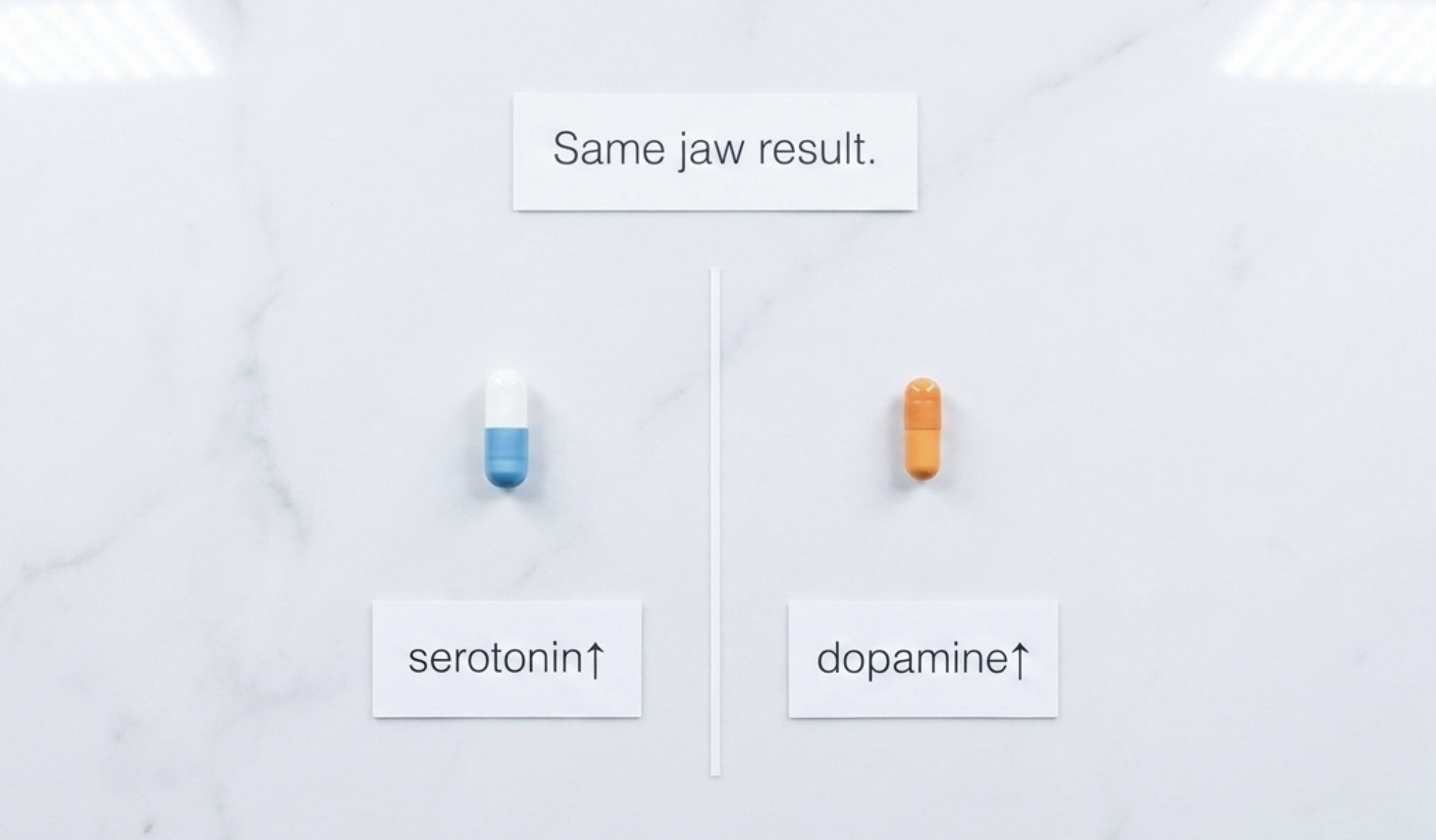
But serotonin and dopamine are not independent systems. Serotonergic neurons project to dopaminergic pathways — particularly in the basal ganglia, the brain region that plays a critical role in regulating involuntary movement. When serotonin is elevated by an SSRI, it exerts an inhibitory effect on dopamine release in the basal ganglia. Dopamine in the basal ganglia normally regulates the smooth execution of motor programs — including the suppression of unwanted involuntary jaw movements during sleep.
When dopamine is suppressed by elevated serotonin, this regulatory function is impaired. The result is disinhibited jaw muscle activity during sleep — the bruxism pattern that case series consistently associate with SSRI initiation. The same dopaminergic mechanism explains why Parkinson’s disease (progressive dopamine neuron loss) is associated with significantly elevated bruxism rates, and why dopamine agonist medications reduce bruxism in Parkinson’s patients.
This is the same pathway — approached from the opposite direction — that explains stimulant-induced bruxism. Stimulants increase dopamine, over-activating the basal ganglia circuits and producing hyperdopaminergic bruxism. SSRIs suppress dopamine through the serotonergic route, producing hypodopaminergic bruxism. Different entry points into the same circuit, producing the same clinical outcome: teeth grinding. For the full established evidence on stimulant-induced bruxism, the Adderall and Vyvanse jaw clenching article covers the mechanism in detail.
Which SSRIs and SNRIs Are Associated?
Bruxism has been reported with all major SSRIs, including:
- Fluoxetine (Prozac) — among the most frequently reported, possibly because it is the most widely prescribed and longest-established
- Sertraline (Zoloft) — consistent case reports in pharmacovigilance databases
- Escitalopram (Lexapro) — among the highest-volume prescriptions globally; well-represented in adverse event literature
- Paroxetine (Paxil) — has some of the most well-documented case series for SSRI-induced bruxism, partly because it has the most significant discontinuation syndrome of the SSRI class
- Citalopram (Celexa) — consistent but less frequently reported, possibly due to lower prescribing volume
SNRIs — which increase both serotonin and norepinephrine — also show the association:
- Venlafaxine (Effexor) — well-represented in SSRI-bruxism literature
- Duloxetine (Cymbalta) — reported, though with less frequency than the SSRIs
The evidence does not clearly establish one drug as significantly worse than others for jaw clenching — the mechanism is shared across the class. Individual susceptibility, baseline dopamine tone, and co-occurring factors (stress, sleep apnea, stimulant use) appear to determine who develops the side effect rather than which specific SSRI they are taking.
Why Jaw Clenching Sometimes Gets Worse When You Stop
This is the section most relevant to the current news cycle — and the one that carries the most important safety caveat.
When an SSRI is tapered or stopped, the serotonin-dopamine system undergoes rebalancing. During the active medication period, the dopamine pathways suppressed by elevated serotonin have adapted — the system has reached a new equilibrium under chronic serotonergic suppression. When the SSRI is removed, the high serotonin levels drop. The dopamine pathways that were suppressed begin to recover.
The problem is that neurochemical recovery is rarely smooth. The systems that were suppressed can overshoot — producing a transient period of elevated dopamine activity that actually exceeds pre-medication baseline levels. This dopaminergic overshoot is part of antidepressant discontinuation syndrome, and it can temporarily worsen bruxism during the tapering period — producing more grinding or clenching than the patient experienced either before the medication or during it.
This rebound bruxism during tapering is typically transient. It resolves over days to weeks as the dopaminergic system reaches a new, stable equilibrium without the serotonergic suppression. But for people who don’t know this is expected — and who are not wearing a night guard during the tapering period — the temporary worsening can cause significant dental damage before it resolves.
The implication is direct: if you are tapering an SSRI under clinician guidance and your jaw symptoms worsen, this is a documented expected phenomenon, not a sign that something is going wrong. The guard wear during this period is especially important. The symptoms should resolve as the system rebalances — if they persist significantly beyond the expected tapering window, this warrants discussion with your clinician.
The safety caveat cannot be overstated: the decision to taper an SSRI, the tapering schedule, and the monitoring during it are medical decisions. Abrupt discontinuation — stopping without a structured taper — produces significantly worse discontinuation syndrome and should never be done without prescriber guidance.
Recognising SSRI-Induced Bruxism
Several signals suggest the jaw clenching is medication-related rather than arising from other causes:
- Temporal correlation — bruxism that began or worsened within weeks of starting an SSRI, increasing dose, or changing SSRI formulation
- Morning jaw soreness without daytime clenching — the grinding occurs during sleep, not during waking hours under stress. If you clench at your desk but not at night, this is more likely stress-driven; if you wake with jaw soreness but have no memory of daytime tension, the nighttime nocturnal pattern is more consistent with medication-induced bruxism
- Progressive dental wear noted by your dentist — particularly if it began or accelerated around the time of SSRI initiation
- No prior bruxism history — new-onset bruxism in an adult without a prior history is a red flag for a medication cause
- Worsening during dose increases — if the jaw symptoms correlate with dose escalation, the pharmacological relationship is clearer
What You Can Do Without Stopping Your Medication
Several interventions address SSRI-induced bruxism without any change to the medication itself. These are compatible with continuing the antidepressant and do not require any clinical decision about the medication.
A hard custom night guard
The most important intervention regardless of what else you do. A hard acrylic custom night guard absorbs grinding and clenching force before it reaches enamel — protecting teeth from damage that would accumulate over the months or years of SSRI use. This is the foundational protective step, and it should not wait for a medication decision to be made. Enamel damage is permanent; it does not reverse if the medication eventually changes.
Buspirone as an add-on — a specific clinical option
This is worth knowing because it is almost never mentioned in dental bruxism content, despite having the most specific evidence for SSRI-induced bruxism: buspirone, a non-benzodiazepine anxiolytic medication, has been used as an add-on to SSRIs specifically to address SSRI-induced bruxism in multiple case reports and small series. The proposed mechanism involves buspirone’s activity as a partial agonist at serotonin 5-HT1A receptors, which modulates serotonin’s inhibitory effect on dopamine differently than the SSRI’s primary mechanism.
This is a clinician conversation — buspirone requires a prescription and must be integrated with the overall medication regimen. But if SSRI-induced bruxism is significantly affecting sleep quality or dental health, asking your prescriber specifically about buspirone as an add-on is a specific, evidence-referenced option.
Magnesium glycinate
200–400mg of magnesium glycinate in the evening reduces muscle excitability through calcium antagonism — the same mechanism relevant to all bruxism drivers. It is compatible with SSRIs, low-risk, and directly addresses the muscle excitability that makes the dopaminergic bruxism mechanism clinically significant. The full evidence base is in the magnesium and jaw clenching article.
Dose review with your prescriber
Bruxism is dose-dependent in many patients — lower doses of the same SSRI produce less jaw clenching while still providing therapeutic benefit. If bruxism is significantly affecting sleep quality or dental health, discussing whether the current dose is the minimum effective dose for your therapeutic needs is a reasonable clinical conversation. This is not the same as stopping the medication — it is optimising the dose.
Protecting Your Teeth During Tapering
If your prescriber has determined that tapering an SSRI is appropriate for you — through a structured, supervised schedule — there are specific dental protection steps for the tapering period:
Wear the guard through the entire tapering period and beyond
The rebound bruxism that can occur during tapering represents a specific window of elevated risk. Guard wear should be especially consistent during this period — not relaxed because “the medication is leaving the system.” The dopaminergic overshoot may produce more intense grinding during tapering than at any other point.
Expect the worsening and know it is temporary
Knowing that increased jaw clenching during tapering is a documented expected phenomenon rather than a sign that something is wrong prevents two problems: unnecessary alarm that might lead to abandoning a clinically appropriate taper, and the temptation to stop the guard because the soreness seems like evidence the guard isn’t working. Tracking whether your clenching pattern is changing during tapering — daytime versus nighttime, intensity, timing — helps you and your dentist assess whether it is the expected rebound or something else. The guard is working — it is protecting teeth from the rebound grinding. The soreness reflects the muscle work, not inadequate protection.
Tell your dentist you are tapering
Your dentist should know about both SSRI initiation and SSRI tapering. The tapering period may warrant a dental check-up to assess whether any new wear has developed during the period of potentially elevated bruxism, and to confirm that the guard is providing adequate coverage.
Continue magnesium glycinate during tapering
The muscle excitability reduction from magnesium glycinate is especially relevant during the tapering period when the dopaminergic overshoot may be producing elevated muscle tone. Continue or begin magnesium glycinate during the tapering window.
The Night Guard: Not Optional, Not Temporary
The night guard for SSRI-induced bruxism is not a temporary measure to use while you wait for a medication decision. It is the foundational dental protection that applies throughout the entire period — on the medication, during tapering, and for a period after tapering while the system rebalances.
The reason it is not optional: enamel damage is cumulative and permanent. Each night of unprotected grinding deposits another increment of irreversible wear. The medication situation may change; the enamel that wore away during unprotected grinding does not come back.
Hard acrylic, custom-fitted — not soft OTC. SSRI-induced bruxism is primarily a clenching-dominant pattern, and soft guards compress under clenching force, potentially stimulating more muscle loading rather than protecting against it. The guard specification that is correct for medication-induced clenching is a non-compressible hard acrylic surface.
The Bottom Line
SSRI-induced bruxism affects an estimated 20–24% of users through a well-understood dopaminergic mechanism — elevated serotonin suppresses dopamine in the basal ganglia, disinhibiting involuntary jaw motor activity during sleep. It is documented, reversible, and — with the right protection in place — preventable from causing permanent dental damage.
The discontinuation angle matters because of the current news environment: people considering tapering under clinician guidance should know that temporary worsening of jaw clenching is a documented expected phenomenon, not a reason for alarm or to abandon a supervised taper. It is the dopaminergic overshoot of the rebalancing system, and it resolves.
What never resolves is enamel wear from unprotected grinding during the medication period. Start with the night guard now — before the medication decision, during the medication period, through the taper, and until the system has fully rebalanced. The Reviv model selector identifies the right FDA-registered Class I hard custom guard for your clenching pattern, or browse the full range of appliances.
And if you haven’t told your dentist you are on an SSRI — or that you are tapering — that conversation should happen at your next appointment.