
Is teeth grinding common during pregnancy?
Is a night guard safe during pregnancy?
Why does jaw clenching get worse during pregnancy?
Does bruxism in pregnancy get worse in the third trimester?
What can I do for teeth grinding during pregnancy?
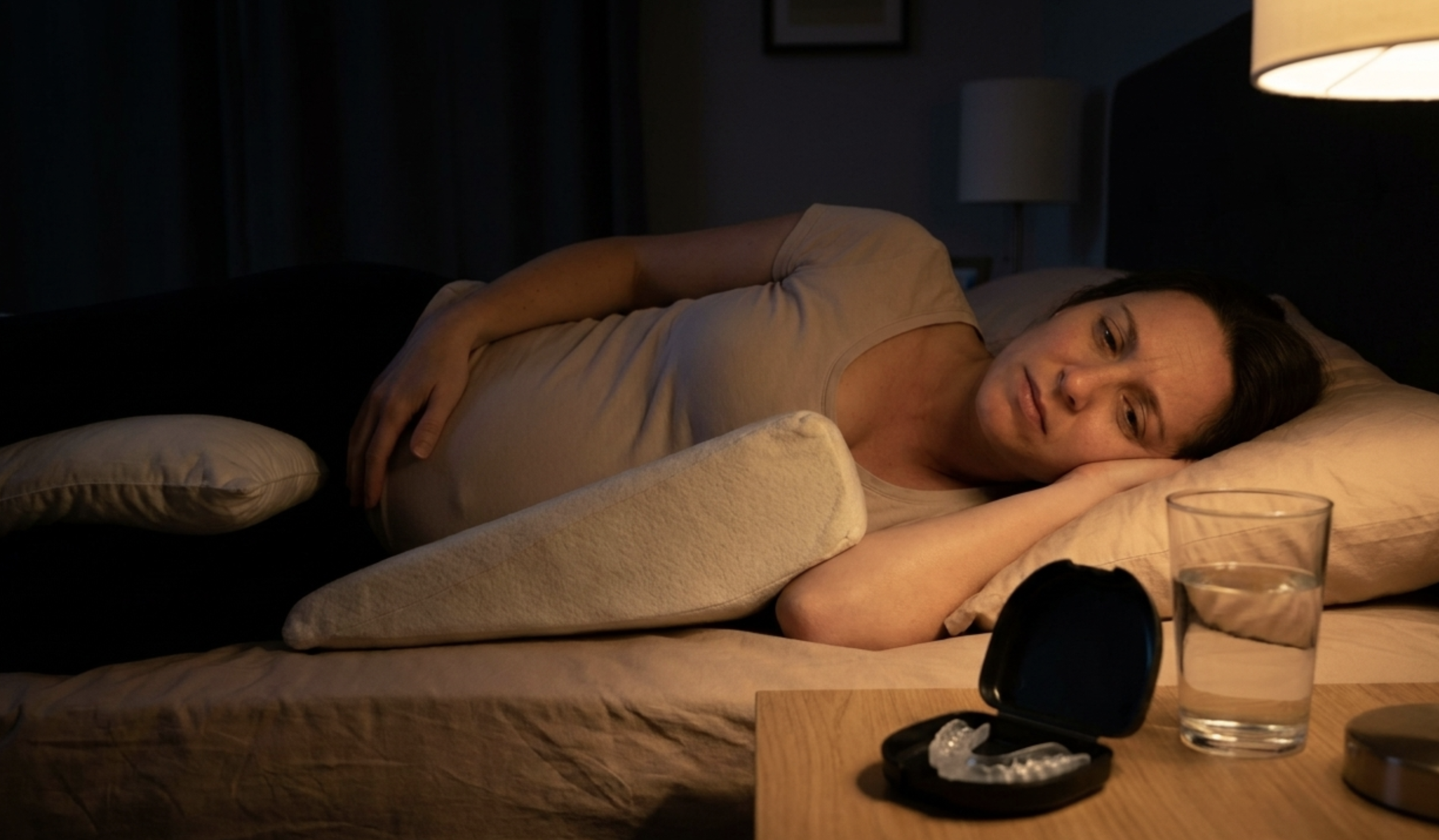
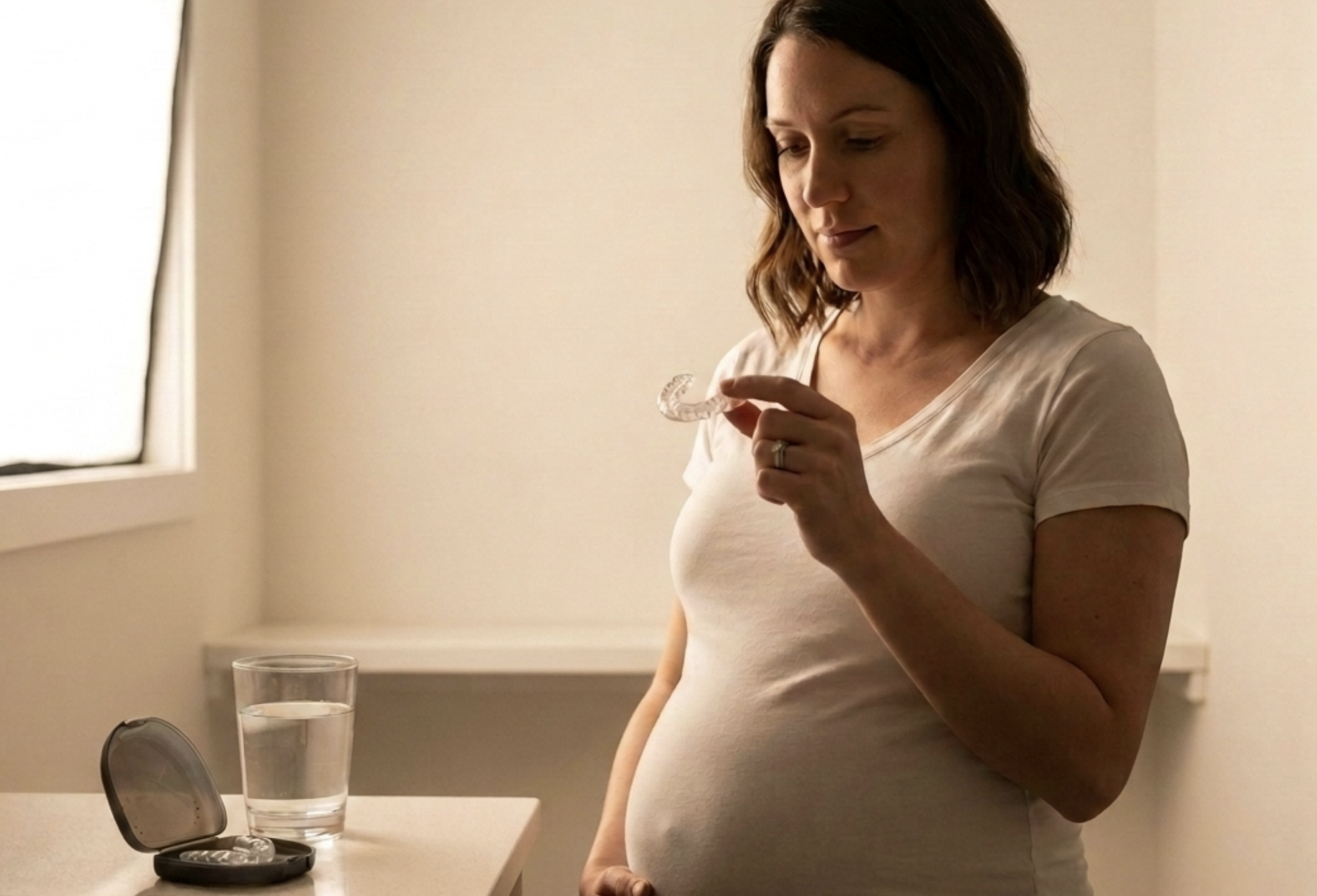
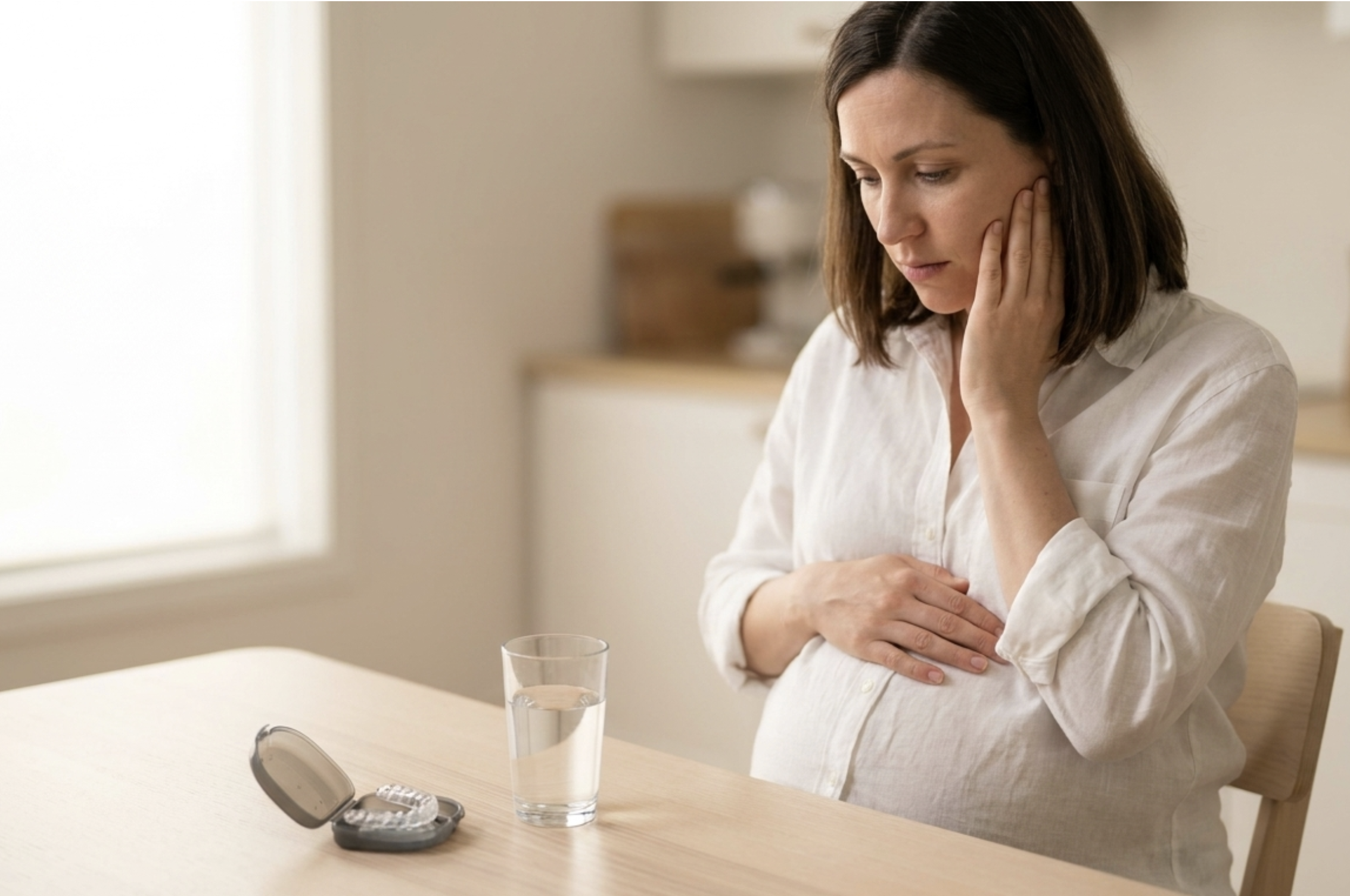
Pregnancy is well-documented as a period of significant physical change. What is less documented — and almost never discussed at prenatal appointments — is that bruxism rates rise substantially during pregnancy, for reasons that are specific, mechanistically understood, and directly relevant to dental health during and after this period.
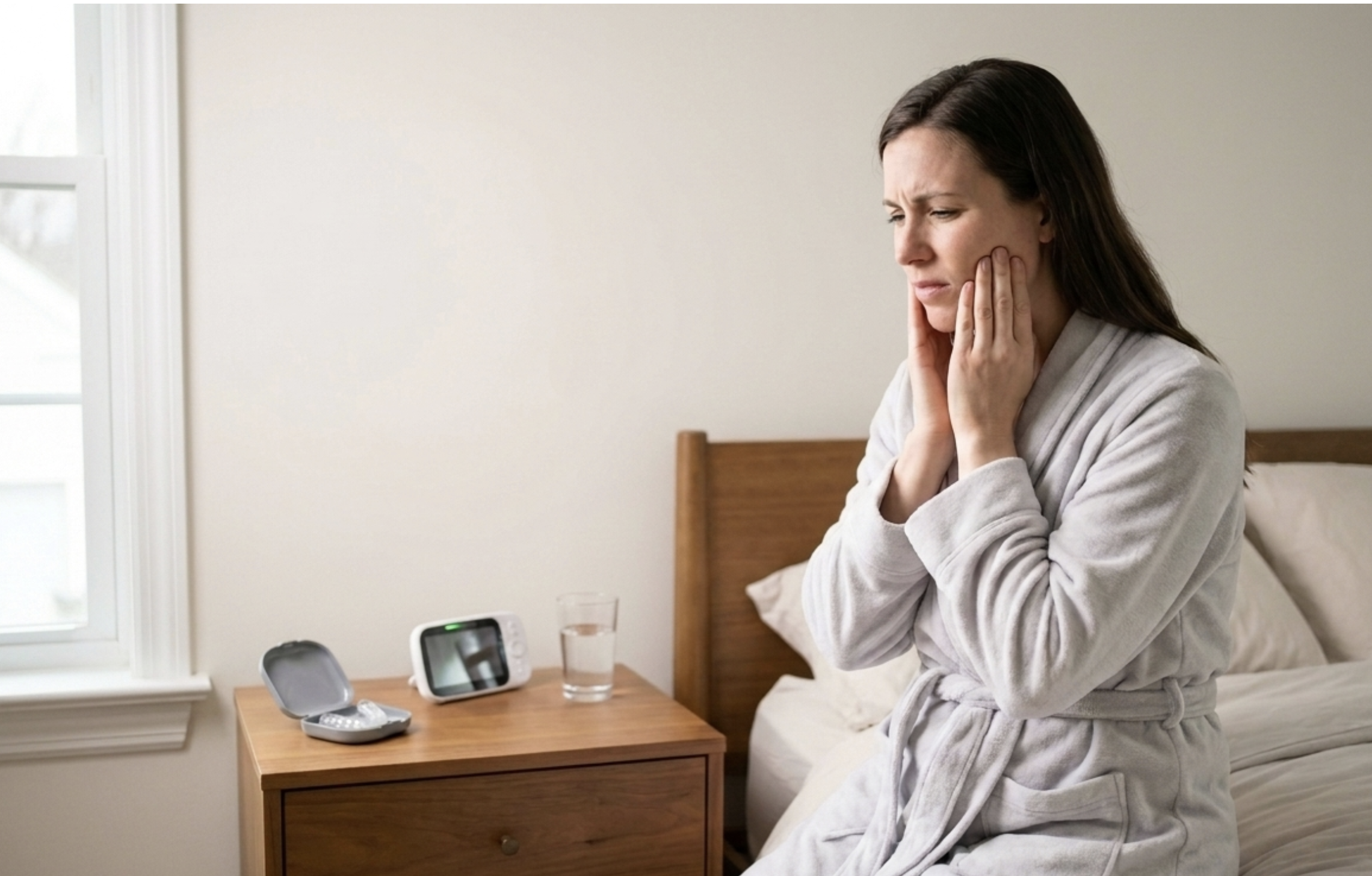
If you have noticed more jaw soreness in the morning since becoming pregnant, or your partner has mentioned grinding noises that weren’t there before, you are not imagining it. Four distinct physiological mechanisms drive the pregnancy bruxism spike, and understanding them matters because the dental damage they cause is permanent — and because most of the standard bruxism interventions are not appropriate during pregnancy, while one of the most effective ones is completely safe.
How Common Is Bruxism During Pregnancy?
Research on bruxism prevalence consistently places pregnant women at elevated risk compared to age-matched non-pregnant adults. A 2013 study in the Archives of Oral Biology found bruxism significantly more prevalent in pregnant women than in controls, with sleep-related bruxism specifically elevated in the second and third trimesters. The effect size was meaningful — not a marginal increase but a clinically significant one.
The elevated prevalence makes mechanistic sense: pregnancy activates several of bruxism’s established physiological drivers simultaneously. What would require a single acute stressor to produce in a non-pregnant adult occurs as the natural background condition of the pregnancy itself in the second and third trimesters, when all four mechanisms are typically active.
Mechanism 1: Hormonal Fluctuation
Pregnancy produces the most dramatic hormonal shifts a human body experiences outside of puberty. Estrogen and progesterone rise substantially through the first and second trimesters, reaching their peak in the third trimester before dropping precipitously at birth.
Both hormones have established effects on the central nervous system, including on the dopaminergic pathways that regulate involuntary jaw motor activity during sleep. Estrogen modulates serotonin and dopamine systems; progesterone has GABA-receptor activity that affects sleep architecture and arousal thresholds. The net effect of high estrogen and progesterone levels on the bruxism-relevant dopaminergic pathways is not fully understood, but the clinical correlation — elevated bruxism rates during pregnancy — is consistent across multiple studies.
The postpartum drop in progesterone is particularly relevant: the dramatic withdrawal of progesterone after birth is associated with neurochemical rebalancing that can temporarily increase bruxism in the immediate postpartum period, in a similar fashion to the dopaminergic overshoot described for SSRI discontinuation. For some women, the worst grinding is in the first weeks after delivery rather than during pregnancy itself.
Mechanism 2: Pregnancy Insomnia and Sleep Disruption
Sleep disruption during pregnancy is near-universal. The causes compound through the trimesters: first trimester fatigue and nausea; second trimester positional discomfort as the uterus grows; third trimester frequent urination, reflux, leg cramps, fetal movement during what would otherwise be deep sleep, and the physical difficulty of finding a comfortable position at full term.
The bruxism relevance is direct: every arousal from slow-wave sleep is a transition into lighter sleep stages where bruxism occurs. Pregnancy insomnia that produces repeated arousals throughout the night — from fetal kicks, from the urge to urinate, from reflux discomfort — creates a sleep architecture dominated by lighter stages. This is structurally the same mechanism that makes shift work and early motherhood high-bruxism periods: the chronic fragmentation of restorative sleep maximises time in the stages where grinding is most likely.
Mechanism 3: GERD and Acid Reflux
Gastroesophageal reflux disease (GERD) affects up to 80% of pregnant women, making it one of the most prevalent pregnancy symptoms in the second and third trimesters. The mechanisms are physiological: the growing uterus exerts upward pressure on the stomach, while progesterone relaxes the lower esophageal sphincter — the valve that normally prevents stomach acid from moving upward. The combination produces acid reflux that is often worst in the recumbent position, directly impacting nighttime sleep quality.
The connection to bruxism runs through the micro-arousal pathway: GERD events during sleep — acid moving into the esophagus and sometimes into the throat — trigger brief arousal responses as the body reacts to the discomfort. These micro-arousals pull the sleeper out of deep sleep and into the lighter stages where bruxism occurs. Research on GERD and sleep bruxism shows a consistent correlation between reflux frequency and grinding episodes, with the timing of GERD events and grinding episodes overlapping in polysomnography studies.
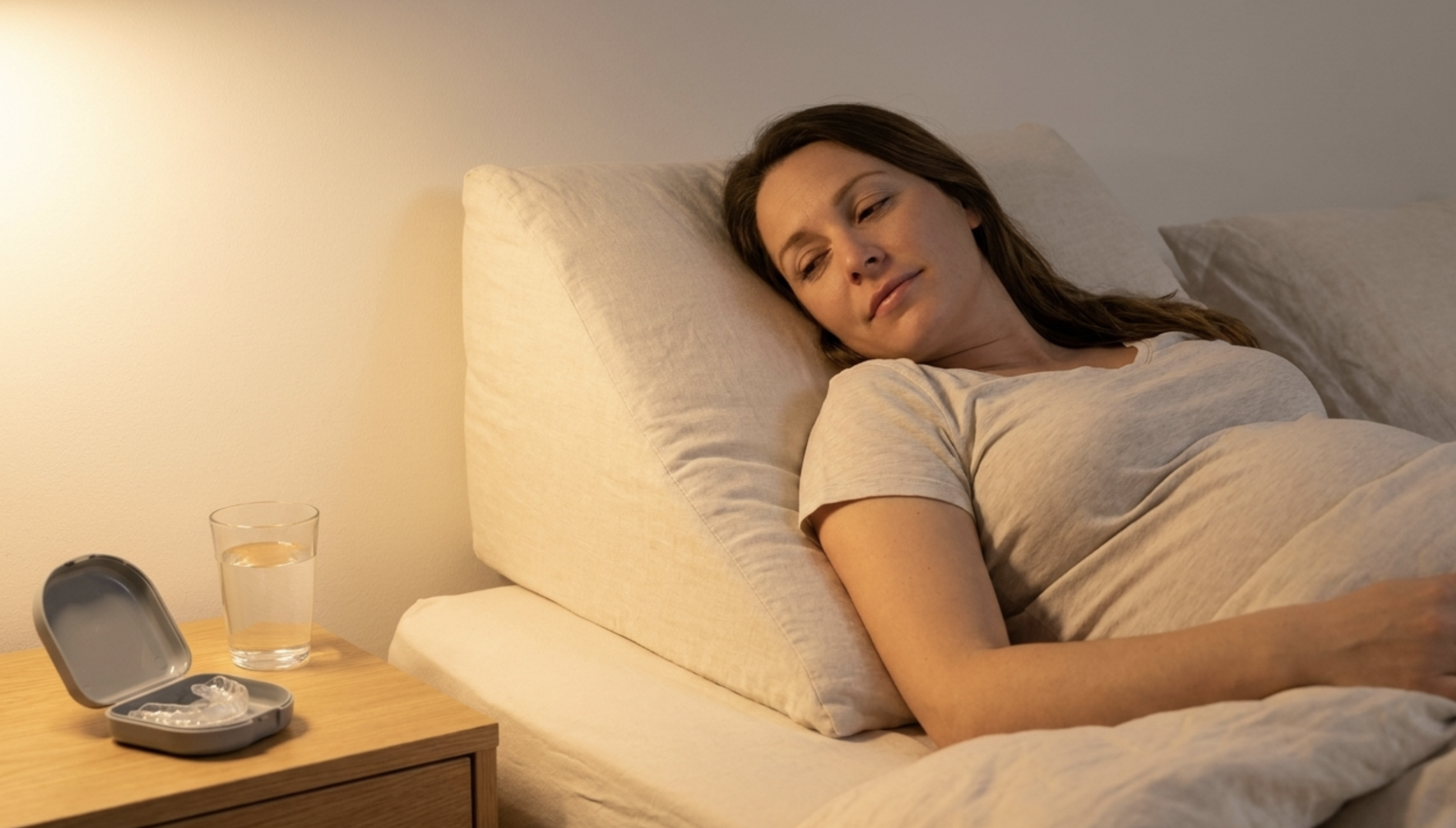
Effectively managing pregnancy GERD is therefore also effective management of one of the four bruxism mechanisms. This includes dietary changes (smaller meals, avoiding triggers), positional management (wedge pillow or elevated head of bed), and OB-approved reflux management — all of which reduce the frequency of the nighttime GERD events that trigger grinding micro-arousals.
Mechanism 4: Pregnancy Anxiety
Pregnancy anxiety — encompassing concerns about fetal health, the approaching birth, financial readiness, relationship changes, and the responsibility of impending parenthood — is a documented independent driver of bruxism through the sympathetic nervous system pathway. Elevated anxiety maintains higher baseline sympathetic tone, which elevates jaw muscle tension and increases bruxism frequency through the same mechanism that stress-related bruxism operates.
The evidence is consistent with other anxiety-related bruxism: elevated anxiety scores correlate with elevated bruxism frequency in multiple populations, and the pregnancy period shows this correlation specifically. This is not a reason to minimise or dismiss pregnancy anxiety — it is a clinically relevant observation that the emotional experience of pregnancy has physiological consequences that include elevated bruxism risk.
Which Trimester Is Worst?
Bruxism can develop or worsen at any point during pregnancy, but most women who experience it report the worst symptoms in the third trimester. The explanation is that all four mechanisms typically reach their peak simultaneously in the third trimester:
- Hormonal levels are at their pregnancy maximum
- Sleep disruption is most severe due to physical size, positioning difficulty, and urinary frequency
- GERD is typically worst as uterine pressure on the stomach is greatest
- Anxiety about the approaching birth and the immediate postpartum period may be at its highest
The first trimester may also produce elevated bruxism through nausea-driven jaw bracing (the same mechanism as GLP-1 medication nausea) and early hormonal shifts. The second trimester is often the most comfortable period for sleep and bruxism. The third trimester is when consistent night guard wear is most important.
What Is Safe During Pregnancy
A custom night guard — the safest and most effective intervention
A custom night guard is completely safe during pregnancy. It is a mechanical device — shaped acrylic that sits over the teeth — with no pharmacological action, no systemic absorption, and no effects on fetal development. The FDA Class I registration as a tooth protection device reflects exactly this: it protects teeth from grinding force through mechanical means only.
Choose a BPA-free material — most reputable DTC labs offer this as standard — and discuss starting a new dental appliance with your OB or midwife as a courtesy, though there are no clinical contraindications. The guard is especially important to start during pregnancy because: (1) the mechanisms driving bruxism are at their strongest, and (2) dental appointments during pregnancy are sometimes less frequent or more limited in what can be done, meaning damage that accumulates goes longer without being identified.
Warm compresses
Warm compresses applied to the jaw and neck muscles for 5–10 minutes provide temporary relief from jaw soreness and muscle tension without any medication. Completely safe during pregnancy. Most effective in the morning immediately after waking, when accumulated grinding tension is highest.
Jaw exercises
The TMJ exercise sequence — gentle jaw mobility movements — is safe during pregnancy and provides physical release for the muscle tension that the four mechanisms above are continuously adding. No medication, no equipment, under five minutes.
GERD management
Positional management (wedge pillow, left-side sleeping position, avoiding eating within 2–3 hours of bed) addresses the GERD mechanism directly. OB-approved reflux management — whether dietary changes or safe antacid options — simultaneously improves sleep quality and reduces one of the four bruxism mechanisms.
What Is Not Appropriate During Pregnancy
Several interventions used for bruxism outside of pregnancy are not appropriate during the prenatal period:
- Botox/botulinum toxin injections — not appropriate during pregnancy. Safety has not been established, and the precautionary standard in pregnancy is to avoid systemic interventions without demonstrated safety
- Most bruxism medications — buspirone, benzodiazepines, and other pharmacological approaches to bruxism require OB assessment for safety during pregnancy; most are avoided unless the clinical indication is compelling
- Magnesium supplementation — not a blanket contraindication, but must be discussed with your OB first. Many OBs already prescribe magnesium during pregnancy for different indications; whether the form and dose appropriate for bruxism is right for your specific situation requires a provider conversation
What Happens Postpartum
The bruxism trajectory after birth depends on which mechanisms were primary during pregnancy:
For many women, the GERD-driven and anxiety-driven components reduce in the first weeks postpartum as reflux resolves and the acute birth anxiety transitions into the different stress of early parenthood. However, the sleep disruption mechanism — which was pregnancy-driven by positional discomfort and fetal movement — transitions seamlessly into the newborn-feeding-driven sleep disruption of early motherhood. For many women, the bruxism doesn’t improve postpartum; it continues, now driven by the mechanisms described in the motherhood bruxism article.
The hormonal drop in progesterone after birth may temporarily worsen bruxism in the first weeks postpartum before the system rebalances. Tracking whether the pattern shifts from nighttime grinding to daytime clenching during the postpartum transition helps identify the right guard specification for this period. The night guard that was appropriate during pregnancy is equally appropriate (and safe) during the breastfeeding period. Do not discontinue the guard in the immediate postpartum period — this is when the hormonal rebalancing may be producing its worst bruxism, and when sleep conditions are also at their worst.
The Bottom Line
Bruxism during pregnancy is common, mechanistically understood, and dentally consequential. Four mechanisms drive the spike — hormonal fluctuation, pregnancy insomnia, GERD, and pregnancy anxiety — and all four typically operate simultaneously in the third trimester.
The intervention that is both most effective and most clearly safe during pregnancy is a custom hard acrylic night guard. Start it during pregnancy, not after. The dental damage from unprotected grinding during the prenatal and postpartum period is permanent — and the mechanisms that drive it don’t resolve cleanly at birth.
Tell your dentist you are pregnant at any dental appointment. Discuss GERD management and positional strategies with your OB. Confirm whether magnesium is appropriate for your specific situation with your provider. And protect your teeth mechanically through every night of the pregnancy and postpartum period — because that protection is available, safe, and something you do not need to defer. The Reviv model selector identifies the right FDA-registered Class I guard for your pattern.