


Do night guards actually help grinding?
How many hours should I wear it?
Is a custom guard better than OTC?
Best guard for grinding and clenching?
Is it safe to wear a night guard every night?
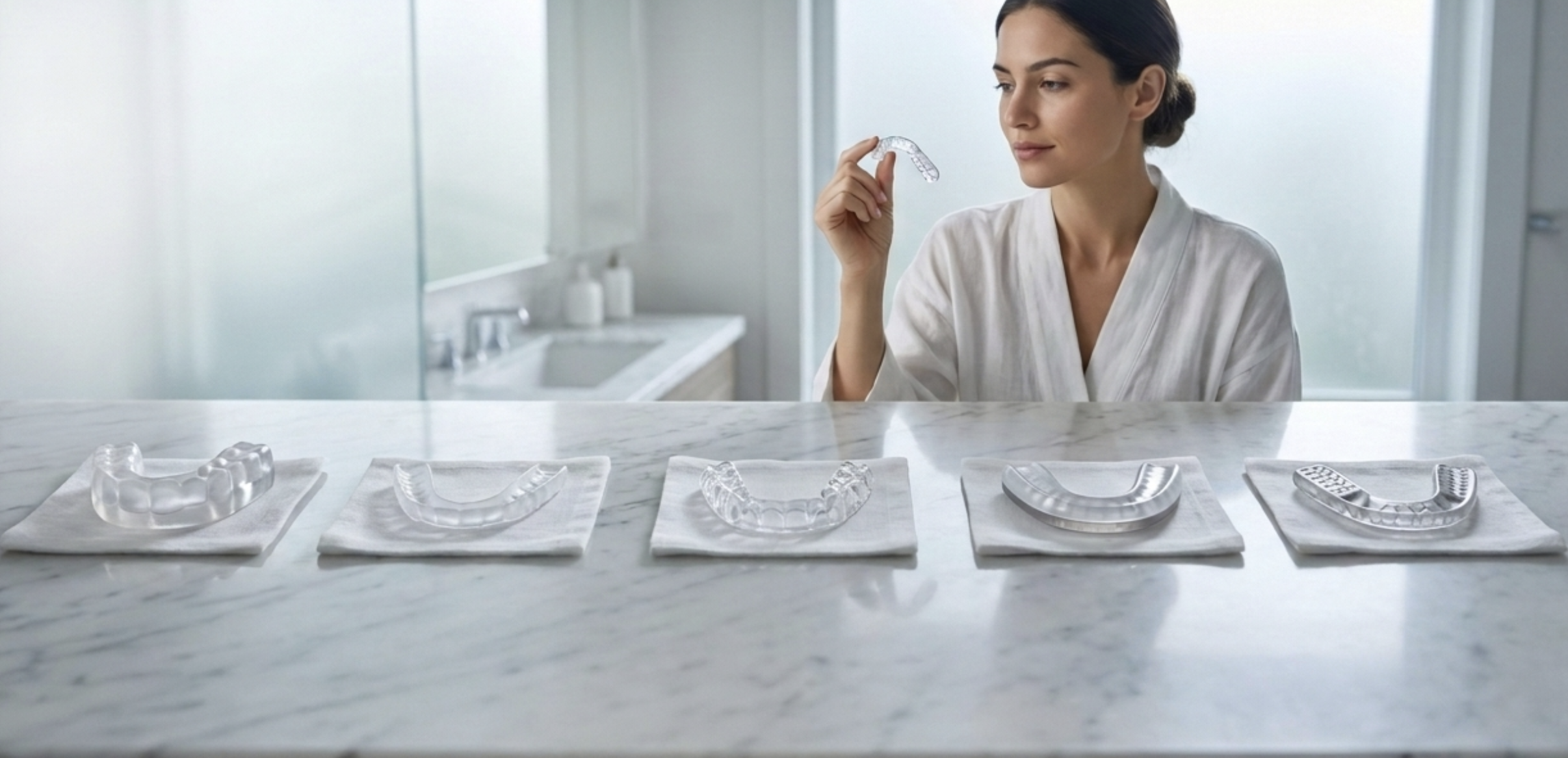
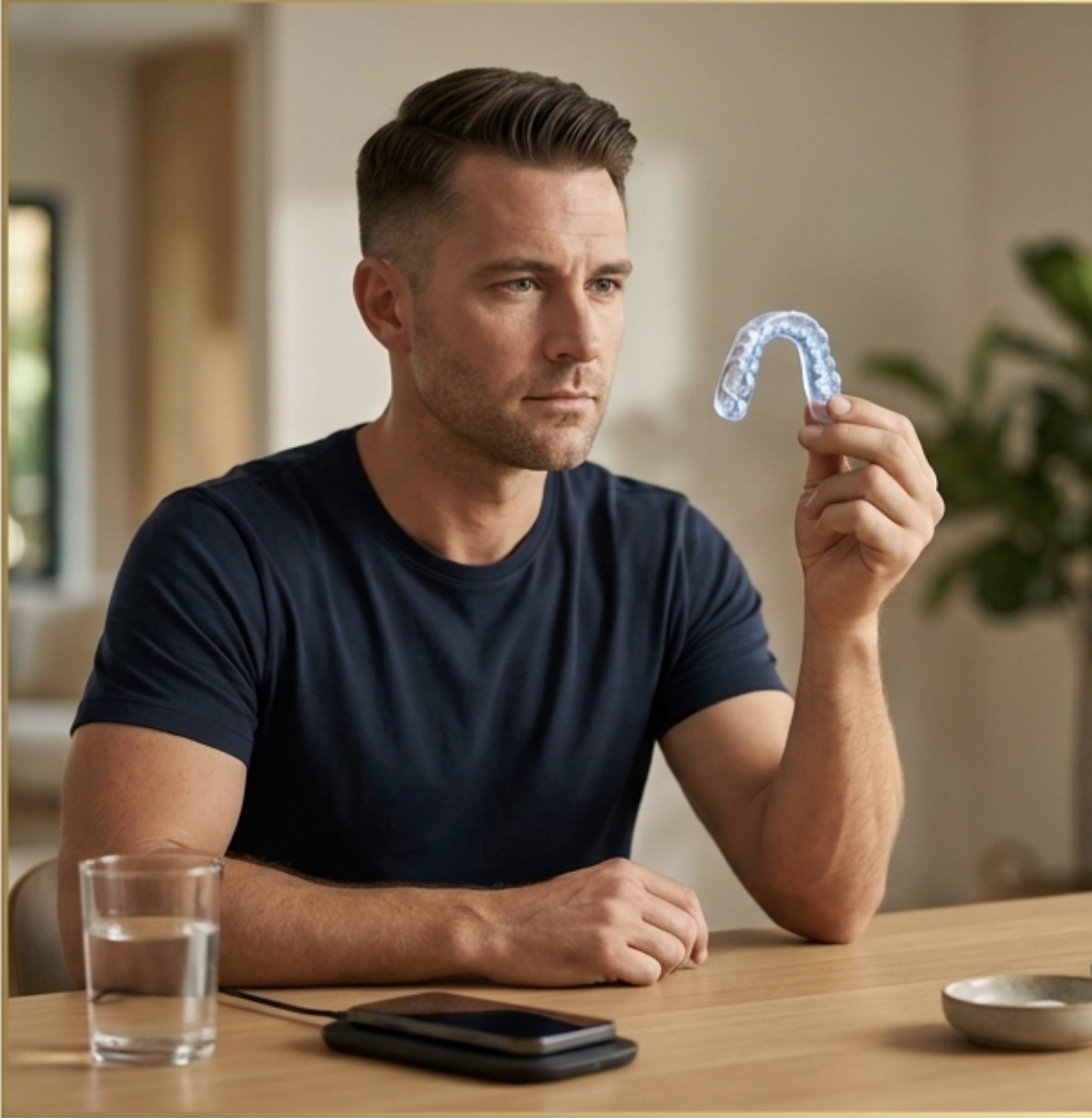

Every night guard roundup on the internet follows the same template: brand name, a paragraph of praise, a pros/cons list, and a “buy here” button. None of them will tell you what actually separates a $20 drugstore tray from a $160 biomechanical guard — or more importantly, which one is right for how you specifically grind.
This guide is structured differently. Instead of leading with brands, it starts with your grinding pattern — because the single most common buying mistake is choosing the right brand in the wrong tier. Someone who grinds hard enough to crack acrylic buying a soft guard, or a light occasional grinder spending $200 on a heavy-duty custom guard they didn’t need. Both are wasted money, just in opposite directions.
By the end you’ll know exactly which category you need, which brands are credible within it, and how to calculate whether upgrading is actually worth it for your specific situation.
Before You Compare Brands: Diagnose Your Grind Severity
The marketing around night guards talks about “light,” “moderate,” and “heavy” grinding without giving you any way to tell which one you are. Here’s a practical self-assessment:
You are likely a light grinder if:
- You wake up without jaw soreness or tooth sensitivity
- A partner or family member has occasionally mentioned hearing grinding, but not nightly
- Your dentist has not flagged visible enamel wear at your last check-up
- You’ve worn soft guards before and they lasted 3–6 months before showing wear
You are likely a moderate grinder if:
- You wake up with mild jaw stiffness most mornings
- Your dentist has mentioned enamel wear or asked if you grind
- You’ve gone through soft guards in under 3 months
- You notice tension in your jaw during the day when stressed
You are likely a heavy grinder if:
- You wake up with consistent jaw soreness or facial tension
- Your dentist has flagged significant wear, stress fractures, or damage to dental work
- You’ve visibly worn through soft guards — you can see the thinned or perforated material
- You’ve cracked a guard or found pieces missing in the morning
- A partner hears grinding most nights and describes it as loud
What a Night Guard Is Actually Doing
A night guard doesn’t stop grinding. The neurological mechanisms behind bruxism — stress processing, sleep architecture, dopamine pathways — are unaffected by a piece of acrylic in your mouth. What changes is where the force goes.
When you grind without a guard, 80–250 lbs per square inch of force is applied directly tooth-to-tooth. Enamel — the hardest material in the human body — does not regenerate. Once worn, it’s gone. A night guard redirects that force into a sacrificial barrier that you replace, not your teeth.
The implication is important: a night guard that wears through is doing its job correctly. A soft guard that disintegrates in 6 weeks on a heavy grinder isn’t a bad product — it’s the wrong product. It absorbed thousands of grinding cycles that would otherwise have hit your enamel. The problem is the economics: you’re replacing it too frequently, and the cost adds up.
The cost-per-night calculation
Here’s the analysis most articles skip:
| Guard type | Price | Lifespan (heavy grinder) | Cost per night |
|---|---|---|---|
| Drugstore boil-and-bite | $20 | 3–6 weeks | $0.47–$0.95 |
| Soft OTC DTC | $60 | 6–10 weeks | $0.86–$1.43 |
| DTC hard custom | $150 | 18–36 months | $0.14–$0.28 |
| Biomechanical (Reviv R2) | $130 | 12–24 months | $0.18–$0.36 |
For a heavy grinder, a soft drugstore guard is paradoxically the most expensive option per night — and the least protective per dollar. The upgrade to a custom hard guard pays for itself within 4–6 months for most heavy grinders. This is the calculation the “just try a cheap one first” advice ignores.
The Five Guard Categories: Honest Assessment
Category 1: Drugstore boil-and-bite (~$15–30)
DenTek, Plackers, and similar pharmacy brands. You boil in water, bite in, let set.
The legitimate use case: You need a guard tonight because you’re travelling, you’ve lost your regular one, or you want to try wearing a guard before committing money. These are fine for that.
The real limitations: Soft thermoplastic throughout. The fit approximates your arch but doesn’t match it — under grinding force, the guard can rock and shift. Thickness is 4–6mm to compensate for the soft material, which means your jaw muscles are working against resistance all night. Heavy grinders go through them in 2–4 weeks. The economics collapse fast.
Verdict: Acceptable short-term or for confirmed light grinders only. Not a long-term solution for anyone grinding with meaningful force.
Category 2: OTC soft DTC (~$40–90)
Remi, some DenTek Professional options. Thermoplastic, often available in S/M/L sizing, sometimes with an impression upgrade option.
The legitimate use case: First-time guard wearers, light grinders, people who prioritise immediate comfort over long-term durability.
The real limitations: Same material limitation as drugstore guards, better initial sizing. Remi’s subscription model makes this more economical than it looks — if you’re going through guards every 3 months, a subscription that replaces them automatically costs less per year than a one-off $150 custom guard that lasts 3 years. That math reverses at moderate-to-heavy grinding intensity.
Verdict: Rational for confirmed light grinders. Marginal for moderate, inadequate for heavy.
Category 3: DTC hard acrylic custom (~$100–200)
Pro Teeth Guard, Sentinel, Chomper Labs, JS Dental Lab. Impression kit → dental lab fabrication → custom guard in 2–4 weeks.
The legitimate use case: Moderate to heavy grinders who want dentist-equivalent quality without the $400–800 dentist price. This is the largest value gap in the category — identical fabrication process, different distribution model.
The critical variable most reviews ignore: Your impression quality determines your guard quality. The lab works from what you send them. A poor impression produces a poor fit. Rules that matter: don’t bite through to the tray (most common mistake), keep your head still for the full set time, use both impression sets if provided. Most reputable brands will redo the guard for a bad impression — always confirm this policy before ordering.
Notable brands:
- Pro Teeth Guard — multiple material/thickness options (soft, hard, ultra-hard, hybrid), lab-direct pricing, 110% money-back guarantee. Consistently strong reputation in bruxism communities. The hard ultra option is the most appropriate for heavy grinders in this tier.
- Sentinel — comparable quality, lower profile, smaller brand. Solid. Dentist-grade materials without the brand markup.
- Chomper Labs — subscription model (~$129 for initial guard, lower for replacements). Particularly economic for moderate grinders who go through a guard every 12–18 months and want seamless replacement.
Verdict: The rational choice for most moderate to heavy grinders. Best cost-per-night in the category at this grind intensity. The 2–4 week wait is the main practical friction.
Category 4: DTC dual-laminate (~$80–150)
Soft inner layer that contacts your teeth, hard outer layer that resists wear. Available from Pro Teeth Guard (hybrid option), some Chomper Labs tiers.
The legitimate use case: The “Goldilocks” tier — people who tried hard guards and found them genuinely uncomfortable, but need more durability than soft provides.
The real limitations: The soft inner layer can compress and subtly refit over 12–18 months, which means the bite geometry drifts. Not as durable as pure hard acrylic at the upper end of grinding force. But for the majority of moderate grinders, the comfort-to-durability balance is very good.
Verdict: Excellent for moderate grinders who didn’t adjust well to hard guards. Less optimal than hard for heavy grinders.
Category 5: Biomechanical DTC guards (~$80–160)
Reviv (R1, R2, R3). The design philosophy differs from the other four categories: rather than flat acrylic passively absorbing force, these guards are engineered with a specific occlusal surface geometry designed to influence the jaw’s closing angle under grinding force — with the goal of reducing peak compressive load on individual teeth, particularly molars where grinding force tends to concentrate.
The critical model selection issue: Reviv’s three models serve genuinely different use cases, and buying the wrong one is the most common mistake:
- R1 — soft single layer. For light grinders who prioritise comfort. Will not hold up to heavy grinding.
- R2 — dual layer design. For moderate grinders and the grinding-and-clenching pattern. The most commonly appropriate model for people who grind at night.
- R3 — maximum protection, hard outer. For heavy grinders who have cracked or rapidly worn through other guards.
The R2 is the model that most searches for “best night guard” should land on — it handles the combined grinding-and-clenching pattern that characterises the majority of nighttime bruxism.
What the biomechanical design adds vs. flat acrylic: For light grinders, the engineering difference is less relevant — any barrier is adequate. For moderate-to-heavy grinders where tooth-specific wear patterns matter, the force distribution geometry is meaningful. Molars take disproportionate grinding force; a guard designed to redirect that load away from specific teeth does something different than one that simply absorbs it uniformly.
The Complete Comparison
| Boil-and-bite | Soft OTC DTC | Hard custom DTC | Dual-laminate DTC | Biomechanical (Reviv) | |
|---|---|---|---|---|---|
| Price | $15–30 | $40–90 | $100–200 | $80–150 | $80–160 |
| Fit | Generic | Generic / semi | Custom (lab) | Custom (lab) | Custom (lab) |
| Material | Soft thermoplastic | Soft thermoplastic | Hard acrylic | Soft inner / hard outer | Varies by model |
| Durability (heavy grinder) | 3–6 weeks | 6–10 weeks | 18–36 months | 12–24 months | 12–24 months |
| Cost per night (heavy) | $0.47–$0.95 | $0.86–$1.43 | $0.14–$0.28 | $0.18–$0.36 | $0.18–$0.36 |
| Light grinders | Fine | Fine | Overkill | Overkill | R1 option |
| Heavy grinders | ✗ | ✗ | ✓ Best value | ✓ Good | R3 |
| Grinding + clenching | ✗ | Marginal | ✓ | ✓ | R2 (designed for this) |
| Time to receive | Same day | 1–3 days | 2–4 weeks | 2–4 weeks | 2–3 weeks |
| FDA-registered | Varies | Varies | Typically yes | Typically yes | Yes (BRW) |
Matching Guard to Grind Pattern
Light grinder, no dentist-flagged wear, guards last 4+ months
Soft OTC or Reviv R1. The economics don’t justify a $150 custom guard at this intensity. Start cheap, assess wear rate, upgrade only if you see it changing.
Moderate grinder, dentist has mentioned wear, going through guards every 2–3 months
This is where the upgrade math kicks in clearly. DTC hard custom — Pro Teeth Guard hard, Sentinel, or Chomper Labs — is now cheaper per night than continuing with soft. Reviv R2 if you also clench. The 2–4 week wait is the practical friction; order before your current guard dies.
Heavy grinder, cracked guards, dentist flagged significant damage
Pro Teeth Guard ultra-hard, Reviv R3, or a dentist-fabricated guard. This is the tier where the engineering of the guard matters most — you need material that can absorb force that cracks hard acrylic. Do not economise here; your enamel is not regenerating.
Primarily a clencher (vertical force, not lateral grinding)
Clenching concentrates force differently than grinding — more vertical compression on specific teeth, less lateral movement across the arch. Hard or dual-laminate guards are more appropriate than soft. Reviv R2 is explicitly designed for this combined pattern. See our full guide to night guards for clenching for more detail on the distinction.
Your dentist quoted $400–800 for a guard
The fabrication process for a DTC custom guard and a dentist-made guard is identical — impression kit, dental lab, custom acrylic. The price difference is distribution margin and in-chair time, not quality. The case for paying the dentist premium is: complex bite issues that need clinical assessment, preference for in-person fitting adjustment, or needing the guard as part of broader dental monitoring. For straightforward bruxism protection, DTC closes the gap entirely.
The Variables Most Comparisons Ignore
Impression quality is the hidden variable in DTC guards
Every review compares brand to brand. None of them emphasise that your guard quality is directly determined by your impression quality, regardless of which lab processes it. The two most common mistakes: biting through to the tray (your teeth hit the plastic, the lab can’t read your arch) and moving while the putty sets. Rules that matter: sit still for the full set time, don’t bite hard at the end, use both impression sets if provided. Before ordering, confirm the re-impression policy — reputable brands will send new putty and remake the guard. If a brand doesn’t offer this, that’s a red flag.
The wrong model problem
More guards are returned or abandoned because the buyer chose the wrong tier within the right brand than because the brand was bad. A hard guard placed on someone who needed soft produces soreness and morning jaw fatigue. A soft guard placed on someone who needed hard wears through and doesn’t protect adequately. The self-assessment earlier in this article is the most important part of this guide — not the brand comparison.
Upper vs lower choice
Almost every guide defaults to upper without explaining why. Upper guards are more stable under lateral grinding motion. Lower guards are less obtrusive — smaller surface area against the tongue, which some people find significantly more tolerable. If you’ve tried upper guards and abandoned them for comfort reasons, try lower before giving up on guards entirely. Both are available from all major DTC labs.
Cleaning and lifespan extension
The published lifespan ranges assume consistent care: daily brushing with mild soap, weekly soaking in dental appliance cleaner or white vinegar solution, air-drying before case closure. The most common lifespan-shortener is storing a wet guard in a sealed case — the warm, moist environment degrades the material. See our complete night guard cleaning guide for the full routine.
The TMJ claim problem
Several brands on this SERP claim to “treat TMJ” or “relieve jaw pain.” These are regulatory overclaims. Night guards are FDA Class I tooth protection devices — they protect against grinding force. No night guard is established as a treatment for TMJ disorders. Any brand making these claims is either misinformed about their own regulatory classification or deliberately overclaiming. Stay with brands that stay in their lane.
Frequently Asked Questions
Do night guards actually help with teeth grinding?
They protect your teeth from the damage grinding causes — they don’t stop the grinding itself. The neurological mechanisms behind bruxism (stress response, sleep architecture, jaw muscle activation patterns) are unaffected by a guard. What changes is where the force goes: into the guard rather than your enamel. Since enamel doesn’t regenerate, that’s a meaningful protection even if the grinding behaviour continues unchanged.
How many hours should I wear my night guard?
Every sleep period, including naps. The protection value is cumulative — every night you skip is a night of unprotected enamel contact. Put it in as soon as you lie down rather than waiting until you fall asleep, because grinding onset can occur in lighter sleep stages before deep sleep begins.
Is it okay to sleep with a night guard every night?
Yes — this is what they’re designed for. Consistent daily cleaning (mild soap and soft brush) and weekly soaking (dental appliance cleaner or white vinegar solution) keeps the guard hygienic for nightly use. The risk isn’t overuse; it’s under-cleaning.
Which night guard is best for teeth grinding and clenching?
Clenching concentrates force vertically on specific teeth rather than laterally across the arch. This changes the protection requirement — hard or dual-laminate construction is more appropriate than soft. The Reviv R2 is designed specifically for the combined grinding-and-clenching pattern. Among flat-acrylic options, Pro Teeth Guard’s hybrid is the most appropriate in that tier.
Is a custom night guard better than an OTC one?
For moderate to heavy grinders — yes, substantially. A lab-custom guard fits your exact arch geometry, which means it doesn’t shift under grinding force and distributes load evenly rather than concentrating it on high points. For light grinders who primarily need any barrier, an OTC guard is adequate and the economics favour not over-spending. The tipping point is when you’re replacing OTC guards frequently enough that the per-night cost exceeds a custom guard’s amortised cost.
The Bottom Line
The best night guard is the one matched to your grinding severity, worn consistently, and kept clean. Brand matters less than tier. Tier selection depends almost entirely on the self-assessment at the start of this guide — not on which brand has the most impressive website.
For most moderate to heavy grinders, a DTC hard custom guard is the rational choice: Pro Teeth Guard, Sentinel, or Chomper Labs on the flat-acrylic side; Reviv R2 or R3 if the biomechanical approach interests you. For light grinders: soft OTC. For anyone whose dentist quoted $500+: DTC custom is the same product at a fraction of the price.
The one choice I’d actively recommend against for serious grinders: a soft drugstore guard as a long-term solution. The per-night cost is the highest in the category. The protection is the lowest. It will feel like the economical choice until you do the arithmetic.
Browse the Reviv range — or use the 60-second model selector to match your grinding pattern to the right guard.