

Can Ozempic cause teeth grinding?
Can Ozempic cause TMJ?
Does semaglutide cause jaw clenching?
Why does Ozempic make me clench my jaw?
Does Ozempic cause teeth grinding at night?

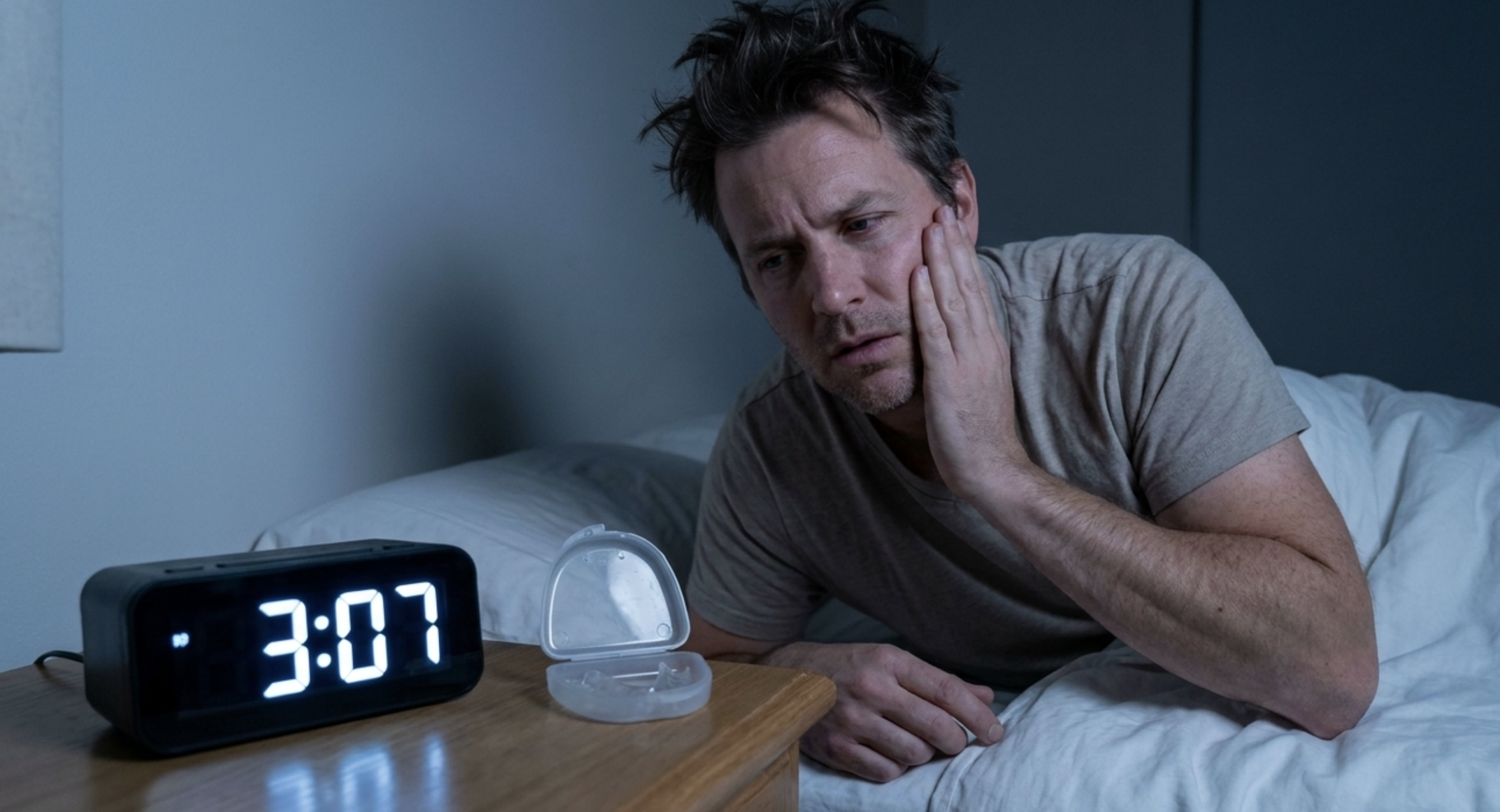
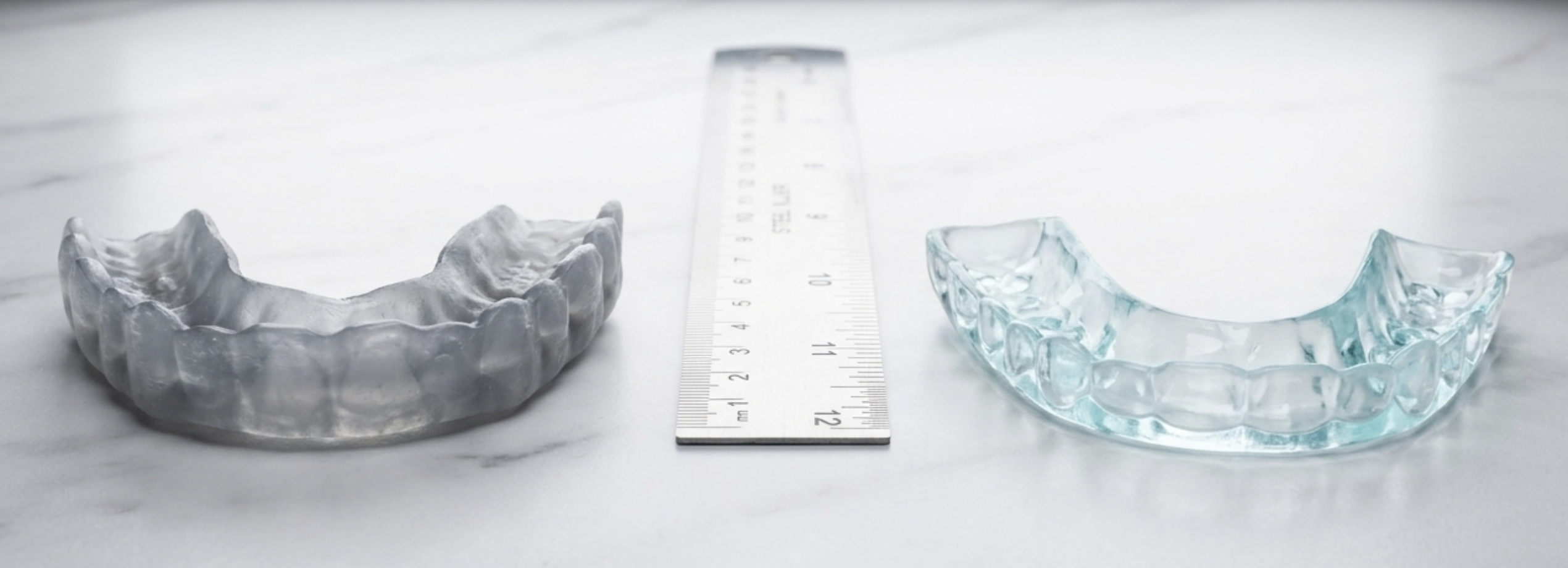
The Reddit threads are consistent. People on Ozempic, Wegovy, and Mounjaro describing jaw soreness they didn’t have before. Waking with headaches at the temples. Partners reporting grinding noises during sleep that started around the same time as the medication. Dentists finding new wear patterns at check-ups that patients cannot explain by lifestyle changes.
The previous article in this series covered the broader Ozempic teeth picture — dry mouth, acid erosion, accelerated decay. This article focuses specifically on the bruxism question: can GLP-1 medications cause jaw clenching and teeth grinding, and if so, how?
The honest answer is that there is no published clinical trial establishing this causal link. But there are four plausible mechanisms that explain the consistent reports, and understanding those mechanisms has direct practical implications for anyone experiencing jaw tension on these medications.
What People Are Actually Reporting
The pattern that appears in GLP-1 user communities is specific enough to be worth taking seriously even in the absence of clinical confirmation. The characteristic reports:
- New jaw soreness on waking that was not present before starting the medication
- Partners reporting audible grinding during sleep that began or worsened after starting GLP-1 therapy
- Tension headaches at the temples in the morning — the classic masseter overload presentation
- Tooth sensitivity that dentists attribute to new wear patterns
- Jaw fatigue during the day without an obvious daytime clenching trigger
- In some reports, new or worsened clicking or discomfort in the jaw joint
The timing correlation is the most clinically suggestive feature: symptoms beginning or significantly worsening within weeks of starting GLP-1 medication, in people with no prior bruxism history. Timing correlation is not causation — but in the absence of other explanatory factors, it is meaningful.
This article exists because the bruxism question deserves more than the one-sentence mention it receives in most Ozempic dental coverage. The mechanism matters — because the right intervention depends on which mechanism is primary for a given patient.
The Evidence Position
As of 2026, there is no published randomised controlled trial or prospective cohort study examining the relationship between GLP-1 receptor agonists and bruxism. The evidence base consists of:
- Consistent anecdotal reports in patient communities — numerous, patterned, and temporally correlated with medication initiation
- A 2024 pharmacovigilance analysis that found elevated reporting of bruxism-related adverse events among GLP-1 users in the FDA adverse event reporting system — a signal, not a confirmation
- Mechanistic research on GLP-1 receptor distribution in the brain and its overlap with dopaminergic circuits — providing a biological plausibility framework for the reports
- Established research on medication-induced bruxism from other drug classes (SSRIs, stimulants) that share mechanistic features with GLP-1 agonists
The precautionary position — take the reports seriously, investigate and protect against the consequences, while maintaining appropriate uncertainty about the causal chain — is what both the evidence level and the practical stakes support.
Mechanism 1: The Dopamine Pathway Hypothesis
This is the most mechanistically interesting of the four proposed pathways and the one with the most support from adjacent research.
Bruxism has a well-established dopaminergic component. The evidence comes from multiple directions: people with Parkinson’s disease (which involves progressive dopamine neuron loss) have significantly elevated bruxism rates; dopamine agonist medications used to treat Parkinson’s reduce bruxism in those patients; and medication-induced bruxism from SSRIs and stimulants is understood to operate through dopaminergic mechanisms — SSRIs increase serotonin, which inhibits dopamine release, altering the dopamine-regulated jaw motor circuits; stimulants increase dopamine directly, over-activating the same circuits.
GLP-1 receptors are not exclusively located in the periphery. They are distributed throughout the central nervous system, including in brain regions involved in reward, motivation, and dopaminergic signalling. GLP-1 receptor agonism in the brain is part of how these medications suppress appetite — through satiety signalling in the hypothalamus and other CNS structures that are deeply interconnected with dopaminergic pathways.
The hypothesis: in susceptible individuals, GLP-1 agonism modulates dopaminergic signalling in ways that alter the normal regulation of jaw motor activity during sleep. The same pathway that drives SSRI-induced and stimulant-induced bruxism may be activated by GLP-1 agonism, through a different entry point into the same circuit.
This is a hypothesis, not an established mechanism. The research required to confirm it — direct measurement of dopaminergic changes in GLP-1 users and their correlation with bruxism outcomes — does not yet exist. But the biological plausibility is meaningful, and it explains why the bruxism reports from GLP-1 users look so similar to the established pattern of medication-induced bruxism from SSRIs and stimulants. For the established parallel in stimulant medications, the Adderall and Vyvanse jaw clenching article covers the dopaminergic mechanism in detail.
Mechanism 2: Nausea-Induced Protective Jaw Bracing
This mechanism is more straightforward and may account for the daytime jaw tension component of GLP-1-associated clenching.
Nausea activates a coordinated physiological response that includes activation of the vagus nerve, increased salivation, and — critically for jaw health — a protective bracing response in the jaw and neck muscles. The body tightens the jaw as part of the anticipatory preparation for vomiting, and this protective tension can persist even when vomiting does not occur.
GLP-1 medications cause nausea in a significant proportion of users — particularly in the early weeks of treatment and during dose escalation. For someone experiencing persistent nausea, the jaw muscles may be in a state of sustained mild activation for hours at a time. Identifying whether the resulting clenching is primarily daytime or nocturnal helps determine the right appliance specification. This sustained activation is functionally similar to the awake clenching that occurs during stress or concentration — the muscles are working without the person’s conscious awareness.
The nausea mechanism is most likely to be primary for patients whose jaw tension is worst in the early weeks of GLP-1 treatment and during dose increases — which is when nausea is typically most pronounced — and less prominent once the GI side effects stabilise. If this pattern matches your experience, the intervention is managing the nausea (discussing dose timing or anti-nausea measures with your prescriber) rather than purely focusing on the jaw.
Mechanism 3: Electrolyte Depletion and Muscle Excitability
This mechanism operates through the same pathway that explains why athletes cramp during intense exercise and why cold weather worsens jaw clenching — and it has a direct, low-risk intervention.
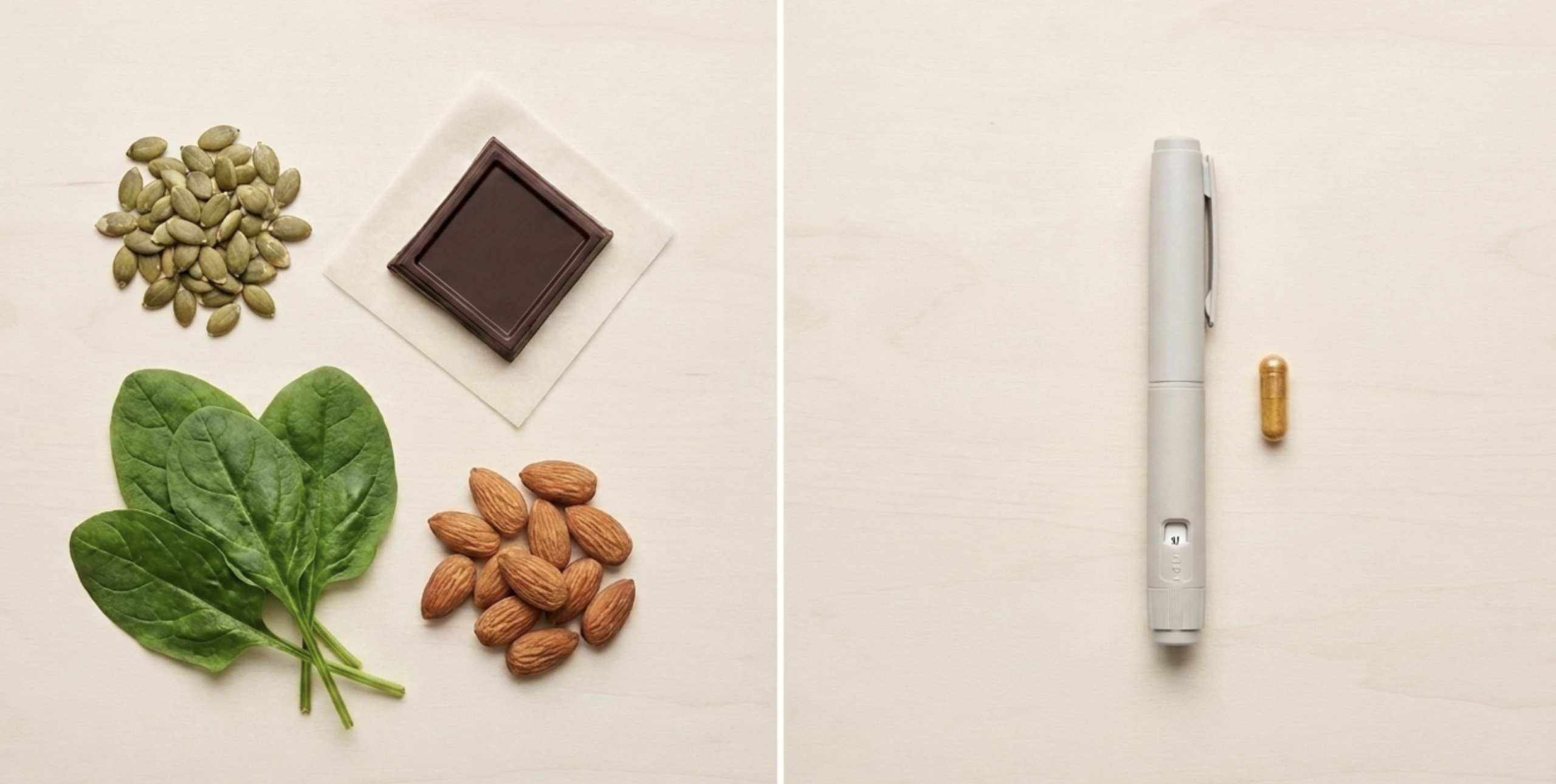
GLP-1 medications significantly reduce food intake. The appetite suppression that makes them effective for weight loss also means that total mineral consumption drops substantially — particularly magnesium, which is concentrated in foods (leafy greens, nuts, seeds, whole grains) that people on GLP-1 medications are eating less of. The gastrointestinal side effects — nausea, diarrhoea, vomiting — further deplete electrolytes through losses that aren’t being replaced by adequate intake.
Magnesium plays a specific role in muscle function: it acts as a natural calcium antagonist, allowing muscles to release contraction after activation. When magnesium is depleted, muscles become more excitable — easier to trigger into contraction, slower to fully relax. For jaw muscles that are already primed by the dopaminergic or nausea mechanisms, magnesium depletion removes a key relaxation mechanism, amplifying whatever clenching is already occurring.
This is the mechanism with the most accessible intervention. Magnesium glycinate supplementation — 200–400mg in the evening — directly addresses the depletion pathway, is low-risk, and is specifically indicated for people on GLP-1 medications who are experiencing jaw tension. The full evidence base for magnesium and jaw clenching is worth reading for anyone on GLP-1 medications experiencing this symptom.
Mechanism 4: Sleep Architecture Disruption
Bruxism occurs predominantly in lighter sleep stages — N1 and N2 non-REM sleep, and during transitions into and out of REM. Anything that disrupts sleep architecture and produces more time in lighter sleep stages increases the frequency and duration of bruxism episodes.
GLP-1 medications disrupt sleep through several routes. GI discomfort — nausea, bloating, abdominal cramping — can cause frequent partial arousals that fragment sleep structure. The slowed gastric emptying that makes GLP-1 medications effective for appetite suppression also means food taken earlier in the day may still be sitting in the stomach at bedtime, with associated discomfort. Some users report that taking GLP-1 medications in the evening significantly worsens overnight GI symptoms compared to morning dosing.
The sleep disruption mechanism has a directly testable intervention: medication timing. If taking the injection in the evening and experiencing worse jaw symptoms overnight, switching to morning administration — with clinician guidance — is worth trying. Morning dosing allows the peak GI activity to occur during waking hours when it can be managed more easily, potentially improving overnight sleep quality and reducing the lighter-sleep-stage time that drives nocturnal bruxism.
The airway-bruxism connection is also relevant here. Sleep-disordered breathing and bruxism co-occur at elevated rates, and GLP-1 medications — through their effects on sleep architecture — may be increasing the frequency of micro-arousals that trigger grinding episodes through the same airway mechanism that explains other forms of sleep bruxism.
Can Ozempic Cause TMJ?
This is the PAA (People Also Ask) question that warrants direct, honest treatment.
Ozempic does not cause TMJ disorder. TMJ disorder — dysfunction of the temporomandibular joint — is a clinical condition with multiple causes including anatomical, inflammatory, and parafunctional factors. No evidence exists linking GLP-1 medications to direct structural changes in the jaw joint.
However, the indirect pathway is worth understanding. If GLP-1 medications increase bruxism through any of the four mechanisms above, the sustained overloading of the jaw muscles and joint that results from unprotected clenching and grinding can worsen existing jaw tension and, in people with a pre-existing tendency toward jaw joint symptoms, contribute to the emergence of symptoms that hadn’t previously been problematic.
The mechanism is: GLP-1 medication → increased bruxism → increased jaw muscle and joint loading → symptom emergence in people with underlying susceptibility. This is the same indirect pathway through which any bruxism amplifier (stress, stimulant medication, sleep disruption) can worsen TMJ symptoms — it is not unique to GLP-1 medications.
The practical implication: if you are experiencing new jaw clicking, limited jaw opening, or jaw joint pain alongside jaw muscle soreness on a GLP-1 medication, this warrants clinical assessment — not just a night guard. The guard addresses tooth protection; jaw joint symptoms may require separate management.
What to Do if You’re Clenching on a GLP-1 Medication
The interventions map to the mechanisms:
Tell your prescribing clinician
Jaw clenching as a side effect of GLP-1 medication is worth reporting to your prescriber. Dose adjustment, timing changes (morning vs evening), or addition of an anti-nausea medication may reduce the GI side effects that drive the nausea-induced bracing mechanism. Don’t adjust dose yourself — this is a clinician conversation.
Tell your dentist
Your dentist needs to know you are on a GLP-1 medication and experiencing new jaw tension. This informs monitoring for wear patterns, appropriate guard specification, and the combined dental risk picture (bruxism on top of already-increased decay risk from dry mouth).
Magnesium glycinate supplementation
200–400mg in the evening, starting at the lower end. Magnesium glycinate is the most bioavailable form for muscle relaxation, is unlikely to cause GI upset (important for GLP-1 users), and directly addresses the electrolyte depletion mechanism. Low-risk, low-cost, and specifically targeted at one of the four proposed mechanisms.
Morning medication dosing — discuss with your clinician
If you are currently injecting in the evening, morning dosing may reduce overnight GI discomfort and improve sleep architecture. This is worth discussing with the clinician managing your GLP-1 therapy before making any change.
Hard custom night guard — not soft OTC
GLP-1-associated clenching is primarily vertical compressive force — the same pattern that makes soft guards counterproductive for clenchers generally. A hard acrylic or dual-laminate custom guard is the appropriate specification. A soft OTC boil-and-bite guard may worsen morning jaw soreness by giving the jaw muscles something to load against. For GLP-1 users whose teeth are already more vulnerable from the other dental effects of the medication, the guard also provides protection against the additional mechanical damage of unprotected bruxism.
The Bottom Line
GLP-1 medications may trigger or worsen bruxism through four indirect mechanisms: dopaminergic pathway modulation, nausea-induced jaw bracing, electrolyte depletion from reduced intake, and sleep architecture disruption from GI discomfort. No clinical trial has established this causal chain. But the mechanisms are plausible, the reports are consistent, and the practical interventions are low-risk regardless of which mechanism is primary.
The most important steps: tell both your prescribing clinician and your dentist; start magnesium glycinate in the evening; discuss medication timing with your clinician; wear a hard custom guard if clenching is confirmed or suspected. For the broader Ozempic dental picture — the dry mouth, acid erosion, and decay risks that compound the bruxism concern — the Ozempic teeth pillar article covers those mechanisms and protective steps in full.
If bruxism protection is the immediate priority, the Reviv model selector identifies the right hard custom guard for your pattern — or browse the full range of FDA-registered Class I appliances.