
- The Penn State Study Explained
- The Glymphatic System: What It Is
- Why Slow-Wave Sleep Is the Key
- How Bruxism Disrupts Brain Cleaning
- The Sleep Apnea-Bruxism-Glymphatic Triangle
- The Alzheimer’s Connection
- What the Biohacker Gets Wrong
- What Actually Protects Your Sleep Architecture
- The Night Guard in This Context
- The Bottom Line
What is the Penn State brain cleaning study?
What is the glymphatic system?
Does teeth grinding affect brain cleaning?
Does a night guard protect brain health?
Why is slow-wave sleep important for brain health?

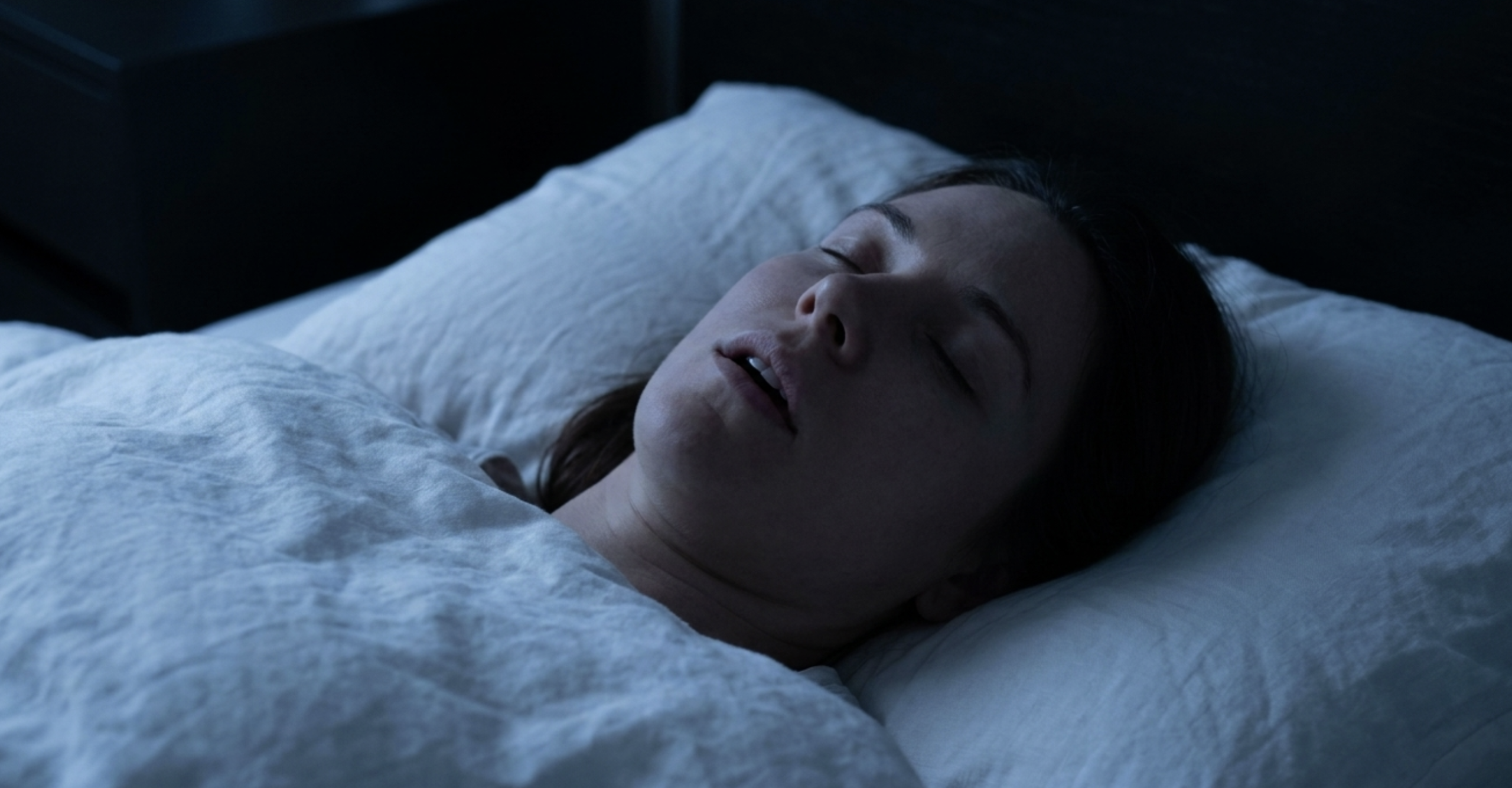
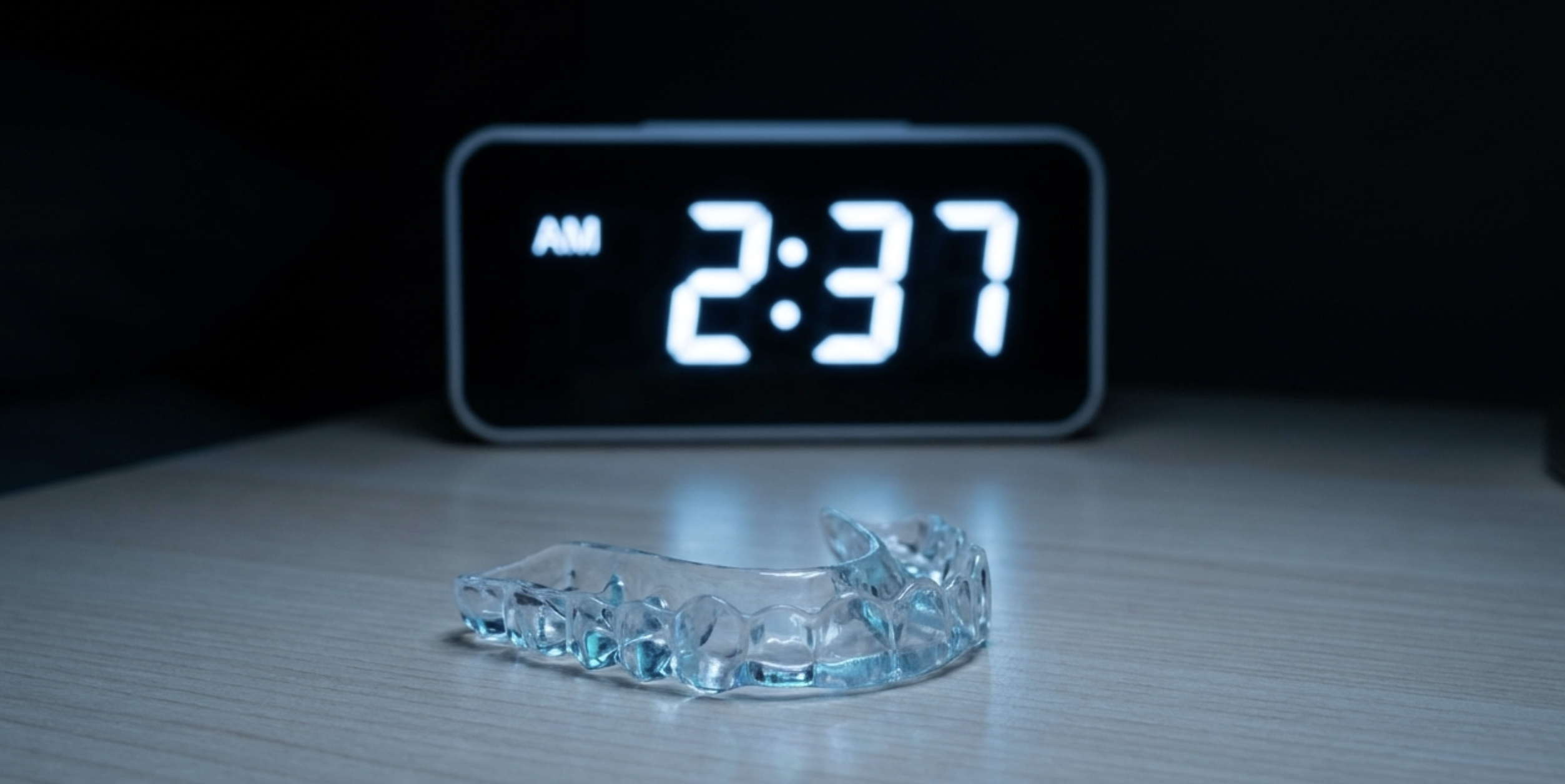
Penn State researchers published a study in Nature Neuroscience in May 2026 showing that abdominal muscle contractions mechanically drive fluid movement through the brain — a previously unknown physical mechanism of the brain’s waste clearance system. The study is trending at 10,000+ searches and has been covered by ScienceAlert, ScienceDaily, and dozens of health outlets.
What almost none of that coverage mentions: if you grind your teeth at night, you may be impairing the very system this study describes.
The connection is not speculative. It runs through the most important sleep research of the past decade — the glymphatic system — and it has direct, practical implications for anyone with bruxism who cares about long-term brain health.
The Penn State Study: What It Actually Found
The Penn State study published in Nature Neuroscience on May 1, 2026, found something unexpected: abdominal muscle contractions — the kind that occur during breathing, movement, and exercise — create a hydraulic pressure effect that pushes blood from the abdomen into the spinal cord, which in turn moves fluid through the brain. The lead researcher Patrick Drew described it directly: “When the abdominal muscles contract, they push blood from the abdomen into the spinal cord, just like in a hydraulic system, applying pressure to the brain and making it move.”
This movement drives cerebrospinal fluid (CSF) through the brain’s glymphatic channels — the fluid-based waste clearance pathways that have become the dominant story in sleep neuroscience over the past decade. The finding adds a mechanical component to a system previously understood primarily through vascular and neuronal mechanisms.
The same Patrick Drew at Penn State has been studying how brain rhythms and arterial changes during different sleep stages control glymphatic flow — his research is part of a $15 million NIH-funded programme to understand the mechanics of the glymphatic system, with implications for Alzheimer’s disease and other neurodegenerative conditions.
The popular coverage of the study focuses on the movement angle — “exercise cleans your brain.” What it misses is the sleep connection. Because the abdominal contractions that drive this mechanism happen most rhythmically and consistently during deep sleep breathing — and anything that disrupts deep sleep disrupts this mechanism.
The Glymphatic System: What It Is and Why It Matters
The glymphatic system is the brain’s equivalent of the lymphatic system — a waste clearance network that removes the metabolic byproducts that accumulate during brain activity. Unlike the rest of the body, the brain has no traditional lymphatic vessels. Instead, it uses a specialised system that circulates cerebrospinal fluid (CSF) through channels that surround brain blood vessels, sweeping waste products from brain tissue into the bloodstream for removal.
The waste products it removes include amyloid beta and tau — the proteins whose accumulation in the brain is associated with Alzheimer’s disease. A 2026 study in Nature Communications provided the first direct confirmation in humans that the glymphatic system clears both amyloid beta and tau from the brain into the bloodstream — establishing in humans what had previously only been shown in animal models.
The implications are significant: sleep-disordered breathing impairs glymphatic clearance — and so, by extension, does anything that chronically disrupts the quality and depth of sleep. This is where bruxism enters the picture.
Why Slow-Wave Sleep Is the Critical Variable
Glymphatic clearance is not uniformly active across all sleep stages. Research is consistent that it peaks during slow-wave sleep — N3 non-REM sleep, the deepest sleep stage, characterised by the large slow delta waves visible on EEG. During slow-wave sleep, something specific happens in the brain that enables more efficient CSF flow: neurons shrink slightly, increasing the extracellular space between them by approximately 60%, allowing CSF to move through brain tissue with significantly less resistance.
Penn State’s glymphatic research found the strongest coupling between brain activity and CSF flow in subjects who were in lighter sleep stages — suggesting that the transition into deeper sleep represents a specific activation of the clearance mechanism, not just passive drainage.
Slow-wave sleep is the sleep stage that is most sensitive to disruption. It is the stage reduced most severely by alcohol, many medications, sleep apnea, age-related sleep changes — and bruxism. It is also the stage that is most restorative, the stage during which growth hormone is released, memory consolidation is most active, and — the relevant point here — the glymphatic system operates at highest efficiency.
How Bruxism Disrupts the Brain-Cleaning System
This is the mechanistic chain that connects the Penn State research to bruxism — and why it matters for anyone who grinds their teeth.
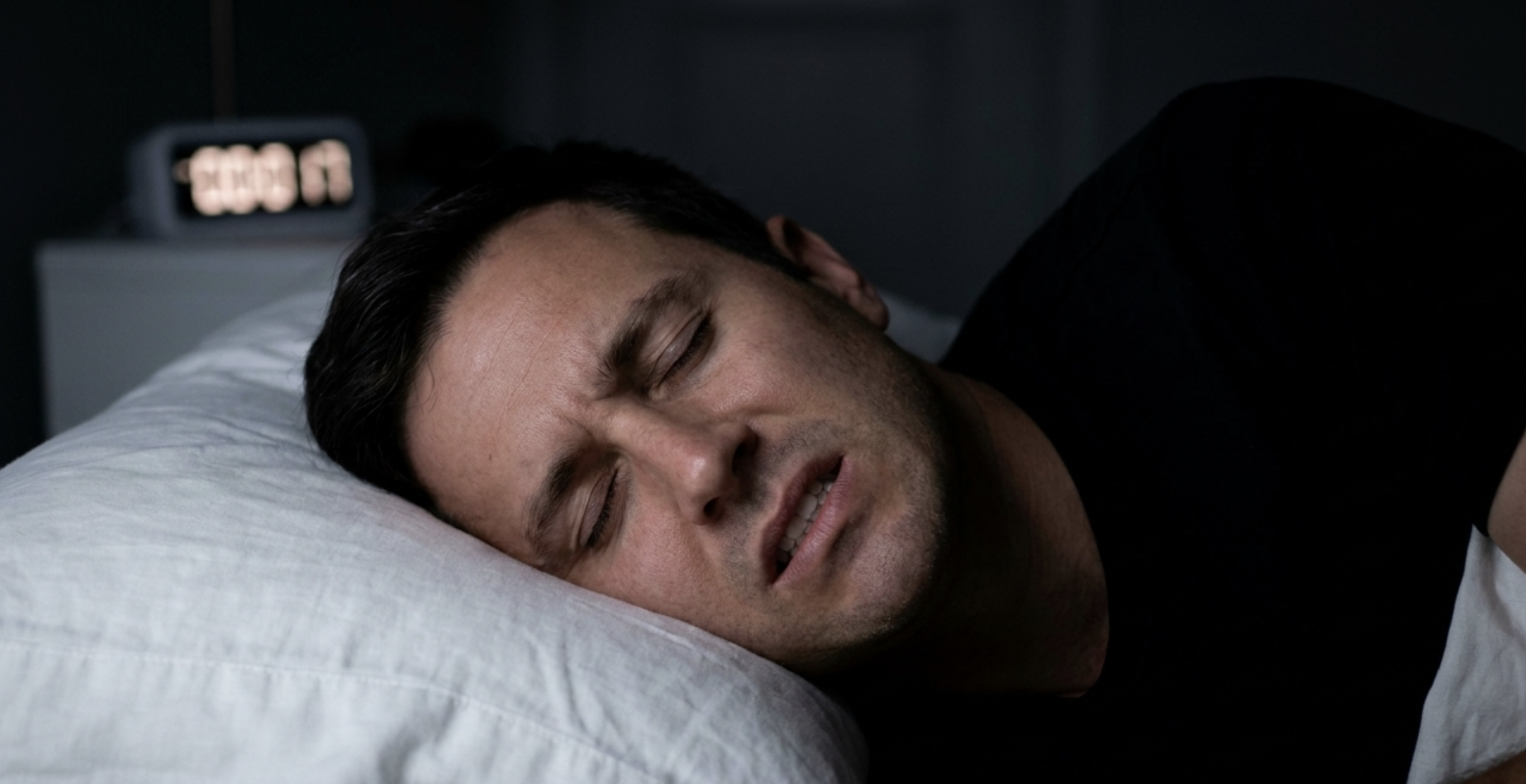
Bruxism episodes during sleep are associated with micro-arousals — brief shifts toward lighter sleep stages that precede and accompany the grinding event. Research on sleep bruxism consistently shows that grinding episodes are associated with a specific EEG pattern: a brief arousal from deeper sleep, a burst of rhythmic masticatory muscle activity (the jaw muscle contraction), and a return toward deeper sleep. This cycle, repeated multiple times per night in moderate to severe bruxers, produces measurable sleep fragmentation.
The consequence for glymphatic function follows directly: each micro-arousal pulls the sleeper out of slow-wave sleep. Each transition back to slow-wave sleep takes time. In a heavy bruxer with dozens of episodes per night, a significant proportion of the sleep period that should be spent in slow-wave sleep is instead spent in lighter stages — reducing the cumulative time available for optimal glymphatic clearance.
This is not yet confirmed by a study directly measuring glymphatic clearance in bruxism patients. But the mechanistic chain — bruxism disrupts slow-wave sleep, slow-wave sleep is when glymphatic clearance peaks, therefore bruxism impairs glymphatic clearance — is supported at every step by existing research. The dedicated study hasn’t been done; the mechanism is already established.
The Sleep Apnea-Bruxism-Glymphatic Triangle
The complexity increases when you add sleep apnea to the picture — and it should be added, because the conditions co-occur at elevated rates.
Obstructive sleep apnea (OSA) is the most studied impairment of glymphatic function. The repeated hypoxia and arousal events of OSA produce severe fragmentation of slow-wave sleep and have been directly linked to reduced glymphatic clearance and elevated amyloid accumulation in longitudinal research. The proposed mechanism connecting OSA to Alzheimer’s risk runs through the glymphatic pathway.
Studies consistently show that 33–54% of people with OSA also have bruxism — a co-occurrence rate far above chance. The mechanism: apnea micro-arousals can trigger jaw muscle activation as part of the arousal response that restores breathing. In susceptible individuals, this manifests as a grinding episode. The person has both conditions, each worsening the other’s sleep disruption effect.
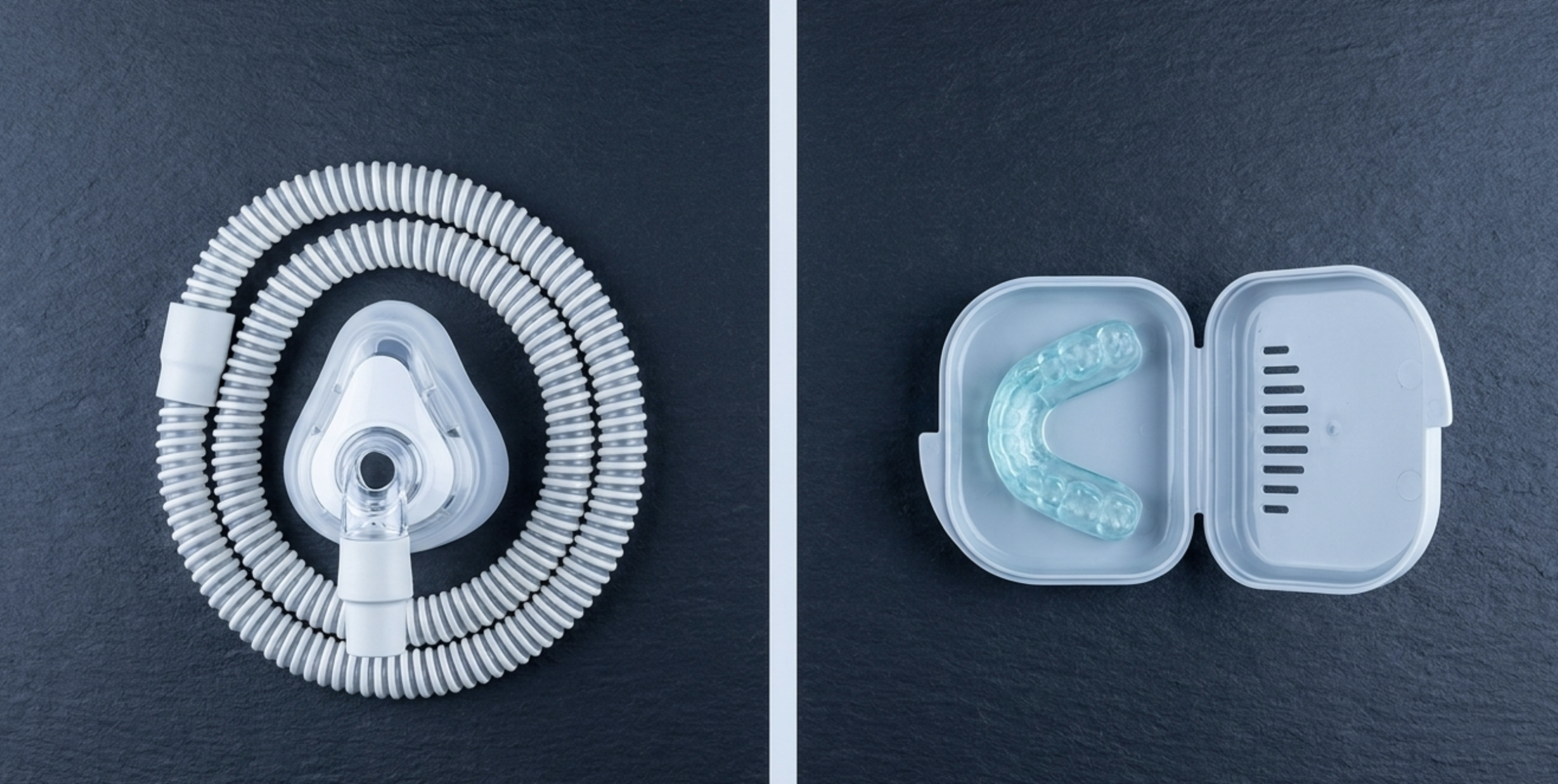
For someone with both OSA and bruxism, the glymphatic impairment is compounded: OSA produces hypoxia-related impairment and its own sleep fragmentation; bruxism adds additional micro-arousal-driven slow-wave sleep disruption on top. Treating the OSA — through CPAP, a mandibular advancement device, or another clinical intervention — is the highest-impact intervention for glymphatic function in this group. The night guard addresses the dental consequences of the bruxism but not the airway component. Both conditions require separate management.
The Alzheimer’s Connection: The Long-Term Stakes
The clinical significance of chronic glymphatic impairment is the neurodegenerative disease risk that accumulates over decades of poor waste clearance. Amyloid beta and tau — the proteins whose accumulation defines Alzheimer’s pathology — are among the primary waste products the glymphatic system removes. When clearance is chronically impaired, accumulation accelerates.
The research connecting sleep disruption specifically to Alzheimer’s risk is substantial and growing. Studies show that even one night of sleep deprivation increases amyloid beta levels in the cerebrospinal fluid. Longitudinal research shows that people with chronic sleep disruption — from OSA, insomnia, or other causes — have elevated Alzheimer’s risk at the population level.
The direct chain — chronic bruxism → chronic slow-wave sleep disruption → chronic glymphatic impairment → elevated amyloid accumulation → elevated neurodegenerative risk — is mechanistically plausible at every step, though the bruxism-specific endpoint has not been measured in a prospective cohort. What has been measured is the OSA-Alzheimer’s link, and since bruxism and OSA co-occur at high rates and share the slow-wave sleep disruption mechanism, the risk applies to the overlap population.
This framing reframes the night guard from a dental appliance to a sleep architecture protection device. It does not treat bruxism or the glymphatic system directly. But by reducing the grinding activity that fragments slow-wave sleep, it protects the sleep stage on which the brain’s waste clearance depends. Identifying whether your pattern is predominantly clenching or grinding determines the right guard specification for maximising that protection.
What the Biohacker Gets Wrong About This
The Penn State study will be processed by the biohacker community primarily through the movement angle — “do abdominal breathing exercises to clean your brain.” This is a legitimate interpretation of the finding, but it misses the larger picture.
The glymphatic story is fundamentally about sleep quality, not waking interventions. The movement-driven mechanism the Penn State study describes operates continuously, including during sleep breathing — and sleep is where the clearance is most efficient and most necessary. Optimising waking exercise for glymphatic benefit while ignoring the sleep architecture that determines most of the clearance is prioritising the smaller variable.
The hierarchy of glymphatic interventions, based on the research:
- Treat sleep apnea — the single largest impairment of glymphatic function in the population, and the most studied
- Protect slow-wave sleep — avoid alcohol before bed (directly reduces slow-wave), maintain consistent sleep schedule, optimise bedroom temperature (65–68°F)
- Reduce bruxism activity — a night guard reduces the grinding-related micro-arousals that fragment slow-wave sleep
- Support sleep architecture supplements — magnesium glycinate and Reishi both have evidence for improving slow-wave sleep specifically
- Maintain regular physical activity — the movement-driven clearance mechanism the Penn State study describes; daily movement rather than acute exercise bouts
Exercise ranks fifth because its glymphatic contribution, while real, is smaller than the sleep variables. But most biohacker content will invert this hierarchy.
What Actually Protects Your Sleep Architecture
Interventions that protect slow-wave sleep — in priority order for people with bruxism:
Screen for and treat sleep apnea
If you grind your teeth and also snore, wake unrefreshed, or experience daytime fatigue, sleep apnea screening is the highest-priority intervention for both your glymphatic function and your bruxism. CPAP therapy — when tolerated — dramatically improves slow-wave sleep continuity and has been shown to reduce both OSA-related bruxism and amyloid accumulation markers. The oral appliance options for OSA are covered in the sleep apnea mouthpiece comparison if CPAP is not tolerated.
Wear a hard custom night guard for bruxism
The most direct intervention for bruxism-related slow-wave sleep disruption. A well-fitted hard acrylic custom guard reduces the micro-arousal frequency associated with grinding episodes, protecting the slow-wave sleep continuity that glymphatic clearance depends on. This is the secondary benefit of the guard — tooth protection is primary — but it is mechanistically real.
Eliminate alcohol before sleep
Alcohol has a well-documented suppressive effect on slow-wave sleep. It produces an initial sedation (which is not the same as sleep quality) followed by rebound arousal in the second half of the night, dramatically reducing slow-wave sleep time. For people with bruxism, alcohol compounds this by also worsening bruxism severity through dopaminergic pathway effects. It is the most impactful dietary variable for slow-wave sleep quality.
Magnesium glycinate and Reishi in the evening
Both have evidence specifically for improving slow-wave sleep depth and continuity — the sleep stage directly relevant to glymphatic function. Magnesium glycinate increases slow-wave sleep time in research studies; Reishi improves total non-REM sleep and reduces sleep onset time. Together they represent the supplement approach most directly targeted at the slow-wave sleep variable. The full evidence base is covered in both the magnesium article and the mushroom supplements article.
Bedroom temperature at 65–68°F
Core body temperature drop is a primary trigger for slow-wave sleep initiation. A bedroom that is too warm prevents the temperature drop, reducing slow-wave sleep time. This is one of the most consistently supported environmental interventions for sleep depth and requires no products.
The Night Guard in This Context
It is worth being explicit about what a night guard can and cannot do in the glymphatic context, because the connection between bruxism and brain health is compelling enough to be overclaimed.
What a night guard does: Absorbs grinding and clenching force before it reaches enamel, protecting teeth from wear and mechanical damage. By reducing the grinding activity that triggers micro-arousals, it may also reduce the frequency of slow-wave sleep disruption — protecting the sleep architecture that glymphatic clearance depends on.
What a night guard does not do: Treat sleep apnea, directly improve glymphatic function, prevent Alzheimer’s disease, or guarantee any specific sleep architecture outcome. The glymphatic benefit is a plausible secondary consequence of better sleep continuity, not a designed function of the device.
The honest framing: if you grind your teeth, you need a night guard for your teeth. The fact that it may also protect your brain’s overnight cleaning system by reducing sleep fragmentation is a genuine additional reason to be consistent about wearing it — but it is not a clinical claim, and the guard should not be chosen or promoted on that basis.
The Bottom Line
The Penn State brain-cleaning study adds a mechanical component to the glymphatic story — abdominal pressure drives CSF through the brain in a previously unknown physical mechanism. But the dominant glymphatic variable remains sleep quality, specifically slow-wave sleep depth and continuity.
Bruxism disrupts slow-wave sleep through grinding-related micro-arousals. Slow-wave sleep is when the glymphatic system — confirmed in humans in 2026 for the first time — performs its waste clearance most efficiently, removing the amyloid beta and tau whose accumulation defines Alzheimer’s pathology. The chain connecting bruxism to long-term brain health risk is mechanistically supported at every step, not yet confirmed in a prospective bruxism-specific cohort.
The practical implications are not complicated: treat sleep apnea if present (the highest-impact glymphatic intervention), wear a night guard consistently (protects teeth and may reduce slow-wave disruption), eliminate alcohol before sleep, and support sleep architecture with magnesium and Reishi if appropriate.
If you don’t yet have a guard, the Reviv model selector identifies the right FDA-registered Class I appliance for your grinding pattern. If you have OSA alongside bruxism, the CPAP alternatives and sleep apnea mouthpiece comparison are the relevant next reads.