
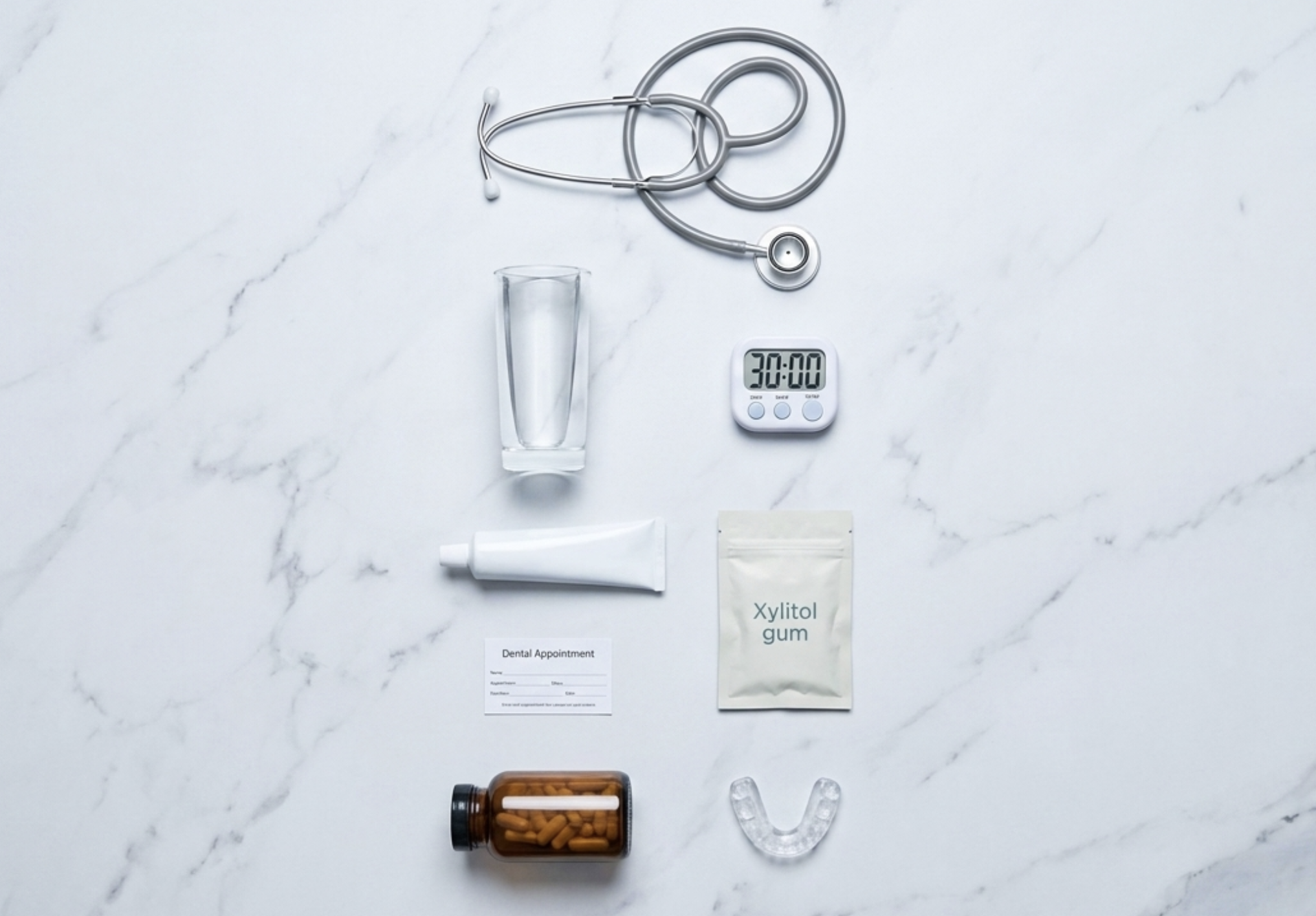

- Why the Standard Advice Falls Short
- Step 1: Tell Your Dentist First
- Step 2: Intentional Hydration Protocol
- Step 3: The Post-Vomit Protocol
- Step 4: Fluoride and Remineralisation
- Step 5: Dry Mouth Management
- Step 6: Increased Dental Frequency
- Step 7: Night Guard for Bruxism
- Step 8: Magnesium for Jaw Tension
- Tongue Posture and Saliva
- The Bottom Line
How do you prevent Ozempic teeth?
Does Ozempic cause dental issues?
Should I brush after vomiting on Ozempic?
How often should I see the dentist on Ozempic?
Can a night guard help with Ozempic teeth?
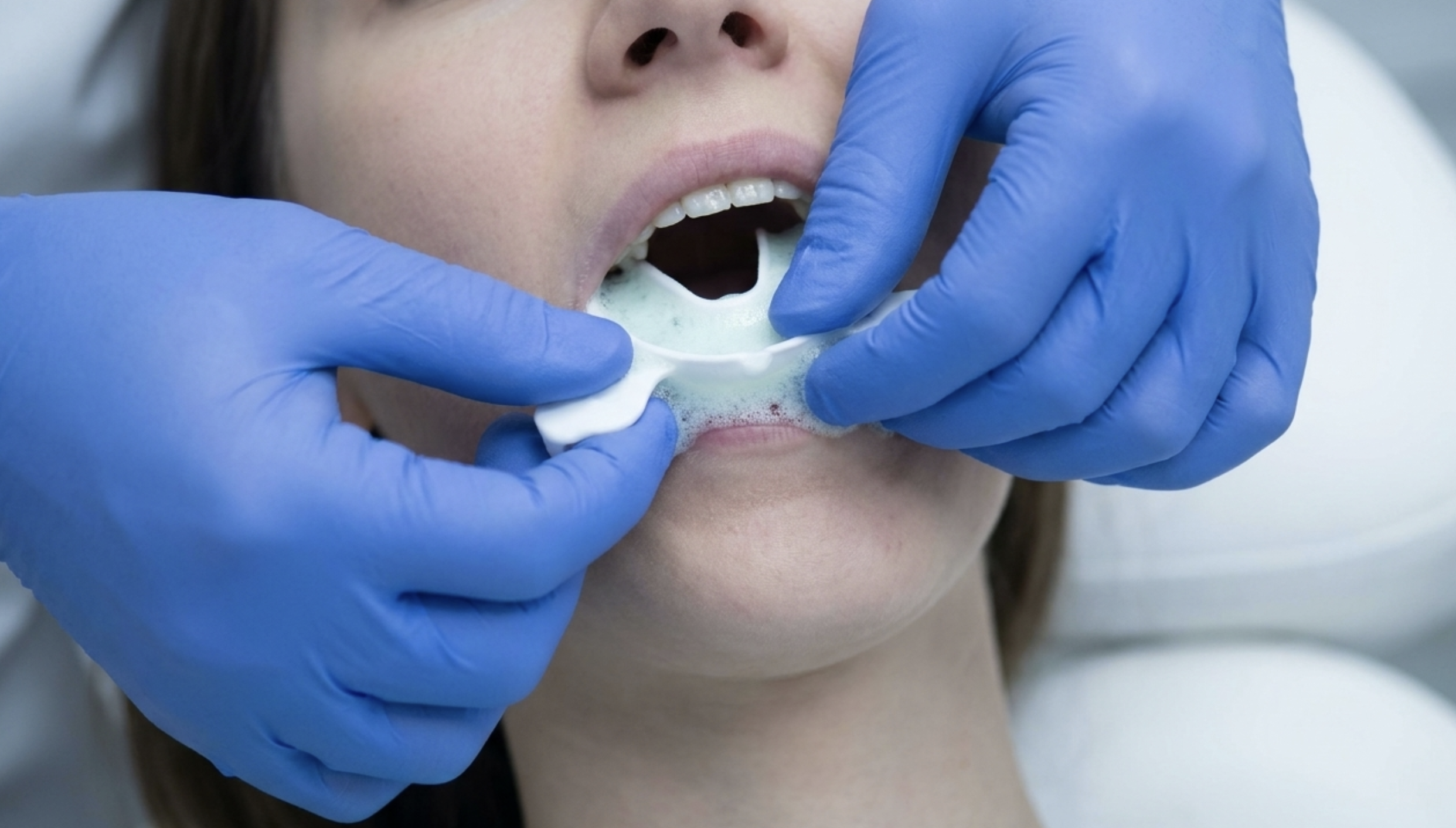
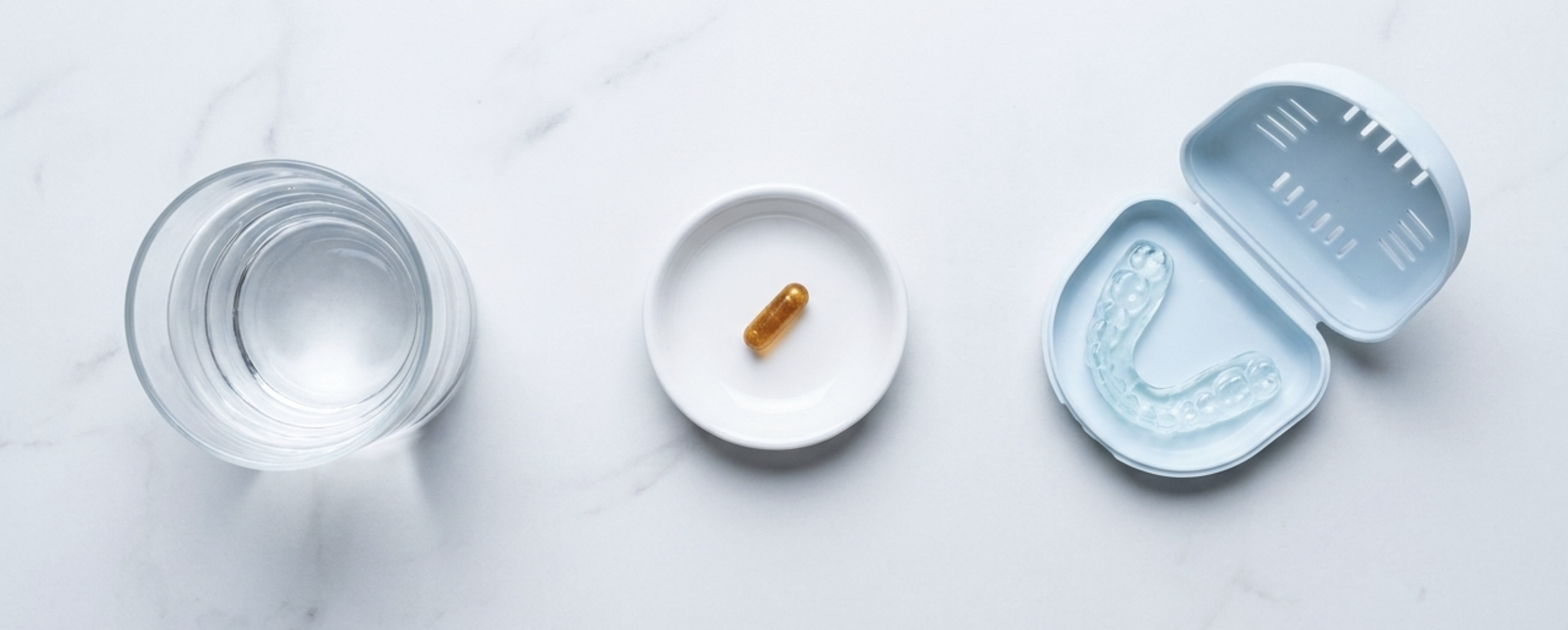
If you’re searching “how to prevent Ozempic teeth,” you already know the problem exists. You’re on a GLP-1 medication — Ozempic, Wegovy, Mounjaro, or similar — and you want to know what to actually do to protect your teeth. This article gives you that: a complete, sequenced protocol with the clinical reasoning behind each step.
Most prevention guides list the same five tips in the same order — hydrate, fluoride, see your dentist, chew gum, drink water. They are correct but incomplete. They don’t explain why each step matters, they don’t tell you which steps matter most, and they miss three interventions that most GLP-1 patients never hear about: the post-vomit brushing protocol, tongue posture and its effect on saliva, and a night guard for the grinding component.
The protocol below is ordered by priority — the highest-impact steps come first. If you do nothing else, do the first three.
Why the Standard Advice Falls Short
The advice that circulates in most Ozempic teeth prevention articles is not wrong — it is incomplete in ways that matter. “Drink more water” without explaining that thirst suppression means you won’t feel the need to is not useful guidance. “See your dentist more often” without specifying the frequency and why is easy to defer. “Use fluoride” without distinguishing between OTC and prescription strength, or without explaining when to upgrade, leaves the most vulnerable patients on inadequate protection.
The most critical gap in standard advice is the post-vomit brushing protocol — the single most consequential thing most GLP-1 users don’t know. Brushing immediately after vomiting causes enamel damage. It is the opposite of protective. Yet it is almost never mentioned in prevention guides, because prevention articles are written from the “what to add to your routine” framing rather than the “what you’re already doing wrong” framing.
This protocol covers both.
Step 1: Tell Your Dentist You Are on a GLP-1 Medication
This comes first because it is the step that makes every other step more effective. Your dentist cannot tailor monitoring, prescribe appropriate protective treatments, or identify early changes without knowing your GLP-1 status.
What changes when your dentist knows:
- They can schedule you for more frequent cleanings proactively rather than reactively
- They can apply professional fluoride treatments during each visit
- They can screen specifically for the decay pattern characteristic of GLP-1-associated dry mouth — decay appearing at the gumline and in areas normally protected by saliva
- They can recommend prescription-strength fluoride toothpaste before the decay risk escalates rather than after it has
- They can monitor jaw wear patterns if you are also experiencing bruxism
- They can recommend dental sealants on back teeth to protect vulnerable surfaces before decay begins
Tell your dentist at your next appointment, or call ahead before it if you have recently started the medication. If you have dental work scheduled — a crown, a filling, an extraction — tell them before the appointment, not during. The ADA has noted that dentists need to know about all medications because many drugs affect oral health in ways that change how dental work should be approached.
Step 2: The Intentional Hydration Protocol
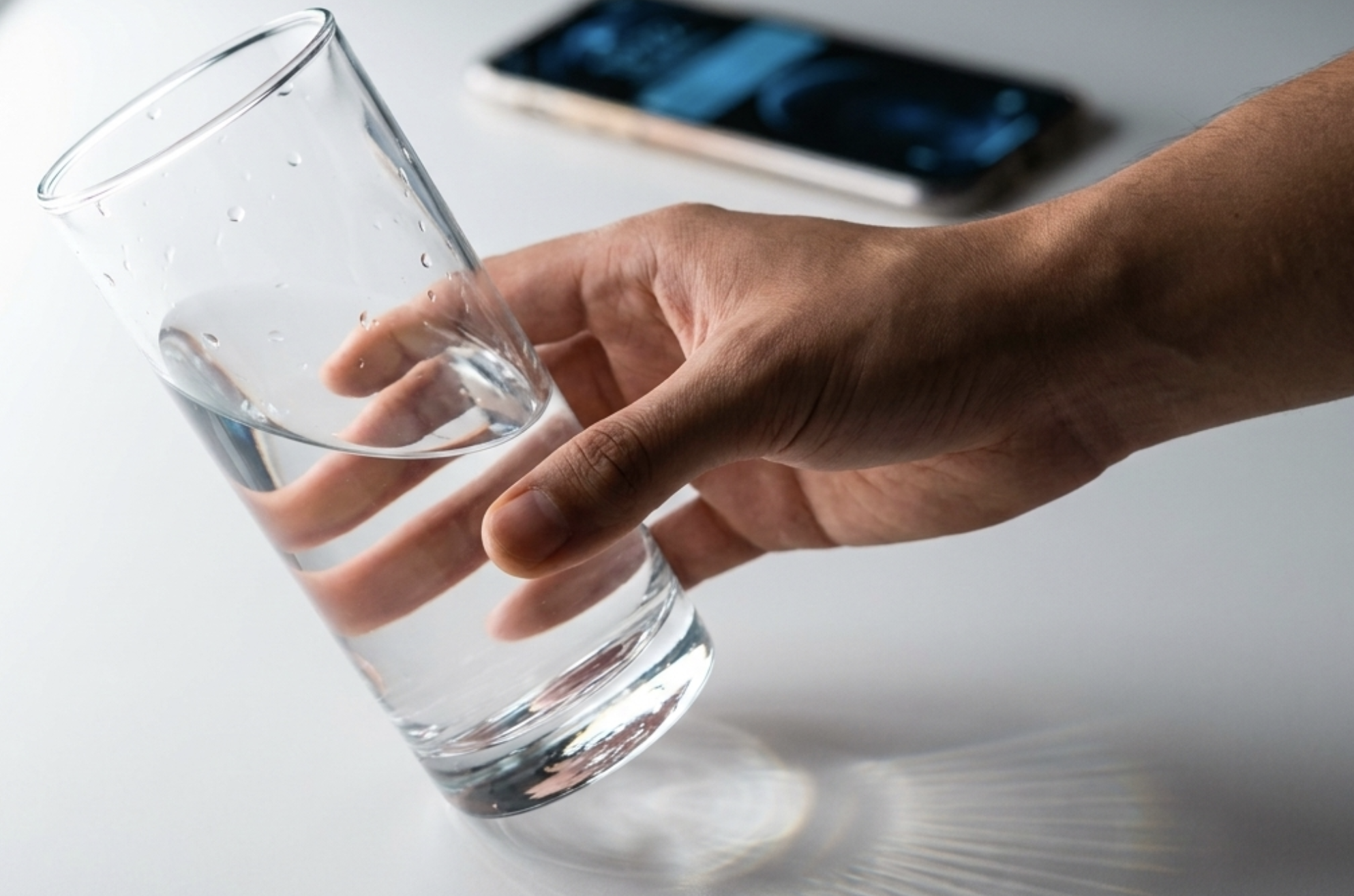
GLP-1 medications suppress both appetite and thirst. The normal signal that tells you to drink — feeling thirsty — is blunted. If you drink only when you feel thirsty while on a GLP-1 medication, you are chronically underhydrated, and your saliva production reflects it.
The intervention is simple but requires deliberate implementation: drink water on a schedule, not in response to thirst.
Practical implementation:
- Set phone reminders every 60–90 minutes during waking hours to drink a glass of water
- Keep a water bottle visible at all times — the visual cue compensates for the absent thirst cue
- Drink a full glass of water with every medication dose
- Target a minimum of 8 glasses (approximately 2 litres) daily — more if experiencing significant GI side effects that cause fluid loss
Water directly increases saliva production, dilutes oral acid concentration, and provides the mechanical rinsing effect that saliva provides. It is the most accessible, lowest-cost intervention in this protocol.
What to avoid: sugary drinks, sports drinks, fruit juices, and carbonated beverages — all of which introduce fermentable carbohydrates or acids that worsen the oral environment that GLP-1 medications have already made more vulnerable. Plain water only, or water with nothing added.
Step 3: The Post-Vomit Protocol — The Most Important Thing Most People Are Getting Wrong
This step deserves its own section because it is both the most critical and the most counterintuitive item in the protocol.
When you vomit, stomach acid — pH approximately 1.5–3.5 — coats all of your tooth surfaces. The instinctive response is to brush your teeth immediately. This is the wrong response, and it causes enamel damage.
Here is why: acid temporarily softens enamel in a process called acid erosion softening. In this state, enamel is significantly more vulnerable to abrasion. Brushing within this window physically abrades the softened enamel and spreads the acid to surfaces it hadn’t reached. You are actively damaging your teeth in the act of trying to clean them.
The correct protocol:
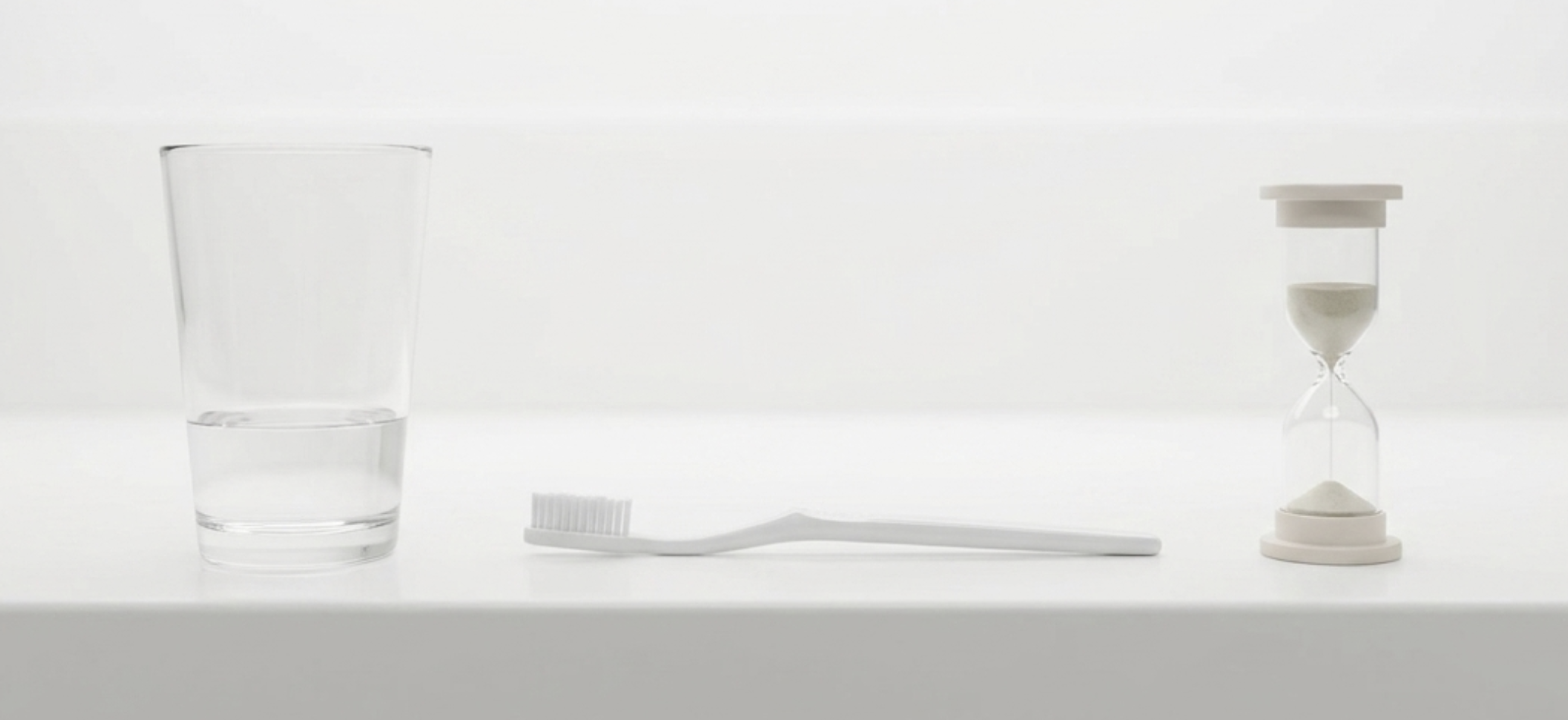
- Immediately after vomiting: Rinse the mouth thoroughly with plain water. Spit it out. This dilutes and begins to remove the acid without abrading.
- Wait 30 minutes. During this time, saliva neutralises the remaining acid and the enamel begins to reharden through remineralisation. Do not brush during this window.
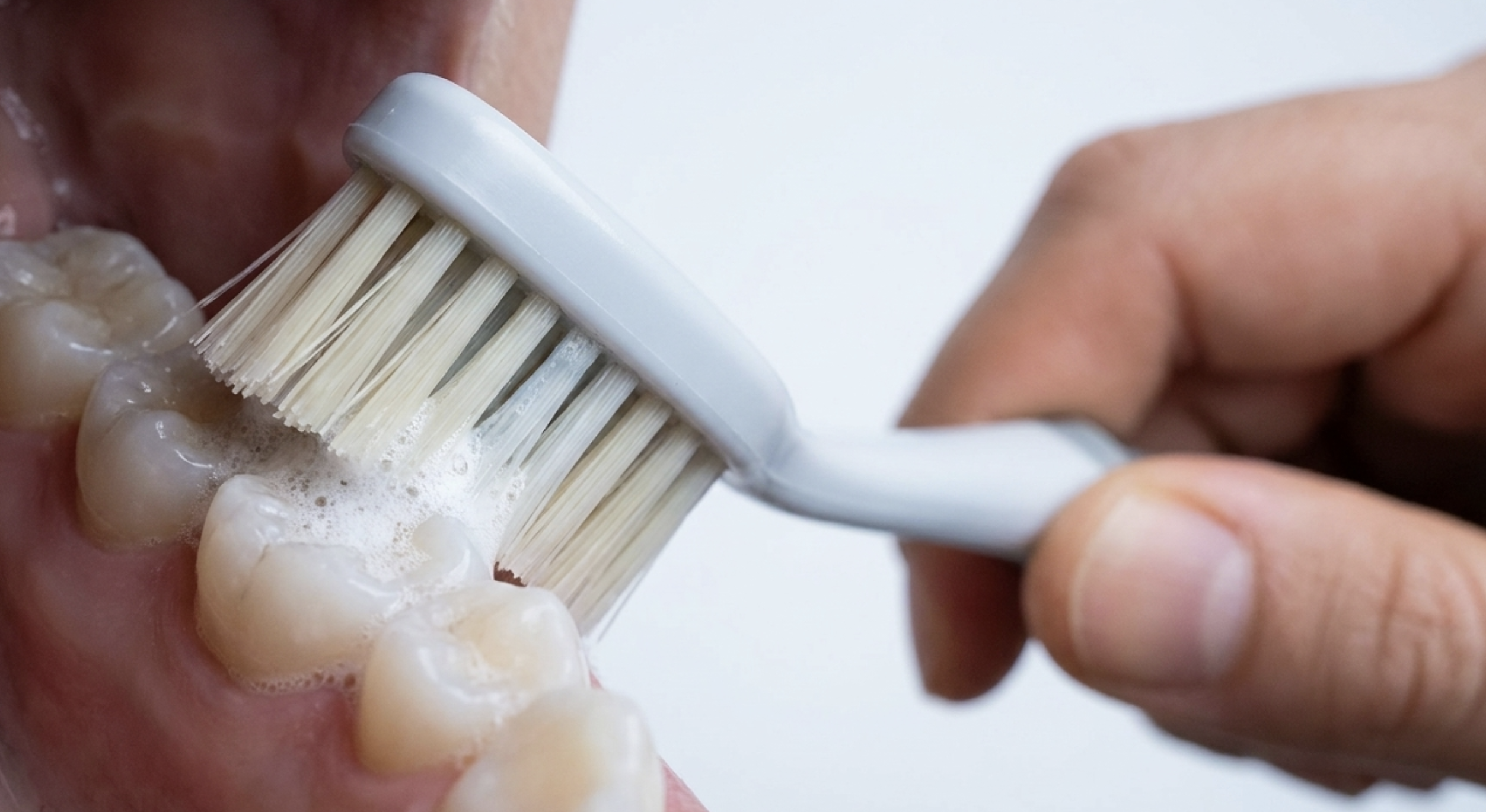
- After 30 minutes: Brush normally with fluoride toothpaste. The enamel is now rehardened enough to tolerate brushing without additional damage.
Optional additions: a small amount of baking soda dissolved in water as a rinse (alkaline, helps neutralise acid faster) or a fluoride rinse during the 30-minute wait period (does not abrade, provides remineralisation support). Do not use mouthwash containing alcohol during this period — alcohol dries the mucosa and inhibits the saliva response.
This protocol applies every time you vomit, regardless of frequency. For GLP-1 users with daily nausea and vomiting during dose escalation, consistent application of this protocol during that period is one of the highest-impact things they can do to protect their enamel.
Step 4: Fluoride and Remineralisation
Fluoride is the primary active agent in enamel remineralisation — the process by which saliva deposits minerals back into enamel that has been partially demineralised by acid. In a normal mouth with healthy saliva production, this process happens continuously throughout the day. In a GLP-1 user with reduced saliva, it is compromised — making supplemental fluoride more important, not less.
OTC fluoride toothpaste
Standard fluoride toothpaste (1000–1450 ppm fluoride) used twice daily is the minimum for GLP-1 users. Brush for two minutes each session, covering all surfaces including the gumline where GLP-1-associated decay most commonly appears.
Do not use whitening toothpaste if enamel erosion is a concern — whitening formulations typically contain abrasives that worsen erosion on already-compromised enamel surfaces.
Prescription fluoride toothpaste
Prescription fluoride toothpaste (5000 ppm — approximately three times the strength of OTC) provides significantly higher remineralisation support and is appropriate for GLP-1 users with persistent dry mouth, elevated decay risk, or early signs of enamel erosion. Ask your dentist specifically about this at your next appointment — they can prescribe it in a routine dental visit without a separate consultation.
Remineralisation products
Products containing hydroxyapatite, casein phosphopeptide-amorphous calcium phosphate (CPP-ACP, marketed as Recaldent or MI Paste), or similar remineralising agents provide additional enamel support beyond fluoride alone. These are particularly useful as leave-on treatments applied after evening brushing. Your dentist can recommend appropriate products based on your specific decay risk profile.
Step 5: Dry Mouth Management
Dry mouth is the central mechanism driving most GLP-1-associated dental risk. Addressing it directly — beyond just hydration — requires a layered approach.
Xylitol products
Sugar-free gum and lozenges containing xylitol serve two functions: they mechanically stimulate saliva production (chewing and sucking stimulate the salivary glands), and xylitol itself has antimicrobial properties against the primary cavity-causing bacteria (Streptococcus mutans). Choose products with xylitol listed as the first or second ingredient. Chew after meals and in periods of particularly dry mouth.
Saliva substitutes
OTC saliva substitute products — mouth sprays, gels, rinses — provide temporary mechanical lubrication and some of the protective functions of saliva. They are most useful at night (when saliva production naturally drops anyway, compounding the GLP-1 effect) and in situations where xylitol gum is not appropriate. Apply before sleep as part of the evening routine.
Bedroom humidifier
A humidifier maintaining 40–50% relative humidity in the bedroom counters the overnight drying of oral mucosa that worsens morning dry mouth symptoms. GLP-1 users with significant dry mouth symptoms often notice a meaningful improvement in morning mouth feel and reduced overnight tooth sensitivity with consistent humidifier use.
Alcohol-free mouthwash only
Mouthwashes containing alcohol dry the oral mucosa and worsen dry mouth. If using a mouthwash, choose an alcohol-free formulation. A fluoride-containing alcohol-free rinse used after brushing provides additional fluoride exposure without the drying effect.
Step 6: Increase Dental Cleaning Frequency to Every 3–4 Months
The standard twice-yearly dental cleaning schedule is calibrated for normal decay risk. GLP-1-associated dry mouth and acid erosion represent a significantly elevated risk profile — one that the standard schedule is not designed to catch early enough.
The clinical argument for more frequent visits: GLP-1-associated decay can progress from early demineralisation to a cavity requiring restoration in the time between standard twice-yearly appointments. A 3–4 month schedule allows early detection at the white-spot lesion stage — where remineralisation treatment can reverse the decay without drilling — rather than at the cavity stage where restoration is the only option. Irreversible damage is far more expensive to treat than preventable damage caught early.
Most dental insurance covers two cleanings per year. Ask your dentist about the billing approach for additional visits — some dentists code additional preventive visits in ways that may be partially covered; others will offer reduced fees for self-pay prevention visits given the medication context.
Step 7: Night Guard for the Bruxism Component
This step applies specifically to GLP-1 users who are experiencing jaw clenching, teeth grinding, or morning jaw soreness — a subset of users for whom the bruxism mechanism is active alongside the dental mechanisms.
In a mouth with healthy enamel and normal saliva production, bruxism is damaging over time but the teeth have full structural integrity to start with. In a GLP-1 user whose enamel has already been thinned by acid erosion and whose teeth are already more vulnerable from reduced saliva, the additional compressive force of unprotected grinding is more damaging than it would otherwise be. Enamel that has been partially demineralised is more brittle and cracks more easily under clenching force.
The guard specification matters: hard custom acrylic only. Not a soft OTC boil-and-bite. Soft guards compress under clenching force, which stimulates more muscle loading rather than reducing it — the opposite of what a clencher needs. A hard acrylic custom guard provides a non-compressible surface that distributes clenching force evenly across the arch without giving the jaw muscles something to load against. For the full reasoning on why this matters, why clenchers need a different guard than grinders covers the mechanism in detail.
Guard cleaning is more important for GLP-1 users than for other wearers. Dry mouth concentrates saliva proteins and bacteria on the guard surface more rapidly, accelerating biofilm formation. Daily soap-and-brush cleaning and weekly soaking are essential — more so than for wearers without dry mouth.
Step 8: Magnesium Glycinate for Jaw Tension
This step is specific to GLP-1 users experiencing jaw tension as a side effect — whether as daytime clenching or nighttime grinding. It addresses one of the four proposed GLP-1 bruxism mechanisms directly: electrolyte depletion from reduced food intake.
GLP-1 medications significantly reduce total food intake. Magnesium — which plays a specific role in allowing muscles to release contraction after activation — is concentrated in foods (leafy greens, nuts, seeds, whole grains) that GLP-1 users are eating substantially less of. Magnesium depletion makes muscles more excitable — easier to trigger into contraction, slower to fully relax. For jaw muscles already primed by the other bruxism mechanisms, depleted magnesium removes a key relaxation pathway.
Magnesium glycinate — 200–400mg in the evening — is the most bioavailable form for muscle relaxation, and critically for GLP-1 users, the least likely to cause GI upset (magnesium citrate and oxide can cause diarrhoea, which worsens the electrolyte depletion). Start at 200mg and assess tolerance before increasing. The full evidence base for magnesium and jaw clenching covers the mechanism and form comparison in detail.
As with all supplements, discuss with your prescribing clinician before starting — particularly if you have kidney disease, which affects magnesium excretion, or if you are taking medications that interact with magnesium.
Tongue Posture and Saliva: The Underreported Protective Habit
This is the step that appears in almost no Ozempic teeth prevention guide, but which has a direct effect on saliva distribution and oral acid neutralisation.
The correct resting tongue posture — tongue resting gently against the palate with the tip behind the upper front teeth, mouth gently closed, teeth slightly apart — keeps the tongue in contact with the palate where saliva accumulates and distributes it across the tooth surfaces of both arches. When the tongue rests on the floor of the mouth (a common pattern in mouth breathers), saliva pools at the floor of the mouth and doesn’t contact the upper teeth and palate effectively.
For GLP-1 users with reduced saliva production, maximising the distribution of whatever saliva is being produced matters. Practising the correct resting tongue position — particularly during the day when conscious adjustment is possible — helps ensure the limited saliva available is reaching the tooth surfaces that most need it.
This also connects to the mouth-breathing question: mouth breathing bypasses the natural saliva distribution function of nasal breathing and results in faster oral drying. If you are a habitual mouth breather, addressing nasal airflow — with nasal strips, saline rinse, or treatment of chronic congestion — compounds the benefit of the other steps by ensuring the oral environment stays appropriately moist.
The Bottom Line
The dental risks associated with GLP-1 medications are real and meaningful — but they are largely preventable with the right protocol. The eight steps above address each of the documented mechanisms: saliva reduction (Steps 2, 5, 7), acid erosion (Step 3), enamel vulnerability (Step 4), late detection (Steps 1, 6), bruxism force (Step 7), and electrolyte depletion (Step 8).
The most common failure mode is implementing two or three steps and assuming that’s sufficient. The mechanisms are additive — dry mouth and acid erosion compound each other, and bruxism on top of compromised enamel is significantly more damaging than either alone. Full protocol implementation is what provides comprehensive protection.
The three highest-priority steps if you do nothing else: tell your dentist (Step 1), follow the post-vomit protocol (Step 3), and hydrate intentionally every day (Step 2). Everything else builds on those three.
For more on why each risk exists, the Ozempic teeth evidence article covers the mechanisms behind each step. For the bruxism component specifically, the GLP-1 and jaw clenching deep-dive covers the four mechanisms and why hard custom guards are the correct specification. If a guard is the next step, the Reviv model selector identifies the right FDA-registered Class I appliance for your pattern.